
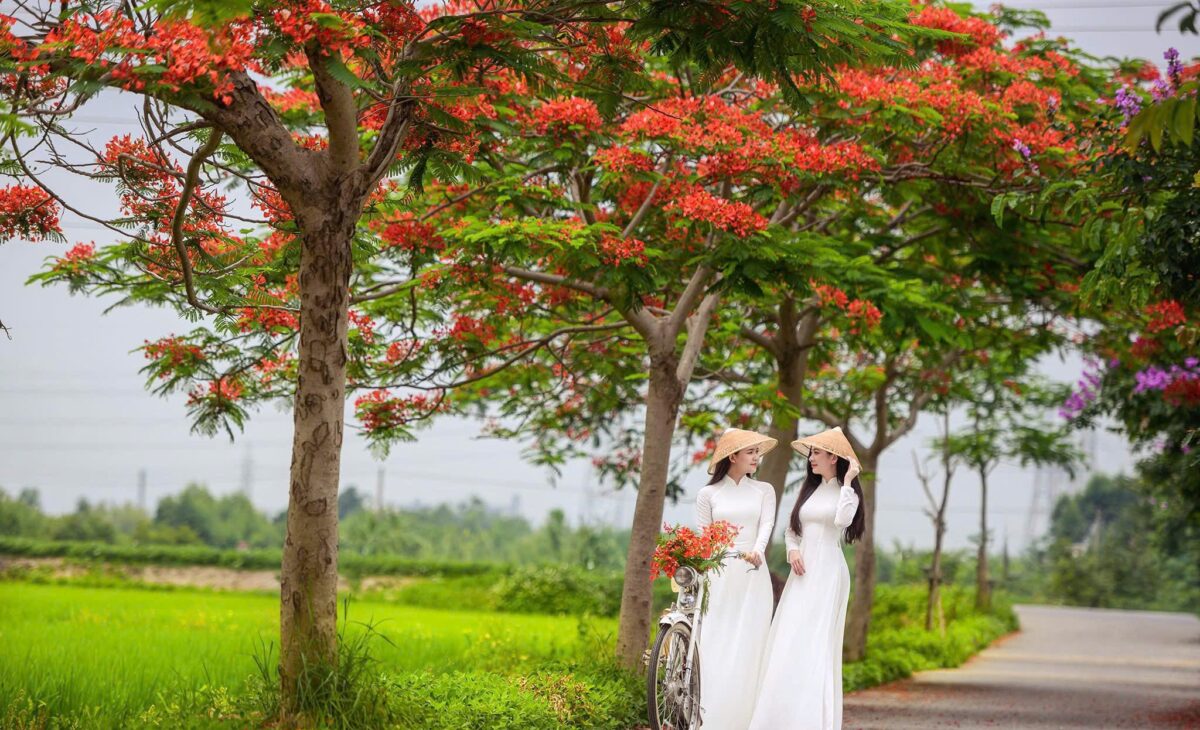
Duong Lam & Ba Vi Full-Day Private Tour – Ancient Villages, Tea Hills & Mountain Countryside Led By Women
Escape the busy streets of Hanoi and discover a quieter side of northern Vietnam on a Duong Lam & Ba Vi Full-Day Private Tour Led By Women.
This private countryside journey combines the preserved architecture of Duong Lam Ancient Village with the green mountain landscapes, tea plantations and rural communities around Ba Vi.
Rather than focusing on major tourist attractions, the experience is built around the everyday character of northern Vietnamese villages.
Walk through centuries-old lanes, visit traditional houses, meet local residents, explore ancient communal spaces and learn how families have preserved village traditions through generations.
Continue toward the foothills of Ba Vi, where rice fields gradually give way to forested mountains, tea gardens and quieter countryside roads.
With Vietnam Women Travel – Premium Private Tours Led by Women, the journey is led by a Vietnamese female guide who introduces the history, architecture, food and traditions behind the places you visit.
A Different Side of Northern Vietnam
Duong Lam and Ba Vi offer two contrasting landscapes within one day.
Duong Lam is about traditional village heritage.
Ba Vi is about mountains, agriculture and rural landscapes.
Together they create a journey from old village culture into the countryside surrounding Hanoi.
You will see:
- Ancient village gates
- Laterite walls
- Traditional wooden houses
- Communal courtyards
- Rice fields
- Local temples
- Family farms
- Tea plantations
- Mountain roads
- Rural markets
- Ba Vi countryside
- Traditional Vietnamese food
The experience is designed for travelers who want to slow down and see how people live outside the capital.
Duong Lam & Ba Vi Full-Day Private Tour Itinerary
Part 1: Hanoi to Duong Lam – Into the Red River Delta Countryside
Your Vietnamese female guide and private driver pick you up from your hotel in Hanoi.
Leave the city and travel west toward Son Tay.
The scenery gradually changes from urban neighborhoods to open farmland and village communities.
As you approach Duong Lam, the roads become quieter and the landscape begins to reveal traditional northern Vietnamese architecture.
Your guide explains the history of village life in the Red River Delta and how agricultural communities developed around rice cultivation.
Arrive at Duong Lam and begin exploring on foot.
Part 2: Mong Phu Village Gate – Entering Historic Duong Lam
Enter the village through the traditional Mong Phu Gate, one of the most recognizable entrances to Duong Lam.
The village layout provides a glimpse into how traditional northern communities were organized.
Walk along narrow lanes bordered by old houses, laterite walls and small courtyards.
The pace is intentionally slow.
Instead of rushing between attractions, take time to observe details such as old doors, tiled roofs, wells, family altars and traditional construction techniques.
Your guide explains how village architecture was influenced by climate, agriculture and family traditions.
Part 3: Ancient Houses & Laterite Architecture
Continue through the historic village to visit selected traditional houses.
Duong Lam is particularly famous for its laterite architecture, a distinctive material commonly found in the region.
Visit an old family home and learn how several generations traditionally lived under one roof.
Observe wooden beams, ancestral altars, tiled roofs, courtyards and agricultural storage areas.
Your guide explains how the traditional house functioned as both a family residence and a place connected with farming activities.
The experience offers a personal look at Vietnamese rural architecture that is difficult to find in modern Hanoi.
Part 4: Mia Pagoda & Village Spiritual Life
Continue toward Mia Pagoda, an important Buddhist site associated with the Duong Lam area.
Explore the peaceful grounds and traditional architecture.
Your guide explains the role of Buddhism and village temples in Vietnamese community life.
The pagoda provides a different perspective from the residential architecture of Duong Lam.
Here, the focus shifts toward spirituality, local traditions and religious practices.
Part 5: Countryside Walk – Rice Fields & Village Life
Leave the historic center and walk or drive through the surrounding countryside.
Depending on the agricultural season, you may see rice fields, vegetable gardens, farm work and local residents traveling between villages.
Stop at suitable locations for photographs.
The countryside around Duong Lam is particularly attractive because the traditional village landscape remains closely connected with agriculture.
Your guide explains the seasonal rhythm of rice farming and how rural families have adapted to changes in modern Vietnam.
Part 6: Local Lunch in Duong Lam – Traditional Northern Flavors
Enjoy lunch at a selected local restaurant or traditional village home.
The meal introduces authentic northern Vietnamese flavors and may include seasonal dishes prepared with locally sourced ingredients.
Possible dishes include:
- Vietnamese chicken
- Fresh vegetables
- Tofu
- Pork dishes
- Seasonal soups
- Spring rolls
- Local herbs
- Steamed rice
- Traditional village specialties
- Seasonal fruit
Your female guide introduces the dishes and explains how family-style meals are traditionally served in northern Vietnamese households.
After lunch, take some time to relax before continuing toward Ba Vi.
Part 7: Duong Lam to Ba Vi – From Ancient Villages to Mountain Country
Leave Duong Lam and continue toward Ba Vi.
The landscape gradually changes.
Flat rice-growing countryside gives way to rolling hills and distant mountains.
The roads become increasingly green and peaceful.
Depending on the season, you may see tea gardens, vegetable farms, fruit trees and small rural businesses along the route.
This transition from historic village to mountain countryside is one of the defining features of the tour.
Part 8: Ba Vi Tea Country – Green Hills & Local Agriculture
Explore the tea-growing areas around Ba Vi where conditions and access allow.
Tea is an important agricultural product in the region.
Visit a suitable tea garden and learn how local farmers cultivate, harvest and process tea.
Walk among the rows of tea plants and enjoy the cooler atmosphere of the foothills.
Your guide explains how tea farming supports local families and how Vietnamese tea traditions are connected with everyday social life.
There is also time for photographs across the green hills.
Part 9: Ba Vi Mountain Countryside – Villages, Farms & Forested Landscapes
Continue through the rural foothills of Ba Vi.
The scenery becomes increasingly dominated by green mountains and forested slopes.
Drive along quieter roads through local communities.
You may see small farms, houses, gardens, livestock and roadside cafés.
Your guide introduces the relationship between Ba Vi’s natural environment and the communities living around the mountain.
The route is flexible, allowing additional stops when there are interesting local activities or viewpoints.
Part 10: Local Tea & Rural Hospitality
Take a relaxed break at a suitable local tea stop.
Enjoy Vietnamese tea while learning about the traditions surrounding tea drinking in northern Vietnam.
Tea is not simply a beverage.
It is commonly used when welcoming guests, beginning conversations and bringing family members or neighbors together.
Your guide explains how tea culture fits naturally into Vietnamese rural hospitality.
Part 11: Return to Hanoi – Countryside to Capital
After exploring the Ba Vi countryside, begin the return journey toward Hanoi.
Watch the landscape change once again from mountain foothills and agricultural villages to increasingly developed suburban areas.
Use the journey to relax after a full day outdoors.
Arrive back at your hotel in Hanoi after experiencing a side of northern Vietnam that feels far removed from the capital.
Duong Lam Ancient Village
Duong Lam is one of the most interesting traditional villages near Hanoi.
Its value comes from the combination of historic architecture and living community life.
People still live in the old village environment rather than the area existing solely as an open-air museum.
This creates opportunities to observe how traditional houses, temples, village lanes and modern daily life coexist.
Mong Phu Village
Mong Phu is the historic heart of Duong Lam.
Its traditional gate and surrounding houses create a strong impression of an old northern Vietnamese village.
The narrow lanes and laterite walls are particularly photogenic.
Your guide explains how the village was organized and why the gate played an important symbolic role.
Traditional Laterite Houses
Laterite is one of the distinctive materials associated with Duong Lam.
The reddish-brown stone has been used in walls, gates and other village structures.
Combined with old wooden houses and traditional tiled roofs, it creates an architectural style strongly associated with the region.
Visiting a traditional home provides a closer look at how Vietnamese families historically organized their living spaces.
Ancient Village Lanes
The lanes of Duong Lam are part of the experience.
Instead of wide modern streets, many routes remain narrow and shaded.
Walk past:
- Laterite walls
- Wooden doors
- Old wells
- Courtyards
- Family homes
- Small temples
- Vegetable gardens
- Traditional rooftops
These details reveal how village architecture developed around community and agriculture.
Mia Pagoda
Mia Pagoda is a peaceful spiritual site within the Duong Lam area.
Its traditional Buddhist architecture and quiet atmosphere provide a contrast with the residential village.
Your guide introduces local Buddhist traditions and explains how pagodas historically served as important spiritual spaces for rural communities.
Ba Vi Tea Plantations
The foothills around Ba Vi provide favorable conditions for tea cultivation.
The tea gardens create a distinctly green landscape.
Depending on the season, you may see farmers pruning plants, collecting leaves or preparing the harvest.
A visit to a tea garden gives travelers an opportunity to connect Vietnam’s famous tea culture with the agricultural communities that produce it.
Ba Vi Countryside
Ba Vi offers a different atmosphere from the flat agricultural landscape around Hanoi.
The mountains create a dramatic background while small villages and farms occupy the lower slopes.
The area is especially attractive for travelers who enjoy:
- Mountain scenery
- Rural roads
- Agriculture
- Photography
- Tea culture
- Quiet villages
- Outdoor experiences
Vietnamese Rural Life
One of the strongest features of this itinerary is the opportunity to observe ordinary countryside life.
You may see:
Farmers working in rice fields.
Families maintaining vegetable gardens.
Local residents drinking tea.
Children traveling between villages.
Small family businesses operating from their homes.
Farmers tending tea plants.
Neighbors meeting at roadside cafés.
These scenes provide a more authentic understanding of life outside Hanoi’s urban center.
Northern Vietnamese Food
Lunch focuses on traditional northern Vietnamese flavors.
Rather than choosing an international restaurant, the tour uses a selected local dining place where possible.
The meal may include several shared dishes accompanied by steamed rice.
Your guide can introduce the ingredients and explain how meals differ between rural households and restaurants.
Food hygiene, freshness and quality are prioritized.
What Makes This Tour Different?
This itinerary is intentionally different from the Cuc Phuong National Park Full-Day Private Tour and the various Ninh Binh itineraries.
It does not focus on caves, wildlife trekking, Trang An boat rides or royal history.
Instead, the central story is:
Traditional Village → Rural Architecture → Local Food → Tea Agriculture → Mountain Countryside.
The route is:
Hanoi → Son Tay → Mong Phu Village Gate → Ancient Houses → Mia Pagoda → Rice Fields & Countryside → Local Lunch → Ba Vi → Tea Gardens → Mountain Villages → Local Tea Experience → Hanoi.
The experience combines:
- Duong Lam Ancient Village
- Mong Phu Village
- Traditional laterite houses
- Ancient village lanes
- Mia Pagoda
- Rice fields
- Rural communities
- Ba Vi countryside
- Tea plantations
- Mountain landscapes
- Local tea culture
- Traditional Vietnamese food
- Private car
- Women-led guiding
The focus is not on checking off famous attractions.
It is on walking through a living village, understanding traditional architecture and seeing how agriculture and mountain life shape communities around Hanoi.
Vietnam Women Travel – Premium Private Tours Led By Women
Vietnam Women Travel – Premium Private Tours Led by Women creates private journeys that connect travelers with Vietnam’s local communities, heritage and countryside.
Our tours are private tours led by women, not women-only tours.
Your Vietnamese female guide accompanies you throughout the day and introduces the stories behind Duong Lam and Ba Vi.
She can explain village traditions, Vietnamese family life, architecture, Buddhist culture, agriculture and local food.
Because this is a private tour, the pace can be adapted to your interests.
Spend longer inside an old house.
Walk further through the village.
Stop at a tea garden.
Take photographs in the countryside.
Or simply enjoy the peaceful mountain scenery.
Private Car Experience
Travel comfortably from Hanoi to Duong Lam and Ba Vi in a private car with a Vietnamese female guide.
The vehicle allows you to explore two very different countryside environments without the fatigue of a long motorbike journey.
Walking sections are included in Duong Lam and at selected countryside stops.
The exact route may change according to weather, agricultural activity, local access and road conditions.
Comfortable walking shoes, sun protection and drinking water are recommended.
Who Is This Duong Lam & Ba Vi Private Tour For?
This experience is ideal for:
- Couples
- Families
- Friends
- Private travelers
- Architecture enthusiasts
- Culture lovers
- Photography enthusiasts
- Travelers interested in Vietnamese village life
- Food travelers
- Tea lovers
- Travelers who enjoy countryside scenery
- Travelers looking for a peaceful alternative to crowded attractions
- Guests seeking private tours led by women
Book Your Duong Lam & Ba Vi Full-Day Private Tour
If you are searching for a Duong Lam private tour from Hanoi, Ba Vi countryside tour, Duong Lam Ancient Village tour, Ba Vi tea plantation tour, or a private cultural experience led by women, this journey offers a completely different perspective on northern Vietnam.
Leave Hanoi behind and enter the historic lanes of Duong Lam, explore traditional laterite houses, discover village spirituality at Mia Pagoda, enjoy a local Vietnamese lunch, then continue toward Ba Vi’s green hills, tea gardens and mountain communities.
With Vietnam Women Travel – Premium Private Tours Led by Women, you experience the countryside at a slower pace.
From ancient village gates and laterite walls to tea-covered hills and quiet mountain roads, discover the living traditions of northern Vietnam beyond the usual tourist routes.