Best Places to Visit in Central Vietnam
Central Vietnam is one of the most diverse parts of the country, combining imperial heritage, ancient towns, beaches, mountains, caves, islands and distinctive regional food. The classic route usually centers on Hue, Da Nang and Hoi An, but travelers who have more time can continue to Phong Nha, Quy Nhon, Phu Yen, Nha Trang, Da Lat and other destinations.
Vietnam’s official tourism website identifies Da Nang, Da Lat, Hoi An, Hue, Nha Trang, Phu Yen and Phong Nha among the region’s major destinations, reflecting how varied Central Vietnam is.
For a first-time visitor, the easiest route is Hue → Da Nang → Hoi An. With 7–10 days, you can add My Son or Phong Nha. With two weeks or more, consider heading farther south to Quy Nhon and Phu Yen, or inland to Da Lat.
Central Vietnam at a Glance
| Destination | Best For | Recommended Stay |
|---|---|---|
| Hue | Imperial history, temples, royal cuisine | 2–3 days |
| Hoi An | Ancient town, food, lanterns, countryside | 2–3 days |
| Da Nang | Beaches, food, mountains, city life | 2–3 days |
| Phong Nha | Caves, adventure, nature | 2–3 days |
| My Son | Champa history | Half–1 day |
| Quy Nhon | Beaches, seafood, quieter coast | 2–3 days |
| Phu Yen | Coastal scenery, local life | 2–3 days |
| Nha Trang | Beaches, islands, resorts | 2–4 days |
| Da Lat | Cool climate, coffee, forests | 2–3 days |
| Bach Ma | Hiking, waterfalls, forest | 1–2 days |
| Quang Binh | Caves, beaches, history | 2–3 days |
1. Hue – The Best Place for History and Imperial Culture
Hue is one of the best places to visit in Central Vietnam if you are interested in history, architecture, spirituality and traditional cuisine.
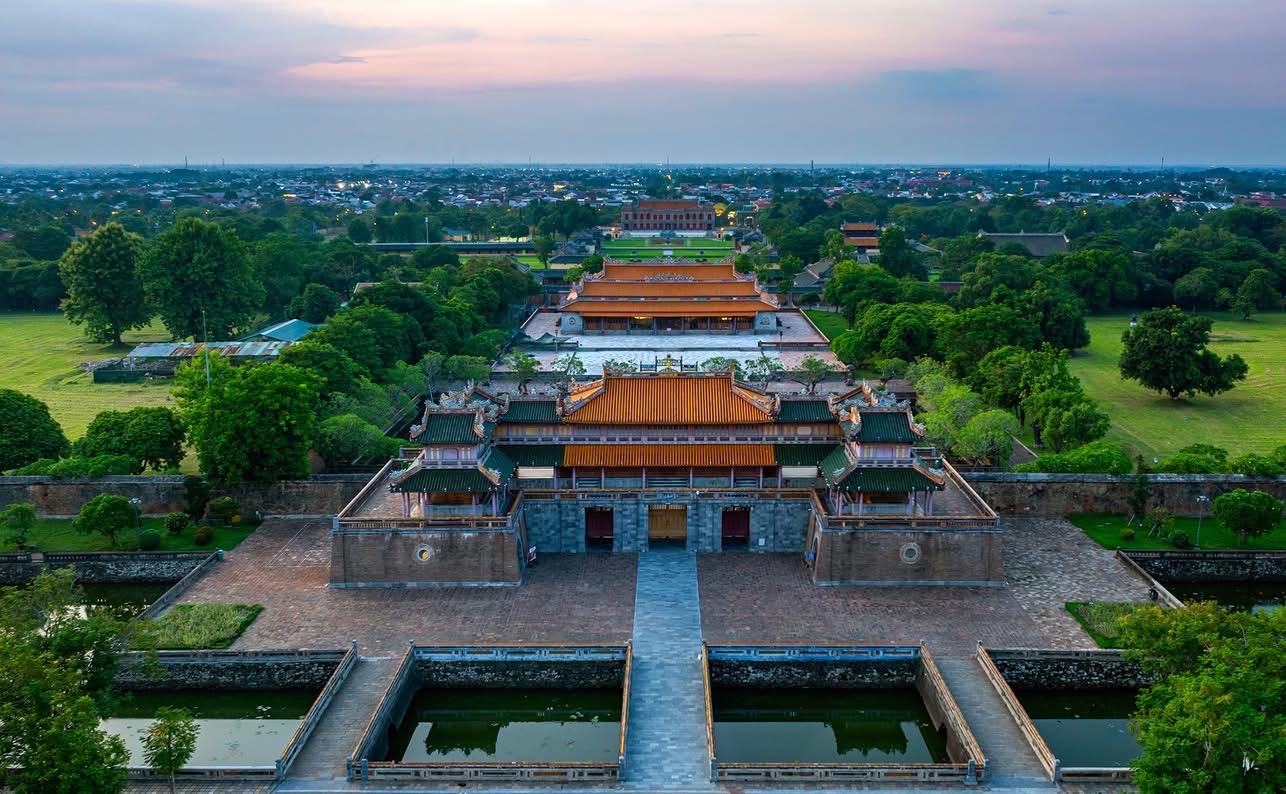
Hue was the imperial capital of Vietnam during the Nguyen Dynasty, when 13 emperors ruled from the city over 143 years. The Complex of Hue Monuments includes the Imperial Citadel, royal tombs, temples and other structures associated with the Nguyen court.
The city has a slower atmosphere than Da Nang and Hoi An, making it a good destination for travelers who enjoy cultural sightseeing rather than nightlife.
Imperial City of Hue
The Imperial City, or Dai Noi, is the essential attraction. Within the fortified complex are ceremonial gates, royal courtyards, temples, gardens and surviving palace buildings.
Allow at least half a day to explore properly. A guide is particularly useful because the architecture becomes much more interesting when you understand how the imperial court was organized.
Royal Tombs
The royal tombs surrounding Hue provide another perspective on the Nguyen Dynasty.
The most visited include the tombs of Minh Mang, Tu Duc and Khai Dinh. Each has a different architectural character.
Minh Mang’s tomb is known for its balanced relationship with the surrounding landscape. Tu Duc’s complex has a garden-like atmosphere, while Khai Dinh’s tomb is much more ornate and combines Vietnamese and European influences.
Thien Mu Pagoda
Thien Mu Pagoda overlooks the Perfume River and is one of Hue’s most recognizable religious landmarks.
The seven-story Phuoc Duyen Tower creates one of the city’s classic views. Combine the pagoda with a river trip or a private sightseeing route through the surrounding countryside.
Perfume River
The Perfume River divides much of Hue and gives the city its distinctive geography.
A boat ride is a relaxing way to see Hue from another perspective, especially near sunset.
Hue Food
Hue is one of the best culinary destinations in Central Vietnam.
Try bun bo Hue, banh beo, banh nam, banh loc, com hen and nem lui.
The food is often more intricate and strongly seasoned than what visitors encounter in Northern Vietnam, making a Hue food tour a worthwhile addition to a cultural itinerary.
2. Hoi An – The Best Place for Ancient Architecture
Hoi An is arguably the most visually distinctive destination in Central Vietnam.
The city developed into an important international trading port from the 15th to 19th centuries, attracting merchants from different parts of Asia and beyond. Its historic urban architecture and trading-port heritage earned UNESCO World Heritage recognition in 1999.
Today, Hoi An is famous for its yellow buildings, lanterns, narrow streets, historic houses, riverside cafés, food and tailoring.
Hoi An Ancient Town
The Ancient Town is best explored slowly on foot.
Visit historic merchant houses, temples, the Japanese Covered Bridge and small museums before returning in the evening when the lanterns transform the streets.
Morning is generally quieter, while the old town becomes much busier after sunset.
Japanese Covered Bridge
The Japanese Covered Bridge is one of Hoi An’s most recognizable landmarks and represents the multicultural history of the old trading port.
It is worth seeing early in the morning before the streets become crowded.
Hoi An Lanterns
Lanterns are an important part of Hoi An’s visual identity. Around the full moon, the traditional lantern atmosphere becomes especially prominent.
The best experience is not simply taking a photograph. Walk through the old town, cross the river, sit at a café and watch the town change as darkness arrives.
Hoi An by Bicycle
One of the best ways to experience the area outside the Ancient Town is by bicycle.
Within a few minutes of leaving the historic center, you can reach rice fields, vegetable farms, waterways and small villages.
A countryside bicycle tour provides a completely different perspective on Hoi An.
Hoi An Food
Try:
Cao lau
White rose dumplings
Com ga Hoi An
Banh mi
Hoanh thanh
Food is one of the strongest reasons to stay in Hoi An for at least two nights.
3. Da Nang – Best for Beaches, Food and Easy Access
Da Nang is the most convenient coastal city in Central Vietnam for many travelers because it has an international airport, beaches, modern hotels, restaurants and easy connections to both Hue and Hoi An.
Official tourism information highlights My Khe Beach, Son Tra Peninsula, Marble Mountains, Cham culture and the city’s street food as major attractions.
My Khe Beach
My Khe Beach is the city’s most famous beach and stretches along a long section of coastline.
Early morning is particularly interesting because local residents walk, exercise, swim and fish along the shore.
At sunset, the beachfront becomes one of Da Nang’s most enjoyable places for an evening walk.
Son Tra Peninsula
The Son Tra Peninsula rises directly from the sea and provides a dramatic contrast with the city’s modern skyline.
The forested peninsula is home to the endangered red-shanked douc langur, and travelers interested in wildlife can explore the mountain roads with an experienced local guide.
Linh Ung Pagoda
Linh Ung Pagoda on Son Tra is famous for its enormous Lady Buddha statue and panoramic views over Da Nang Bay.
Go earlier in the day for cooler temperatures and better visibility.
Marble Mountains
The Marble Mountains consist of five limestone and marble outcrops containing caves, pagodas and shrines.
The complex is only a short distance from central Da Nang, making it easy to combine with Hoi An. Official tourism information recommends exploring the caves and temples on foot and notes that the site is approximately 15 minutes from the city center.
Wear comfortable shoes because the visit involves stairs.
Da Nang Street Food
Da Nang is one of Central Vietnam’s strongest food cities.
Try mi Quang, banh xeo, bun thit nuong and fresh seafood.
Mi Quang is particularly important to the region and combines noodles with herbs, peanuts and a concentrated amount of flavorful broth rather than the large quantity of broth associated with phở.
4. Phong Nha – Best for Caves and Adventure
Phong Nha is one of the best destinations in Central Vietnam for adventure travelers and nature lovers.
The area is the gateway to Phong Nha-Ke Bang National Park, a spectacular limestone landscape containing hundreds of caves and underground river systems. Vietnam’s official tourism website describes Phong Nha as a major adventure destination and highlights its enormous cave network.
Phong Nha Cave
A boat journey into Phong Nha Cave is one of the most accessible cave experiences in the region.
The Son River takes visitors directly toward the cave entrance, after which the journey continues underground through huge chambers and limestone formations.
Paradise Cave
Paradise Cave is another major attraction and is particularly impressive for visitors who want to see enormous underground chambers without joining a multi-day expedition.
Son Doong Cave
Son Doong is the name that has made Phong Nha famous internationally.
The cave is enormous enough to contain its own weather system, forest and river. Official tourism information describes it as one of the world’s largest cave systems and notes that visiting involves a specialized adventure expedition rather than a normal sightseeing tour.
You do not need to visit Son Doong to enjoy Phong Nha. There are many more accessible caves and outdoor activities.
5. My Son Sanctuary – Best for Champa History
My Son Sanctuary is one of Central Vietnam’s most important archaeological sites.
The red-brick temple complex was developed by the Champa civilization and contains structures dating from approximately the 7th to 13th centuries. It is located around 35 kilometers inland from Hoi An and is a UNESCO World Heritage site.
The site is best visited early because the central area has limited shade.
A knowledgeable guide can explain the relationship between Champa religion, architecture and the wider history of Central Vietnam.
6. Hai Van Pass – Best Scenic Road
The Hai Van Pass is one of the most beautiful places to experience Central Vietnam by road.
The mountain pass connects Hue and Da Nang and offers views over the coast, mountains and ocean. Vietnam’s official tourism website calls it one of the country’s most famous coastal roads.
You can travel across it by:
Motorbike
Private car
Jeep
Train
For travelers who want to stop at viewpoints, a private vehicle is more flexible than the train.
7. Lang Co – Best Scenic Beach Stop Between Hue and Da Nang
Lang Co lies between Hue and Da Nang and combines a long sandy beach, lagoon and surrounding mountains.
It is an excellent place to stop for seafood during a road journey across the Hai Van Pass.
The landscape is particularly attractive from higher viewpoints before descending toward the coast.
8. Quy Nhon – Best Quiet Beach City
Quy Nhon is one of Central Vietnam’s best choices for travelers who want beaches without the scale of Da Nang or Nha Trang.
Vietnam’s official tourism website describes it as a lesser-known beach destination with clear water, coastal scenery and fewer crowds.
Ky Co Beach
Ky Co is known for clear water, rocky cliffs and a beautiful sandy beach.
It is an excellent destination for swimming, photography and boat excursions.
Eo Gio
Eo Gio, or “Wind Strait,” features dramatic coastal cliffs and viewpoints overlooking the sea.
A private coastal trip can combine Eo Gio with Ky Co and nearby fishing villages.
Bai Xep
Bai Xep offers a smaller-scale coastal experience outside Quy Nhon.
It is especially attractive to travelers who prefer quiet beaches and local seafood rather than large resort developments.
9. Phu Yen – Best for Undiscovered Coastal Scenery
Phu Yen is one of the strongest choices for travelers who want to move beyond the classic Central Vietnam route.
Vietnam’s official tourism website describes Phu Yen as a quieter coastal destination with beaches, islands, stone cliffs and opportunities for kayaking, hiking and scenic road trips.
The province works particularly well for travelers who enjoy renting a car with a driver and exploring the coastline at a relaxed pace.
Ganh Da Dia
Ganh Da Dia is Phu Yen’s most recognizable geological attraction.
Dark basalt formations appear stacked along the coast like giant stone plates.
Early morning is an excellent time to visit because the light is softer and the temperature is more comfortable.
O Loan Lagoon
O Loan Lagoon is known for its coastal scenery and seafood, particularly local oysters.
It is an excellent place to combine photography with a seafood lunch.
Vung Ro Bay
Vung Ro Bay combines mountains, sea and fishing villages.
The road through this area is one of the most enjoyable coastal drives in the region.
10. Nha Trang – Best for Beaches and Island Trips
Nha Trang is one of Vietnam’s most established beach destinations.
Compared with Quy Nhon and Phu Yen, it has a larger resort industry, more restaurants, more nightlife and a much wider range of accommodation.
The destination is particularly suitable for travelers who want:
Beach resorts
Island tours
Snorkeling
Diving
Seafood
Nightlife
Spa and wellness experiences
Nha Trang works well as the southern extension of a Central Vietnam coastal itinerary.
11. Da Lat – Best for Cool Weather and Coffee
Although Da Lat is inland in the Central Highlands rather than on the coast, it is frequently added to Central Vietnam travel routes.
The city is known for cooler temperatures, pine forests, flower gardens, coffee plantations and French-influenced architecture.
It is an excellent contrast after several hot days on the Central Vietnam coast.
For coffee lovers, plantation and specialty-coffee experiences are especially worthwhile.
12. Bach Ma National Park – Best for Forest and Hiking
Bach Ma National Park lies between Hue and Da Nang and offers a completely different environment from the coastal cities.
The park contains mountain forests, waterfalls, viewpoints and hiking routes.
For travelers who like nature more than museums, a one- or two-day Bach Ma excursion can be an excellent addition to a Hue itinerary.
13. Quang Binh – Best for Nature and Adventure
Quang Binh is particularly attractive to travelers interested in caves, beaches, wartime history and rural landscapes.
Phong Nha is the best-known attraction, but the province also contains Vinh Moc Tunnels, beaches and historical sites.
The combination of caves and history makes Quang Binh one of the most diverse areas in Central Vietnam.
14. Vinh Moc Tunnels – Best for War History
The Vinh Moc Tunnels are an extensive underground complex built by local villagers during the Vietnam War.
Unlike many wartime sites, Vinh Moc was designed as an underground community where people lived, worked and sheltered from bombing.
The tunnels provide important context for understanding the history of Central Vietnam.
15. Tam Ky and Nui Thanh – Best for Travelers Going Deeper
Travelers moving south from Hoi An toward Quy Nhon can consider Tam Ky and Nui Thanh for a quieter side of Central Vietnam.
These areas are more locally oriented and are better suited to travelers interested in rural landscapes, seafood and road-trip experiences than conventional sightseeing.
They work best as part of a longer private coastal itinerary.
16. Kon Tum – Best for Central Highlands Culture
Kon Tum provides a very different experience from the coastal destinations.
The city and surrounding countryside offer opportunities to learn about Central Highlands cultures, traditional communal houses and indigenous communities.
It requires additional travel time, but it is worthwhile for travelers who want to move beyond the standard Hue–Da Nang–Hoi An route.
17. Pleiku – Best for Lakes, Coffee and Volcano Landscapes
Pleiku is another Central Highlands destination that can be combined with Kon Tum.
The region has volcanic landscapes, coffee plantations, lakes and villages.
It is a particularly good choice for repeat visitors who want to explore a less familiar side of Central Vietnam.
Best Places in Central Vietnam for History
For history, prioritize:
Hue
Hoi An
My Son
Vinh Moc
Quang Binh
Hue is the strongest choice for imperial Vietnam, Hoi An for international maritime trade, My Son for Champa civilization and Vinh Moc for modern wartime history.
Best Places in Central Vietnam for Beaches
For beaches, choose:
Da Nang
Quy Nhon
Phu Yen
Nha Trang
Da Nang is the easiest choice for first-time visitors because of its airport and excellent accommodation options. Quy Nhon and Phu Yen are better for travelers who prefer a quieter coastline. Nha Trang is best for a full resort and island-trip experience.
Best Places in Central Vietnam for Food
A food-focused itinerary should be:
Hue → Da Nang → Hoi An
In Hue, try bun bo Hue and royal-style small dishes.
In Da Nang, look for mi Quang and seafood.
In Hoi An, try cao lau, white rose dumplings and com ga.
This three-city combination gives you a remarkable cross-section of Central Vietnamese cuisine.
Best Places in Central Vietnam for Adventure
Choose:
Phong Nha
Bach Ma
Hai Van Pass
Son Tra
Quy Nhon
Phong Nha is the clear choice for cave exploration, while Hai Van Pass and Son Tra are excellent for road adventures.
Best Places in Central Vietnam for Couples
The strongest romantic route is:
Hue → Hai Van Pass → Da Nang → Hoi An
Add An Bang Beach or a coastal resort for relaxation.
Hoi An’s lantern-lit evenings, Hue’s river scenery and the Hai Van Pass make this a particularly attractive route for couples.
Best Places in Central Vietnam for Families
Families can comfortably combine:
Da Nang → Hoi An → Hue
Da Nang provides beaches and easy transportation.
Hoi An provides cycling, cooking classes and countryside activities.
Hue offers historical sites that can be explored at a manageable pace.
For older children, add Phong Nha.
Best Places in Central Vietnam for Photographers
The strongest destinations are:
Hoi An
Hue
Hai Van Pass
Phong Nha
Quy Nhon
Phu Yen
Hoi An is best for architecture and nighttime photography, Hue for history and river landscapes, Hai Van for mountain-and-ocean views, and Phu Yen for dramatic coastal geology.
Best Places in Central Vietnam for a Quiet Trip
Travelers who want fewer tourists should prioritize:
Phu Yen
Quy Nhon
Bach Ma
Phong Nha
Kon Tum
Phu Yen is especially attractive for those who want a coastal road trip without the heavier tourism infrastructure of Da Nang or Nha Trang.
Best Central Vietnam Route for 5 Days
For a short trip:
Day 1: Hue
Day 2: Hue
Day 3: Hai Van Pass → Da Nang
Day 4: Da Nang → Hoi An
Day 5: Hoi An
This route covers the region’s essential cultural highlights.
Best Central Vietnam Route for 7 Days
Days 1–2: Hue
Days 3–4: Da Nang
Days 5–6: Hoi An
Day 7: My Son or departure
This is the best first-time itinerary for most travelers.
Best Central Vietnam Route for 10 Days
Days 1–2: Hue
Days 3–4: Da Nang
Days 5–6: Hoi An
Day 7: My Son
Days 8–10: Phong Nha
This combines heritage, beaches and caves.
Best Central Vietnam Route for 14 Days
With two weeks:
Days 1–2: Hue
Days 3–5: Da Nang
Days 6–8: Hoi An
Day 9: My Son
Days 10–11: Phong Nha
Days 12–14: Quy Nhon or Phu Yen
This creates a much broader experience without trying to see everything.
Central Vietnam Weather
Central Vietnam has significant regional and seasonal differences.
For Da Nang, official tourism information identifies March–May and September–October as particularly comfortable periods, while June–August can provide relatively calm seas and little rain. The wetter period generally extends from November to February.
Phu Yen has a different pattern, with its storm season particularly important to consider from September to December.
If traveling across several destinations, don’t assume the weather will be identical everywhere. Hue, Da Nang, Hoi An and the southern coast can experience different conditions.
How to Travel Around Central Vietnam
Central Vietnam is one of the easiest regions for multi-destination travel.
Hue → Da Nang: Train, private car or motorbike.
Da Nang → Hoi An: Private car, taxi or local transfer.
Hoi An → My Son: Private car or organized excursion.
Da Nang → Phong Nha: Private vehicle or domestic connection via Dong Hoi.
Da Nang → Quy Nhon: Train, private car or flight combinations.
Quy Nhon → Phu Yen: Private car is particularly convenient.
For travelers who prioritize scenery, a private road journey is often more interesting than flying between every destination.
Central Vietnam by Motorbike or Jeep
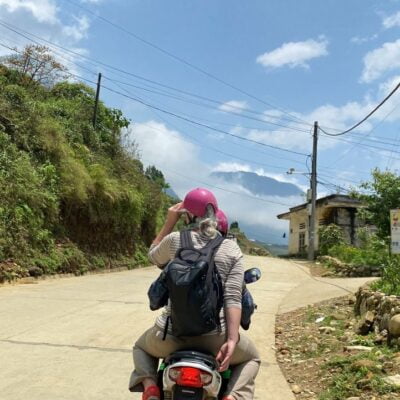
The region is excellent for road trips, particularly around Hai Van Pass, Son Tra, Hoi An countryside, Quy Nhon and Phu Yen.
Experienced riders can explore independently where appropriate, while travelers who do not want to drive can use an experienced local driver.
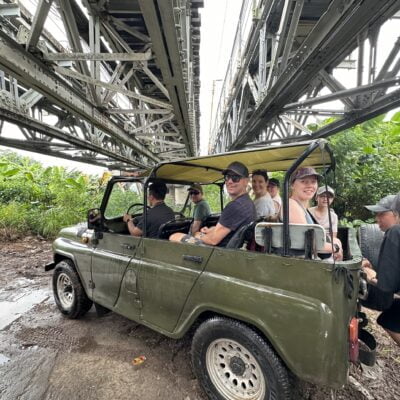
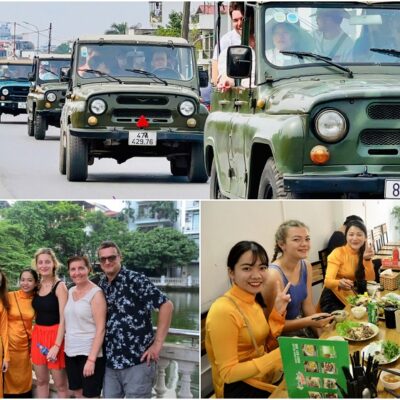
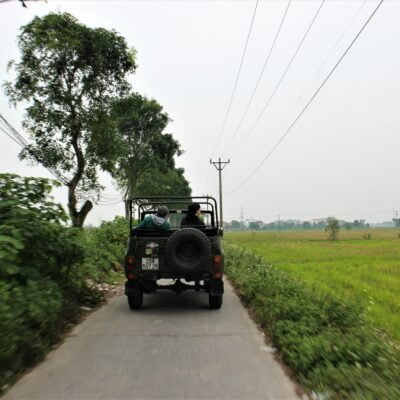
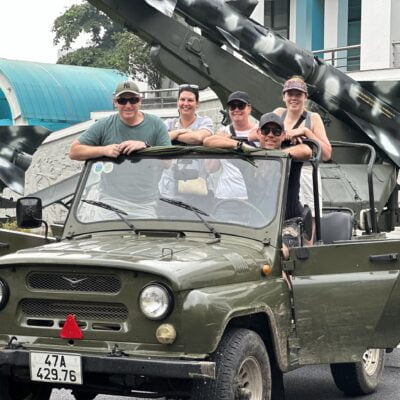
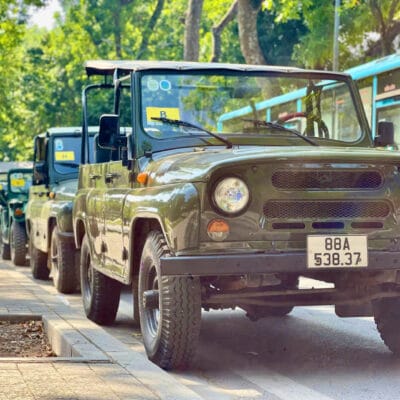
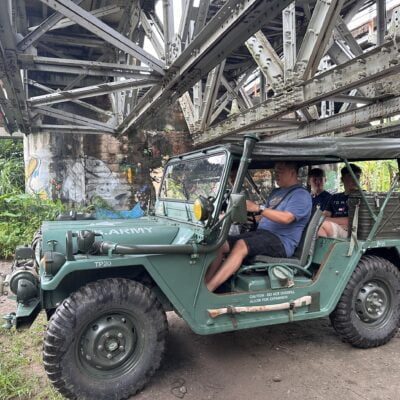
An open-air Jeep is another attractive option for couples, families and private groups who want better visibility and easy photography.
Central Vietnam for First-Time Visitors
If you have never visited Central Vietnam, don’t try to cover the entire region.
Start with:
Hue
Da Nang
Hoi An
These three destinations provide history, beaches, food, architecture and countryside within a relatively compact area.
Once you have 10 or more days, add Phong Nha or travel farther south.
Final Thoughts
The best places to visit in Central Vietnam range from historic cities and ancient temples to beaches, caves, mountain passes and quiet coastal villages.
For history, choose Hue and Hoi An.
For beaches and food, choose Da Nang.
For caves and adventure, choose Phong Nha.
For Champa history, visit My Son.
For quieter beaches, explore Quy Nhon and Phu Yen.
For resorts and island activities, consider Nha Trang.
For cool weather and coffee, head inland to Da Lat.
For travelers who want nature closer to Hue and Da Nang, Bach Ma National Park is an excellent addition.
Central Vietnam is particularly rewarding because the destinations complement one another. Official tourism information similarly highlights the region’s combination of historical sites, Hoi An and Hue, spectacular caves, coastal cities and scenic roads such as the Hai Van Pass.
For most first-time visitors, Hue → Da Nang → Hoi An is the ideal starting route. With more time, continue south to Quy Nhon and Phu Yen or north toward Phong Nha.
Explore imperial palaces, walk through lantern-lit streets, cross the mountains, swim on Central Vietnam’s beaches and follow the coast beyond the main tourist route.
Explore Central Vietnam With Vietnam Women Travel
For travelers looking for private and small-group experiences led by women, Vietnam Women Travel can create a Central Vietnam itinerary around your preferred destinations and pace.
A private journey can combine Hue, Hoi An and Da Nang with the Hai Van Pass, My Son, Phong Nha, Quy Nhon, Phu Yen or other destinations. Private transportation makes it possible to stop for local food, photography, beaches, villages and cultural experiences instead of treating each city as a simple transfer point.
The women-led format is suitable for couples, families, solo travelers and private groups, rather than being limited to women-only travel.
Contact Vietnam Women Travel
VIETNAM WOMEN TRAVEL
Address: 91 Tho Nhuom Street, Hoan Kiem District, Hanoi, Vietnam
Phone / WhatsApp 24/7: +84 982 416 518
Second Contact: +84 981 090 989
Website: vietnamwomentravel.com
Private Central Vietnam Tours Led By Women
Hue Tours Led By Women
Hoi An Tours Led By Women
Da Nang Tours Led By Women
Phong Nha Tours
Quy Nhon & Phu Yen Tours
Private & Small-Group Vietnam Experiences
Discover Central Vietnam with local women guides—from the imperial heritage of Hue and lantern-lit Hoi An to Da Nang’s beaches, Phong Nha’s caves and the quieter coastal landscapes of Quy Nhon and Phu Yen.