Hue Travel Guide: Exploring Vietnam’s Imperial Capital
Hue is one of the most important cultural destinations in Central Vietnam and one of the best places in the country for travelers interested in history, architecture, food and traditional Vietnamese culture. Located along the banks of the Perfume River, the former imperial capital combines grand citadel walls, royal palaces, ornate tombs, Buddhist pagodas, garden houses, traditional markets and a sophisticated culinary tradition.
Hue was the capital of the Nguyen Dynasty from 1802 to 1945, making it the political, cultural and religious center of Vietnam for more than a century. The Complex of Hue Monuments is recognized as a UNESCO World Heritage Site and includes the Imperial Citadel, royal tombs and other structures associated with the Nguyen emperors.
Yet Hue is not simply an open-air history museum. The city has a slower rhythm than Hanoi or Ho Chi Minh City, with leafy streets, riverside cafés, traditional food stalls, pagodas and quiet countryside surrounding the historic center. The result is a destination that rewards travelers who take time to explore rather than rushing through the major monuments.
Hue Travel Guide at a Glance
| Experience | Recommended Time | Best For |
|---|---|---|
| Imperial City | 3–4 hours | History & architecture |
| Royal Tombs | Half–1 day | Imperial history |
| Thien Mu Pagoda | 1 hour | Culture & religion |
| Perfume River | 1–2 hours | Scenic experience |
| Dong Ba Market | 1–2 hours | Food & local life |
| Hue Food Tour | 2–4 hours | Food lovers |
| Garden Houses | 1–2 hours | Architecture |
| Thanh Toan Village | Half day | Countryside |
| Tu Hieu Pagoda | 1–2 hours | Spiritual culture |
| Bach Ma National Park | 1 day+ | Nature & hiking |
Why Visit Hue?
Hue provides a completely different travel experience from the beaches of Da Nang and the lantern streets of Hoi An. The city’s identity is deeply connected to the Nguyen royal court, Buddhism, traditional arts, regional cuisine and the Perfume River.
The historic monuments are the obvious reason to come, but the atmosphere between those monuments is equally important. You can spend a morning inside the Imperial City, eat a bowl of bun bo Hue for lunch, visit a quiet pagoda in the afternoon and finish the day with a riverside walk.
Official destination information describes Hue as a city shaped by its royal heritage, refined cuisine, pagodas, markets and surrounding countryside.
Hue and the Nguyen Dynasty
The Nguyen Dynasty was Vietnam’s last imperial dynasty. The dynasty moved its capital to Hue in 1802, and the city remained the country’s political center until 1945.
The emperors built an enormous complex of palaces, administrative buildings, temples and gardens inside the Citadel, while royal tombs were constructed outside the city along the hills and waterways.
Understanding this history makes a visit to Hue much more meaningful. The buildings are not isolated monuments; they were part of an imperial system that connected government, religion, family, ritual and landscape.
1. Visit the Hue Imperial City
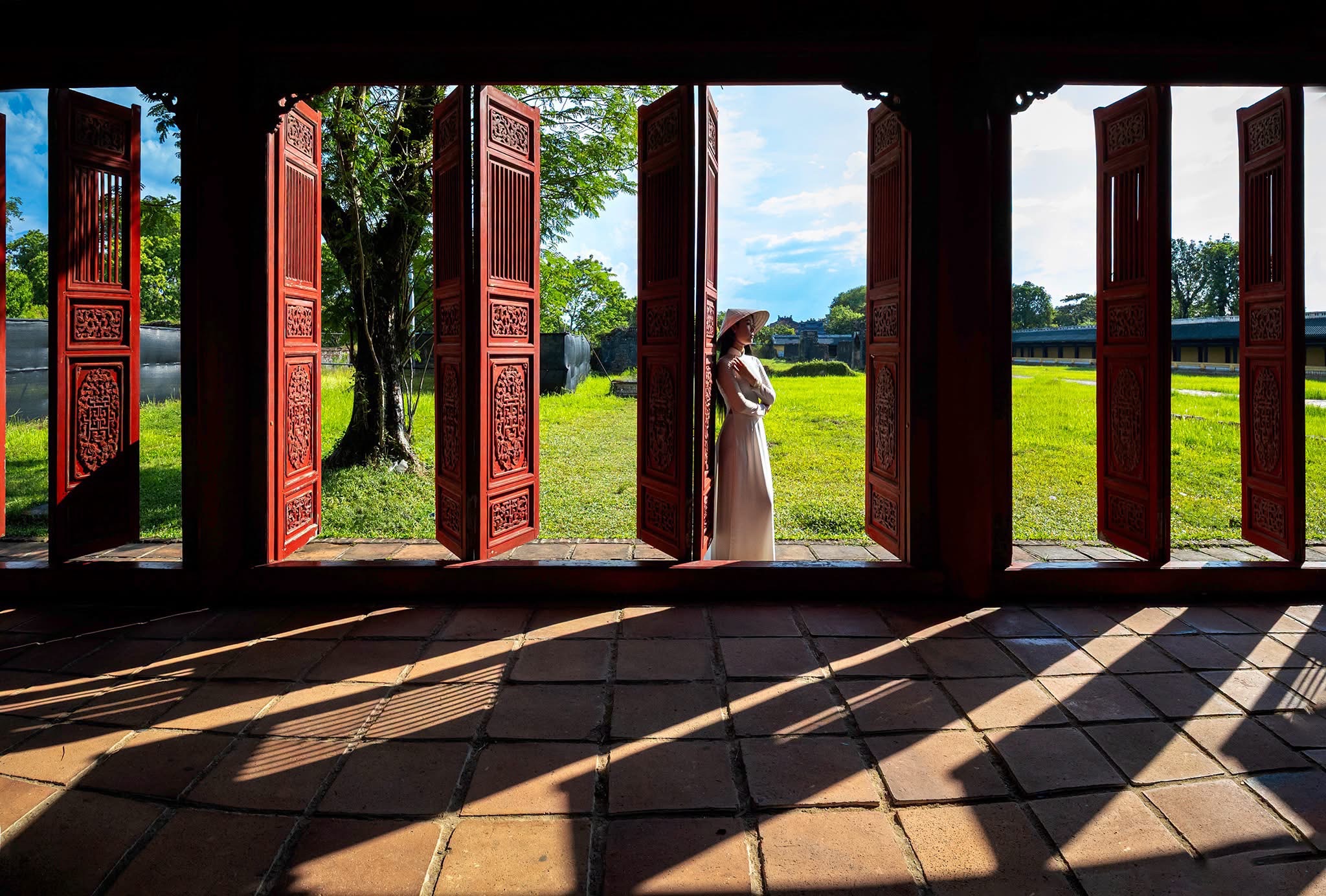
The Imperial City is the essential first attraction for anyone visiting Hue.
Located within the enormous Citadel, the complex contains gates, courtyards, ceremonial halls, temples, gardens and surviving royal buildings. The layout reflects traditional Vietnamese ideas of cosmology, symmetry and imperial authority. Official heritage information notes that the complex was carefully aligned according to the Five Cardinal Points, Five Elements and Five Colours.
Allow at least three hours for a meaningful visit. Travelers interested in architecture and history can easily spend half a day exploring.
Ngo Mon Gate
Ngo Mon Gate, or the Meridian Gate, is one of the most recognizable structures in the Imperial City.
Historically, it served as an important entrance to the imperial palace area and was associated with royal ceremonies.
The elevated pavilion above the gate provides an excellent perspective over the surrounding courtyards.
Thai Hoa Palace
Thai Hoa Palace was one of the most important ceremonial buildings in the Imperial City.
The emperor’s throne and major court ceremonies were associated with this area. Its architecture represents the formal grandeur of the Nguyen court.
Take time to observe the wooden columns, decorative motifs and roof structure.
Forbidden Purple City
At the heart of the Imperial City was the Forbidden Purple City, reserved primarily for the emperor, royal family and court.
Much of the original complex was damaged over the decades, but restoration projects continue to preserve and reconstruct important structures.
Even the surviving foundations help visitors understand how extensive the imperial residence once was.
2. Explore the Royal Tombs
The royal tombs around Hue are among the city’s most impressive attractions.
Unlike many royal burial complexes elsewhere in Asia, the Nguyen emperors were deeply involved in designing their own tombs. As a result, each complex reflects the personality, philosophy and aesthetic preferences of its emperor. Official information specifically notes the different characters of the tombs and their connection to important periods of Vietnamese history.
The three most frequently visited tombs are:
Minh Mang Tomb
Tu Duc Tomb
Khai Dinh Tomb
For a first visit, seeing two or three is enough.
3. Visit Minh Mang Tomb
Minh Mang Tomb is often considered one of the most harmonious royal tombs.
The complex is carefully arranged around courtyards, lakes, gardens, gates and ceremonial structures. Its architecture integrates with the surrounding hills and water rather than dominating the landscape.
The atmosphere is quieter than the Imperial City, making it a good place to appreciate the relationship between royal architecture and nature.
4. Visit Tu Duc Tomb
Tu Duc Tomb has a different atmosphere.
Emperor Tu Duc designed the complex not only as his final resting place but also as a retreat during his lifetime. Pavilions, lakes, trees and gardens give the site a more intimate character.
Official heritage information notes that major sections of the complex were constructed during Tu Duc’s lifetime and served as a kind of royal retreat.
This is one of the best tombs for travelers who enjoy gardens, poetry and quiet landscapes.
5. Visit Khai Dinh Tomb
Khai Dinh Tomb is dramatically different from Minh Mang and Tu Duc.
The complex incorporates Vietnamese architectural traditions with European influences and contains elaborate ceramic and glass decorations.
There are numerous stairs leading to the upper structures, so comfortable shoes are recommended.
Official information highlights Khai Dinh’s distinctive combination of Vietnamese and European design.
6. Discover Less-Visited Royal Tombs
Travelers with more than one day in Hue can explore lesser-visited tombs such as Gia Long, Thieu Tri, Duc Duc and Dong Khanh.
These sites generally receive fewer visitors than Minh Mang, Tu Duc and Khai Dinh. Official travel guidance specifically recommends them for travelers looking for quieter historical experiences.
For photographers and history lovers, this can be one of the best ways to experience Hue beyond the standard itinerary.
7. Visit Thien Mu Pagoda
Thien Mu Pagoda, also known as the Pagoda of the Celestial Lady, sits beside the Perfume River and is one of Hue’s most recognizable landmarks.
The pagoda dates back to 1601, predating the Nguyen Dynasty, while its famous seven-story tower became the visual symbol most closely associated with the site.
Visit in the morning when the grounds are relatively peaceful, or combine the pagoda with a river journey.
8. Cruise the Perfume River
The Perfume River runs through the center of Hue and is fundamental to the city’s landscape.
A short boat ride provides a different perspective on the city and is particularly pleasant around sunset.
For a more meaningful experience, combine a boat ride with Thien Mu Pagoda or another riverside destination rather than taking the boat simply as a transfer.
9. Walk Along the Perfume River
You don’t need a boat to appreciate the river.
The riverside is a pleasant place for walking, especially in the early morning and evening when temperatures are more comfortable.
The contrast between the river, historic architecture, gardens and modern city life captures the quieter character of Hue.
10. Explore Dong Ba Market
Dong Ba Market is one of the best places to experience everyday life in Hue.
The market sells fresh produce, seafood, spices, clothing, household goods, souvenirs and prepared food.
Official heritage itineraries recommend Dong Ba Market as a place to observe local life and explore Hue’s food culture.
Go early if you want to see the market at its busiest.
11. Eat Bun Bo Hue
No Hue travel guide is complete without bun bo Hue.
This spicy beef noodle soup is one of Vietnam’s most famous regional dishes. The broth is rich and aromatic, while lemongrass, chili, beef and herbs create a much stronger flavor profile than many travelers expect from Vietnamese noodle soup.
Try it for breakfast or lunch at a local restaurant.
12. Try Hue’s Small Traditional Dishes
Hue is particularly famous for small dishes and carefully prepared snacks.
Look for:
Banh beo
Banh nam
Banh loc
Banh khoai
Nem lui
Com hen
These dishes are excellent for travelers who want to sample several flavors in one meal rather than ordering one large dish.
Official destination information specifically highlights Hue’s traditional snacks and refined cuisine.
13. Experience Hue Royal Cuisine
Hue’s food culture is closely associated with the imperial court.
Historically, food prepared for the royal household involved careful presentation and numerous small dishes. Modern Hue cuisine is not the same as palace cuisine, but traces of that attention to balance, presentation and variety remain.
A Hue food tour is one of the best ways to understand the difference between everyday dishes and food traditionally associated with the royal court.
14. Try Com Hen
Com hen, or clam rice, is a distinctly Hue dish.
It combines rice with small clams, herbs, peanuts, crispy toppings and a range of strong seasonings.
It is simple, inexpensive and very different from the richer palace-style dishes.
15. Visit Tu Hieu Pagoda
Tu Hieu Pagoda is a peaceful Buddhist site surrounded by trees and gardens.
It offers a quieter alternative to the more famous Thien Mu Pagoda.
The site also has a connection with the Vietnamese Zen tradition and is associated with the renowned Buddhist teacher Thich Nhat Hanh, who spent part of his early monastic life there. Official Hue travel information recommends Tu Hieu as one of the city’s meaningful but less-visited spiritual sites.
16. Explore Hue Garden Houses
Hue is famous for its traditional garden houses, where architecture and carefully landscaped gardens exist together.
These properties reflect the city’s distinctive aristocratic and cultural traditions.
A garden-house visit provides a useful contrast with the huge scale of the Imperial City because the spaces feel personal, residential and peaceful.
17. Cycle Through the Hue Countryside
Hue is an excellent cycling destination because rural landscapes begin surprisingly close to the city center.
Ride along quiet roads through rice paddies, vegetable farms, canals and villages.
A countryside cycling itinerary can include Thanh Toan Bridge, local markets and traditional farming areas.
Official tourism information specifically recommends cycling through Hue’s countryside and around Thanh Toan.
18. Visit Thanh Toan Bridge
Thanh Toan Bridge is a traditional covered wooden bridge located outside central Hue.
The bridge is associated with a rural village landscape of rice fields, vegetable farms and canals.
A visit here can be combined with a cycling trip and local market exploration.
19. Visit Thanh Toan Agricultural Museum
Near the bridge, travelers can learn more about traditional agricultural life in the region.
This is an excellent stop for understanding the connection between Hue’s rural communities and the food that eventually appears in the city’s markets and restaurants.
20. Explore Hue’s French-Colonial Architecture
Hue is often described through its imperial monuments, but the city also contains layers of French colonial architecture.
Walk along the streets near the Perfume River and look for schools, villas, hotels and public buildings built or influenced during the colonial period.
The result is a city where Vietnamese imperial, Buddhist and French architectural traditions exist within the same urban environment.
21. Visit Quoc Hoc High School
Quoc Hoc High School is one of Hue’s best-known historic educational institutions.
Its distinctive red buildings and position beside the Perfume River make it an interesting stop for travelers interested in architecture and modern Vietnamese history.
The area is particularly photogenic during quieter hours.
22. Explore Hue by Cyclo
A cyclo can be a pleasant way to travel through central Hue.
Because the city moves at a slower pace than Hanoi or Ho Chi Minh City, cycling through the historic center allows you to notice architecture, cafés, river views and local neighborhoods.
For longer excursions to the royal tombs, private cars are generally more efficient.
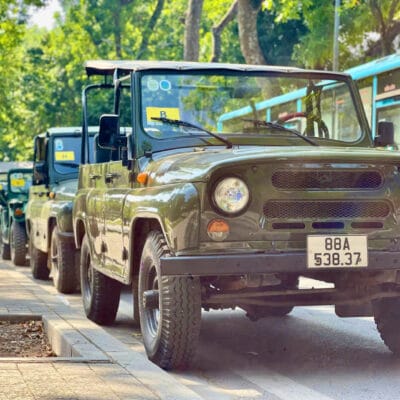
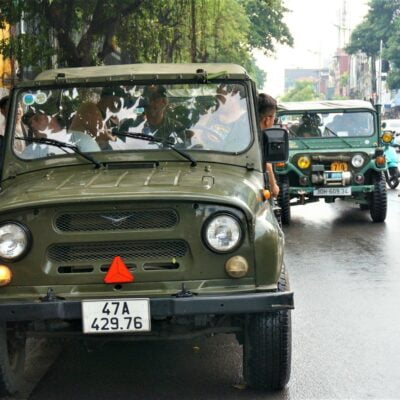
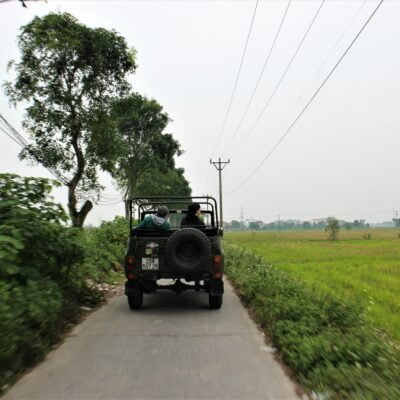
23. Explore Hue by Jeep
A private Jeep tour offers another way to see Hue beyond the major monuments.
A route can combine the Imperial City, riverside neighborhoods, garden houses, countryside roads, local markets and lesser-known historical sites.
An open vehicle is particularly useful for photography and small private groups.
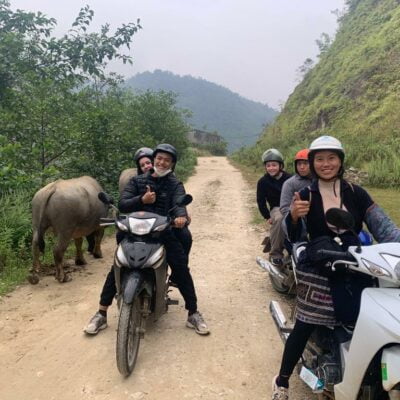
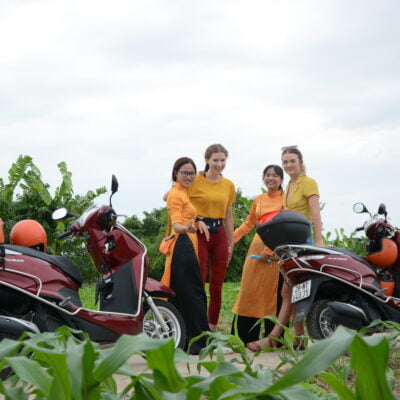
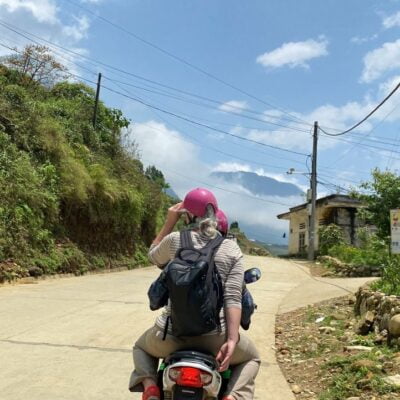
24. Explore Hue by Motorbike or Vespa
For travelers who enjoy two-wheel travel, a motorbike or Vespa experience can connect central Hue with villages, markets and countryside roads.
Riding with an experienced local driver is a convenient option for international visitors who want the atmosphere of motorcycle travel without navigating unfamiliar roads themselves.
25. Visit Nam Giao Esplanade
The Nam Giao Esplanade is associated with important royal ceremonies during the Nguyen Dynasty.
It is less visited than the Imperial City and royal tombs, making it an interesting addition for travelers who want to understand the ceremonial side of imperial government.
Official Hue travel guidance includes Nam Giao among the city’s lesser-visited historical sites.
26. Visit Ho Quyen Tiger Arena
Ho Quyen is a fascinating and unusual historical site outside the central tourist route.
Built during the reign of Emperor Minh Mang in the 19th century, the arena was used for staged fights between elephants and tigers as royal entertainment. Official heritage itineraries identify it as a rare surviving example of this type of Asian architecture.
Its unusual history makes it especially interesting for repeat visitors.
27. Experience Hue’s Local Coffee Culture
Hue has a strong café culture, especially around the riverside and university areas.
Try a traditional Vietnamese coffee and spend time observing local life.
A café break can also provide relief between long historical visits, particularly during the hotter months.
28. Explore Hue at Night
Hue is much quieter at night than Hanoi, but that is exactly what makes an evening enjoyable.
Walk along the Perfume River, explore local restaurants, visit the night market or find a quiet café.
The city’s slower pace suits travelers who prefer conversation, food and atmosphere rather than nightlife.
Best Places to Visit in Hue for History Lovers
Prioritize:
Imperial City
Minh Mang Tomb
Tu Duc Tomb
Khai Dinh Tomb
Nam Giao Esplanade
Ho Quyen
Dong Ba Market
For a deeper historical experience, add Gia Long Tomb and other lesser-visited royal sites.
Best Places in Hue for Culture Lovers
Choose:
Thien Mu Pagoda
Tu Hieu Pagoda
Garden Houses
Dong Ba Market
Thanh Toan Village
Traditional food experiences
The combination of religion, architecture, food and everyday life reveals much more about Hue than the Imperial City alone.
Best Places in Hue for Food Lovers
A food-focused Hue itinerary should include:
Bun bo Hue
Banh beo
Banh nam
Banh loc
Banh khoai
Nem lui
Com hen
Hue vegetarian cuisine
For the best introduction, join a local food tour that visits markets and small family-run restaurants.
Best Places in Hue for Photographers
Photographers should prioritize the Imperial City, Thien Mu Pagoda, Minh Mang Tomb, Tu Duc Tomb, Perfume River, Thanh Toan Bridge and countryside rice fields.
Early morning and late afternoon are generally the most comfortable periods for outdoor photography.
The royal tombs are particularly effective for architectural photography because their layouts combine buildings, water, gardens and hills.
Hue for Couples
Hue works beautifully as a slower destination for couples.
Spend the morning at the Imperial City, take lunch at a traditional restaurant, visit a royal tomb in the afternoon and finish with a sunset walk along the Perfume River.
A private food experience or countryside Jeep tour can add a more personal element to the trip.
Hue for Families
Families can visit Hue comfortably with a private vehicle.
Keep the Imperial City visit relatively focused for younger children and add activities such as boat rides, countryside cycling or garden-house visits.
Older children may enjoy Ho Quyen and the stories surrounding the Nguyen emperors.
Hue for Seniors
Hue is particularly suitable for travelers who want culture without excessive intercity transportation.
Use a private vehicle for the royal tombs and choose shorter walking routes.
Some attractions contain considerable stairs or uneven surfaces, particularly tomb complexes such as Khai Dinh, so mobility should be considered when planning the route.
How Many Days Do You Need in Hue?
Two days is the minimum I recommend for a first visit.
A simple two-day itinerary can cover the Imperial City, two royal tombs, Thien Mu Pagoda, Dong Ba Market and a food experience.
Three days is better if you want countryside, garden houses, additional tombs and slower sightseeing.
Perfect 2-Day Hue Itinerary
Day 1
Visit the Imperial City in the morning, enjoy Hue cuisine for lunch, then explore Thien Mu Pagoda and the Perfume River in the afternoon.
Finish with a local food tour or evening walk.
Day 2
Visit Minh Mang and Khai Dinh or Tu Duc Tomb, have lunch near the countryside, then return to Hue for Dong Ba Market and a relaxed evening.
Perfect 3-Day Hue Itinerary
Day 1
Imperial City, traditional Hue lunch and Perfume River.
Day 2
Minh Mang, Tu Duc and Khai Dinh royal tombs.
Day 3
Thien Mu Pagoda, garden houses, Thanh Toan countryside and local food.
This gives you a much more balanced understanding of Hue.
Best Time to Visit Hue
According to current official destination information, February through April is one of the most pleasant periods for visiting Hue. Summer can be very hot and humid, while rain becomes more frequent from around August into January. Hue can also experience flooding during the wetter part of the year.
That does not mean you cannot visit during the rainy season. Hue can be atmospheric in wet weather, but outdoor sightseeing should remain flexible.
Hue in Spring
Spring is generally comfortable for walking and sightseeing.
Temperatures are more manageable and the historic buildings and gardens can look particularly attractive.
This is a strong period for travelers who want to spend long hours outdoors.
Hue in Summer
June and July can become very hot and humid.
Plan major outdoor attractions for early morning and late afternoon, with a midday break for lunch and rest.
A private vehicle with air conditioning is particularly useful during this period.
Hue in the Rainy Season
Rain can arrive from late summer through winter, with the possibility of heavy rain and flooding later in the year.
During wet days, prioritize:
Museums
Imperial buildings
Food experiences
Cafés
Cooking classes
Garden houses
Keep countryside excursions flexible.
How to Get to Hue
Hue has Phu Bai International Airport, which is approximately 30 minutes from the city center according to current destination information. Travelers can also reach Hue by train on the Reunification Express or by road from Da Nang.
For travelers arriving from Hanoi or Ho Chi Minh City, flying is generally the fastest option.
For scenic travel, the train can be an enjoyable alternative.
Hue From Da Nang
Traveling from Da Nang to Hue is one of the most scenic journeys in Central Vietnam.
The road crosses the Hai Van Pass and passes through the Lang Co area.
A private car, Jeep or experienced motorbike driver allows you to stop at viewpoints along the way.
The train is another attractive option if you prefer simply to enjoy the scenery without driving.
Hue to Hoi An
A private route from Hue to Hoi An can include:
Imperial City
Royal tomb
Lang Co
Hai Van Pass
Da Nang
Hoi An
This turns a transfer day into one of the most memorable road journeys in Central Vietnam.
Hue and Hoi An
Combining Hue and Hoi An is one of the best ways to experience Central Vietnam.
Hue provides imperial history and refined cuisine.
Hoi An provides international trading-port heritage, lanterns, countryside and beaches.
The two cities are very different, which makes the combination particularly effective.
Hue and Da Nang
Da Nang adds beaches, modern city life and mountains to the historical experience of Hue.
A route of:
Hue → Hai Van Pass → Da Nang → Hoi An
is one of the strongest Central Vietnam itineraries for first-time visitors.
Hue and Phong Nha
Travelers interested in history and caves can combine Hue with Phong Nha.
Hue provides imperial architecture and cultural heritage.
Phong Nha provides caves, rivers and national-park landscapes.
Allow additional days because the road journey is considerable.
Hue for Food Lovers
Hue may be one of Vietnam’s best cities for food-focused travel.
The food is not just about one famous soup.
You can spend a full day exploring different textures and styles, from steamed rice cakes and dumplings to grilled meats, noodle soups, vegetarian dishes and royal-inspired cuisine.
A local female food guide can be particularly helpful for explaining how these dishes are eaten and where locals actually go.
Hue Vegetarian Food
Hue has a strong Buddhist tradition, and vegetarian cuisine is an important part of the city’s food culture.
Visitors can find vegetarian restaurants and dishes ranging from noodles and rice to vegetable preparations and mock meats.
For travelers interested in Buddhist culture, a vegetarian food experience combined with a pagoda visit can be particularly meaningful.
Hue Royal Cuisine vs Everyday Food
One of the most interesting things about Hue is the contrast between royal-style food and everyday street food.
Royal-inspired dishes tend to emphasize presentation and small portions.
Everyday Hue food is more direct, flavorful and accessible.
Trying both gives you a better understanding of how food connects different social layers of the city.
Why Hue Is Different From Hanoi
Hanoi is more urban, energetic and commercially active.
Hue feels slower and more deeply connected to imperial architecture, Buddhism and the Perfume River.
Hanoi is ideal for street life and contemporary Northern Vietnamese culture.
Hue is ideal for understanding Vietnam’s royal past and Central Vietnamese culinary traditions.
Why Hue Is Different From Hoi An
Hoi An is a preserved trading port.
Hue is an imperial capital.
Hoi An’s identity comes from merchants, river trade and multicultural architecture.
Hue’s identity comes from emperors, court ceremonies, royal tombs and religious traditions.
Visiting both provides a much deeper understanding of Central Vietnam.
Hue Off the Beaten Path
For travelers who have already visited the major monuments, explore:
Gia Long Tomb
Thieu Tri Tomb
Duc Duc Tomb
Dong Khanh Tomb
Nam Giao Esplanade
Tu Hieu Pagoda
Thanh Toan
Garden houses
Rural villages
These places allow you to experience a quieter side of Hue. Official travel guidance specifically recommends several of these lesser-visited sites for travelers seeking more depth.
Hue Travel Tips for First-Time Visitors
Start early at major historical sites.
Wear comfortable shoes.
Bring sun protection.
Carry water during summer.
Respect dress requirements at pagodas and religious sites.
Don’t try to visit every royal tomb in one day.
Use a private vehicle for tombs outside the city.
Try local food rather than relying on international restaurants.
Leave time for an unstructured afternoon.
The last point matters. Hue is one of those cities where simply sitting beside the river or drinking coffee can become one of the most enjoyable parts of the journey.
What to Wear in Hue
For sightseeing, lightweight and breathable clothing works well during warm months.
Bring an umbrella or light rain jacket during wetter periods.
At pagodas and religious sites, shoulders and knees should generally be covered.
Comfortable shoes are essential for the Imperial City and royal tombs.
How to Get Around Hue
The central city is relatively easy to explore by walking, bicycle or cyclo.
For the royal tombs and countryside, use a private car, taxi or experienced local driver.
A private Jeep or Vespa experience is also a good option for travelers who want to connect the city with rural areas.
Is Hue Worth Visiting?
Absolutely.
Hue is not the loudest or fastest destination in Vietnam, and that is exactly its appeal.
The city rewards travelers who appreciate architecture, history, food and atmosphere.
If you spend only a few hours visiting the Imperial City, you will see the most famous monument but miss much of what makes Hue distinctive.
Stay at least two nights.
Eat local food.
Visit the tombs.
Walk beside the Perfume River.
See a pagoda.
Explore beyond the central tourist route.
Final Thoughts
A Hue Travel Guide: Exploring Vietnam’s Imperial Capital naturally begins with the Imperial City, but Hue is much more than the remains of a royal palace.
The city’s identity extends through the royal tombs of Minh Mang, Tu Duc and Khai Dinh, Thien Mu Pagoda, the Perfume River, Dong Ba Market, garden houses, countryside villages and an extraordinary food culture. The royal monuments remain central to the story of Hue, with the Nguyen Dynasty ruling from the city between 1802 and 1945.
For first-time visitors, two days is a practical minimum and three days is even better. Use the first day for the Imperial City and central Hue, the second for the royal tombs and surrounding heritage, and the third for pagodas, countryside, food and quieter attractions.
Hue is also an excellent starting point for a wider Central Vietnam journey. From here, you can travel across the Hai Van Pass to Da Nang and Hoi An, or north toward Phong Nha.
Come to Hue for the emperors, stay for the food, the river, the pagodas and the slower rhythm that makes Vietnam’s former imperial capital so memorable.
Explore Hue With Vietnam Women Travel
For travelers looking for private and small-group experiences led by women, Vietnam Women Travel can create a customized Hue itinerary focused on imperial history, local food, Buddhist culture and countryside experiences.
A private journey can include the Imperial City, Minh Mang, Tu Duc and Khai Dinh tombs, Thien Mu Pagoda, Dong Ba Market, garden houses, Thanh Toan, local food experiences and the Perfume River. The itinerary can then continue over the Hai Van Pass to Da Nang and Hoi An.
The women-led format is suitable for couples, families, solo travelers and private groups, rather than being limited to women-only travel.
Contact Vietnam Women Travel
VIETNAM WOMEN TRAVEL
Address: 91 Tho Nhuom Street, Hoan Kiem District, Hanoi, Vietnam
Phone / WhatsApp 24/7: +84 982 416 518
Second Contact: +84 981 090 989
Website: vietnamwomentravel.com
Private Central Vietnam Tours Led By Women
Hue Tours Led By Women
Da Nang Tours Led By Women
Hoi An Tours Led By Women
Hue Imperial City Tours
Hue Food Tours
Private & Small-Group Vietnam Experiences
Discover Hue with local women guides—from the Imperial City and royal tombs to Thien Mu Pagoda, the Perfume River, local markets and the traditional food culture of Vietnam’s former imperial capital.