Central Vietnam Travel Tips: Weather, Transport & Where to Stay
Central Vietnam is one of the easiest regions in Vietnam to combine into a single trip, but good planning makes a major difference. Hue, Da Nang and Hoi An sit relatively close together, yet their weather patterns, transportation options and accommodation styles are quite different.
You can spend a few nights among the imperial monuments of Hue, move south through the Hai Van Pass, stay beside Da Nang’s beaches, then continue to Hoi An for lantern-lit streets and countryside. With more time, the route can extend to Phong Nha, Quy Nhon, Phu Yen, Nha Trang or Da Lat. Official regional travel information identifies Hue, Da Nang, Hoi An and Phong Nha among the major destinations of Central Vietnam, with a particularly strong combination of heritage, beaches and natural landscapes.
For first-time visitors, the key questions are simple: When should you go? How should you travel between the cities? And where should you stay?
This guide covers those practical decisions so you can build a Central Vietnam itinerary that is comfortable rather than rushed.
Central Vietnam Travel Tips at a Glance
| Topic | Best General Advice |
|---|---|
| Best overall months | March–May |
| Good beach period | June–August |
| Another good period | September–October |
| Wettest concerns | Hue from August–January; Hoi An October–January; Da Nang November–February |
| Best airport | Da Nang International Airport for Hoi An + Da Nang |
| Best transport between Hue & Da Nang | Private car, train or scenic road |
| Best transport between Da Nang & Hoi An | Private car, taxi or shuttle |
| Best transport for sightseeing | Private car, Jeep, Vespa or local driver |
| Best base for beaches | Da Nang |
| Best base for heritage | Hoi An or Hue |
| Best city for airport convenience | Da Nang |
| Best for a romantic stay | Hoi An |
| Best for imperial history | Hue |
| Best for combining everything | Hue + Da Nang + Hoi An |
When Is the Best Time to Visit Central Vietnam?
There is no single perfect month for every destination because Hue, Da Nang and Hoi An experience different rainfall patterns.
For many travelers, March to May is the safest all-around choice. Da Nang’s official destination guidance identifies March–May and September–October as particularly favorable periods, while Hoi An also lists March–May among its best months. Hue’s spring period from February through April is considered especially pleasant.
June to August can be very good for beaches, particularly in Da Nang, where official guidance notes relatively little rain and generally clear, calm seas. The trade-off is higher temperatures and humidity.
September and October can provide another attractive travel window, but weather becomes less predictable. By late autumn, rainfall becomes a much more important consideration, especially around Hoi An and Hue.
Central Vietnam Weather by Destination
Hue Weather
Hue has one of the more distinct wet-season patterns in Central Vietnam.
Official destination guidance describes February through April as a particularly pleasant period. June and July can be extremely hot and humid, while rains begin around August and can continue into January. Hue can also experience flooding, particularly from October toward the end of the year.
This means travelers interested mainly in Hue’s imperial sites should be comfortable with heat if visiting in June or July and should allow flexibility for rain in the later months.
Da Nang Weather
Da Nang is generally the easiest of the three destinations for travelers prioritizing beaches.
Official guidance identifies March–May and September–October as particularly favorable months. June–August can also work well because rainfall is relatively low and sea conditions can be favorable. The wetter period is generally November–February.
For a beach-heavy trip, summer can therefore be a very practical choice.
Hoi An Weather
Hoi An’s weather is particularly important for travelers planning cycling, beach days or evening walks through the Ancient Town.
Official information describes March–May as the best general period, while June–August can also be suitable if you are comfortable with heat. Rain and storms become more common from October through January.
Because Hoi An can experience heavy rain and flooding in wetter periods, travelers should avoid building a completely rigid outdoor schedule.
Central Vietnam in January
January can be a mixed month.
Hue may still be wet.
Hoi An can experience rainy weather and storms.
Da Nang is milder but can also be cloudy and wet.
This does not make January impossible, but it is not the period I would choose for a first trip focused heavily on beaches and outdoor sightseeing.
It can still be worthwhile for travelers primarily interested in food, history and cultural experiences.
Central Vietnam in February
February is generally a better proposition.
Hue enters its more comfortable spring period, while conditions in Da Nang and Hoi An begin improving.
This is a useful transition month for travelers who want to combine historical sightseeing with some beach time.
Central Vietnam in March
March is one of the strongest months for a Central Vietnam trip.
Hue is comfortable for sightseeing, Hoi An enters its favorable March–May period, and Da Nang’s weather also becomes attractive.
This is particularly good for a classic:
Hue → Da Nang → Hoi An
itinerary.
Central Vietnam in April
April is another excellent month.
The weather is generally warm without the extreme heat of summer, and Hoi An is particularly attractive for cycling and beach activities. Local travel guidance also highlights April as a pleasant time in Hoi An.
For first-time visitors, April is one of the easiest months to recommend.
Central Vietnam in May
May remains excellent, although temperatures begin rising.
It is a particularly good month for travelers who want a mixture of sightseeing and beaches.
Plan major outdoor visits for early morning and late afternoon.
Central Vietnam in June
June is hot, but that can be an advantage if your priority is the beach.
Da Nang’s official guidance notes little rain and relatively clear, calm seas during June–August.
Hue can be uncomfortably hot in June and July, so start sightseeing early.
Central Vietnam in July
July is similar to June.
Da Nang: excellent for beach time.
Hoi An: possible, but hot.
Hue: very hot and humid.
A practical itinerary would schedule historical sightseeing before 10:00 AM and after 3:30 PM.
Central Vietnam in August
August is a transition month.
Da Nang may still have good beach conditions, but Hue’s rainy season begins around this time, and weather patterns become less predictable.
For travelers visiting all three destinations, keep at least one flexible day.
Central Vietnam in September
September can be very attractive, particularly early in the month.
Da Nang officially lists September–October among its favorable periods.
However, rain becomes more of a possibility across the region, so outdoor itineraries should remain flexible.
Central Vietnam in October
October can be beautiful but increasingly unpredictable.
It is still among Da Nang’s recommended months, but Hoi An enters its wetter period and Hue’s rainfall can become substantial.
A traveler visiting mainly for beaches should consider another time.
A traveler interested in food, heritage and slower travel can still have a rewarding trip.
Central Vietnam in November
November is one of the months when weather planning becomes more important.
Hoi An and Hue can receive substantial rain.
Da Nang can also be wet.
Avoid relying on a tightly packed itinerary with multiple outdoor excursions on fixed dates.
Central Vietnam in December
December can be pleasant for some travelers because temperatures are not as high, but rain remains a significant possibility in Hue and Hoi An.
It is better suited to travelers who can accept changing plans.
What Is the Best Month Overall?
For the classic Hue + Da Nang + Hoi An itinerary, I would generally prioritize:
March
April
May
September and early October can also work well, particularly when beach conditions and weather forecasts cooperate.
How to Get to Central Vietnam
For most international travelers, Da Nang International Airport is the most practical gateway.
The airport has domestic connections to major Vietnamese cities as well as international connections. Da Nang is also connected by train and long-distance bus services, making it a useful transportation hub for the central region.
For travelers focusing on Hue, Phu Bai International Airport is another option. Official Hue information places the airport about 30 minutes from central Hue.
Should You Fly Into Da Nang or Hue?
Choose Da Nang when your itinerary includes:
Da Nang
Hoi An
My Son
Quy Nhon
Phu Yen
Choose Hue when you are starting specifically with:
Hue
Phong Nha
Central Vietnam heritage travel
For the majority of first-time visitors, Da Nang is the most flexible arrival point.
Getting From Da Nang Airport to Hoi An
Hoi An does not have its own major airport, so most air travelers arrive through Da Nang.
Official tourism information puts the Da Nang International Airport at about a 50-minute drive from Hoi An Ancient Town.
Your main options are:
Private car
Taxi
Ride-hailing service
Shared shuttle
A private transfer is particularly convenient if you are arriving with luggage or traveling as a family.
Getting From Da Nang Airport to Da Nang City
The airport is close to central Da Nang.
A taxi, ride-hailing vehicle or private hotel transfer is generally straightforward.
Because the airport and city are relatively close, there is little reason to book an expensive airport hotel unless you have a very early flight.
How to Travel From Hue to Da Nang
You have several options.
Private Car
This is the most flexible choice.
The driver can stop at Lang Co, viewpoints and the Hai Van Pass, turning a transfer into a scenic experience.
Train
The train is one of the most enjoyable options if your priority is scenery rather than flexibility.
The coastal and mountain views between Hue and Da Nang are a major attraction.
Bus
Buses are practical but offer less flexibility.
Motorbike
Experienced riders can travel independently where legally permitted, while visitors who prefer to be passengers can use a professional local driver.
How to Travel From Da Nang to Hoi An
Because the distance is short, this is easy.
Options include:
Private car
Taxi
Ride-hailing
Shuttle
Motorbike
For families or travelers with luggage, private car is usually the most comfortable.
How to Travel From Hoi An to Hue
Hoi An to Hue is a longer journey than Da Nang to Hoi An.
A private vehicle is particularly valuable because you can travel through Da Nang, the Hai Van Pass and Lang Co.
The train is another option, but you first need to reach Da Nang railway station.
Private Car vs Train in Central Vietnam
Both can be excellent.
Choose private car for flexibility.
Choose train for scenery and a more traditional long-distance travel experience.
For the Hue–Da Nang section, I would choose the train when the journey itself is the priority and a private car when sightseeing stops matter more.
Is a Private Driver Worth It?
For Central Vietnam, often yes.
A private driver becomes particularly useful when:
You are traveling as a family.
You have limited time.
You want countryside stops.
You want to photograph the Hai Van Pass.
You are combining multiple destinations in one day.
You want to avoid changing transportation.
It is especially practical for a route such as:
Hue → Lang Co → Hai Van Pass → Da Nang → Hoi An
Traveling by Motorbike
Motorbikes offer tremendous flexibility, especially around Da Nang, Hoi An and the Hai Van Pass.
However, travelers should only ride when they have the appropriate legal documentation and sufficient experience.
Mountain roads can involve sharp bends, steep gradients, rain and unpredictable traffic.
For visitors who want the motorcycle experience without taking responsibility for navigation, riding as a passenger with an experienced local driver is a practical alternative.
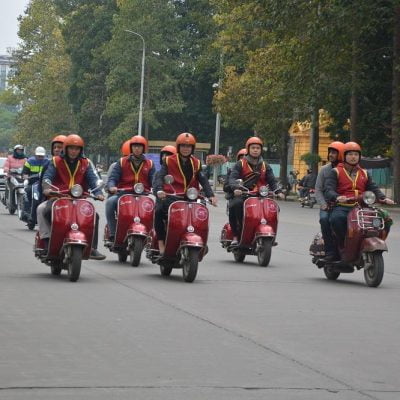
Exploring Central Vietnam by Vespa
A Vespa experience works particularly well in Hoi An and Da Nang.
The slower speed allows you to see neighborhoods, markets, rice fields, fishing villages and smaller roads that are easy to miss from a car.
It is particularly suitable for couples and small private groups.
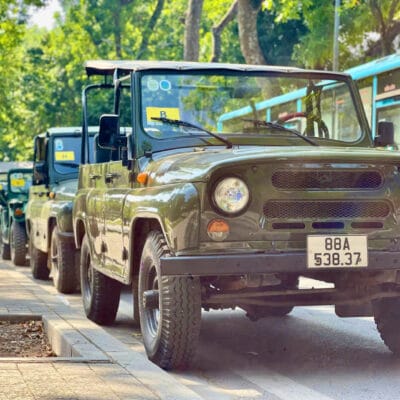
Exploring Central Vietnam by Jeep
A private Jeep is especially useful for scenic routes.
Open-air sightseeing works well around:
Hai Van Pass
Son Tra
Hoi An countryside
Coastal roads
Rural villages
For photographers, the open vehicle can be a real advantage.
Where to Stay in Hue
Hue is relatively easy to navigate, but location still matters.
For first-time visitors, consider staying around the Perfume River and central city.
This gives you convenient access to:
Imperial City
Restaurants
Markets
Riverside
Nightlife
The Le Loi and Doi Cung area is one established option near the Perfume River, while the Pham Ngu Lao–Chu Van An–Vo Thi Sau area is useful for travelers who want cafés, restaurants and nightlife within walking distance. Official tourism information has previously highlighted both areas as practical accommodation zones.
Staying Near Hue Imperial City
If history is your priority, staying closer to the Citadel can reduce transportation time.
The atmosphere is quieter and better suited to travelers who plan early starts.
Staying Near the Perfume River
This is a good compromise for most visitors.
You are close to restaurants, riverside walks and central sightseeing.
Where to Stay in Da Nang
Da Nang gives travelers several distinct accommodation zones.
My Khe Beach
My Khe is the best choice for first-time visitors who prioritize beaches.
You can easily walk to the coast and have restaurants, cafés and seafood venues nearby. The beach is broad and integrated into daily city life, rather than existing purely as a resort zone.
An Thuong
The An Thuong area is popular with international visitors because of its concentration of restaurants, cafés, bars and accommodation near My Khe.
Choose it when you want nightlife and easy beach access.
Han River / City Center
The area around the Han River is better for travelers who prioritize restaurants, markets, bridges and central city life.
Official tourism information describes central Da Nang as a lively area filled with cafés, restaurants, markets and family neighborhoods, while the riverfront and beach side provide different atmospheres.
Son Tra
Staying around Son Tra provides a quieter atmosphere and easier access to the peninsula.
It is particularly suitable for travelers interested in nature, views and resort-style properties.
Where to Stay in Hoi An
Hoi An offers three broad accommodation styles.
Hoi An Ancient Town
Choose this area if you want:
Lanterns
Restaurants
Walking
Historic buildings
Nightlife
Easy evening sightseeing
The major advantage is that you can return to the hotel on foot after dinner.
An Bang Beach
Choose An Bang if you want:
Beach
Boutique resorts
Relaxation
Beach restaurants
Quiet mornings
An Bang is about 7–10 kilometers from the Ancient Town, depending on the route and location. Official tourism information describes it as Hoi An’s most developed beach while still remaining much smaller in scale than Da Nang’s urban beachfront.
Cam Thanh / Countryside
Choose the countryside if you want:
Rice fields
Quiet surroundings
Gardens
Family-friendly accommodation
Bicycle rides
This area is better for travelers who value space and relaxation than immediate access to Hoi An nightlife.
Hoi An Old Town vs An Bang Beach
This is one of the most important accommodation decisions in Central Vietnam.
Choose Ancient Town when evenings matter.
Choose An Bang Beach when mornings and beach time matter.
For couples, An Bang can be very attractive.
For first-time visitors who want maximum sightseeing convenience, staying close to the Ancient Town usually makes more sense.
Best Area in Da Nang for First-Time Visitors
For most visitors, I recommend My Khe / An Thuong.
You get:
Beach access
Restaurants
Cafés
Nightlife
Easy access to Son Tra
Convenient transportation to Hoi An
This gives you the best balance.
Best Area in Hoi An for First-Time Visitors
Stay within walking distance of the Ancient Town.
Hoi An’s evening atmosphere is one of its biggest strengths, and you don’t want to depend on transportation every time you want to walk out for dinner or see the lanterns.
Best Area in Hue for First-Time Visitors
Stay around the central city or Perfume River.
This keeps you close to the city’s restaurants and major attractions.
How Many Nights Should You Stay?
2 Nights
Ideal for:
Hue
Da Nang
Short Hoi An visit
4 Nights
A good combination is:
1 night Hue
1 night Da Nang
2 nights Hoi An
or:
2 nights Da Nang
2 nights Hoi An
6 Nights
A stronger first-time itinerary:
2 nights Hue
2 nights Da Nang
2 nights Hoi An
This is one of the best-balanced Central Vietnam combinations.
Central Vietnam 5-Day Itinerary
Day 1: Hue.
Day 2: Hue → Da Nang via Hai Van Pass.
Day 3: Da Nang.
Day 4: Da Nang → Hoi An.
Day 5: Hoi An.
This works well for travelers with limited holiday time.
Central Vietnam 7-Day Itinerary
Days 1–2: Hue.
Days 3–4: Da Nang.
Days 5–7: Hoi An.
You can include My Son or a countryside day trip without making the trip excessively fast.
Central Vietnam 10-Day Itinerary
Days 1–2: Hue.
Days 3–5: Da Nang.
Days 6–8: Hoi An.
Days 9–10: Phong Nha or another destination.
Another option is to move south toward Quy Nhon.
Central Vietnam 14-Day Itinerary
With two weeks, consider:
Days 1–2: Hue.
Days 3–5: Da Nang.
Days 6–8: Hoi An.
Days 9–10: Phong Nha.
Days 11–12: Quy Nhon.
Days 13–14: Phu Yen.
This is much slower than trying to visit all of Central Vietnam in one week.
Should You Stay in Hue, Da Nang or Hoi An?
Choose Hue if you prioritize:
History
Architecture
Royal heritage
Food
Choose Da Nang if you prioritize:
Beaches
Modern city life
Nightlife
Transportation
Mountain scenery
Choose Hoi An if you prioritize:
Heritage
Food
Lanterns
Countryside
Romantic atmosphere
Slow travel
If you cannot decide, stay in all three.
Central Vietnam With Children
Families generally benefit from staying in Da Nang and Hoi An.
Da Nang has broad beaches, modern facilities and easy transportation.
Hoi An offers bicycle rides, cooking classes, basket boats and beach access.
Hue is also suitable for families, particularly when historical visits are balanced with outdoor activities.
Central Vietnam for Couples
For couples, I would allocate:
2 nights Da Nang
3 nights Hoi An
Then add 2 nights Hue if you have a full week or more.
The combination of beaches, private road journeys, lantern-lit evenings and heritage creates a good variety without constantly moving.
Central Vietnam for Seniors
Prioritize convenient hotels and private transportation.
Hue’s royal tombs can require walking and stairs.
Marble Mountains also involves climbing.
Hoi An’s Ancient Town is relatively compact, but walking surfaces and heat can become tiring.
A private car can make the entire journey much more comfortable.
Central Vietnam for Solo Travelers
Da Nang is easy for independent travelers because of its transportation network and large range of accommodation.
Hoi An is particularly easy for walking and cycling.
Hue is manageable on foot in central areas, with private transportation useful for the tombs.
Central Vietnam for First-Time Visitors
Don’t overcomplicate the route.
The safest recommendation is:
Hue → Da Nang → Hoi An
The three destinations provide an unusually complete introduction to Central Vietnam.
How to Save Time While Traveling Central Vietnam
Avoid changing hotels every night.
Use Da Nang as a base when you want to combine city, beach and nearby day trips.
Stay overnight in Hoi An if evening atmosphere matters.
Use the Hue → Da Nang journey as sightseeing rather than a simple transfer.
Book private transportation for complicated days.
Keep at least one flexible block of time during the rainy season.
How to Save Money
Central Vietnam can be very affordable.
Use local restaurants instead of hotel dining.
Travel by train between Hue and Da Nang when the schedule suits you.
Use ride-hailing for short urban trips.
Stay a little outside the most expensive beach or Ancient Town zones if budget matters.
Book private cars selectively for long sightseeing days rather than every short transfer.
When Is a Private Tour Worth the Extra Cost?
Private travel becomes especially valuable when you want:
Flexible departure times
Local restaurants
Photography stops
Countryside routes
Family-friendly pacing
No group waiting
Private vehicle
Women-led local guiding
For a simple airport transfer, you do not necessarily need a full private tour.
For a Hai Van Pass + countryside + Hoi An day, private travel can make a significant difference.
Central Vietnam Packing Tips
Pack for both heat and rain.
Bring:
Breathable clothing
Comfortable walking shoes
Swimwear
Sun protection
Light rain jacket
Small umbrella
Power bank
Waterproof phone protection
One modest outfit for temples
If visiting between November and January, a light jacket can be useful, especially during cooler or rainy periods.
What Shoes Should You Bring?
Bring one pair of comfortable walking shoes and, ideally, sandals that can handle water.
You will encounter:
Ancient Town streets
Temple steps
Royal tombs
Marble Mountain stairs
Beach
Countryside paths
A single pair of stylish shoes is unlikely to work for everything.
Should You Carry an Umbrella?
Yes, particularly from late summer through winter.
An umbrella is cheap, easy to find locally and useful even when rain is brief.
A lightweight rain jacket is better for cycling or motorbike travel.
Heat Management in Central Vietnam
During hot months, schedule outdoor attractions early.
A practical rhythm is:
7:00–10:30 AM: Major sightseeing.
10:30 AM–3:30 PM: Lunch, hotel, café or indoor attractions.
4:00–7:00 PM: Outdoor sightseeing.
Evening: Food and walking.
This is especially helpful in Hue and Hoi An.
Eating Safely in Central Vietnam
For street food, choose places that are busy with local customers and where food turnover is high.
Look for:
Fresh ingredients
Hot food
Clean preparation areas
Busy meal periods
Don’t assume an expensive restaurant is automatically safer than a small family restaurant.
Cash or Card?
Cards are increasingly accepted in hotels, modern restaurants and many tourism businesses.
However, keep some Vietnamese cash available for:
Markets
Street food
Small cafés
Local transport
Small shops
Rural areas
A mix of card and cash is the safest approach.
Internet and SIM Cards
Central Vietnam has strong mobile coverage in urban areas.
A Vietnamese SIM or eSIM is useful for:
Ride-hailing
Maps
Translation
Hotel communication
Tour arrangements
For remote mountain areas, coverage can become weaker.
Using Ride-Hailing Apps
Ride-hailing is useful in Da Nang, Hue and Hoi An for short urban journeys.
It is less practical for remote sightseeing days where you want the driver to wait.
For those trips, book a private vehicle instead.
Central Vietnam Travel Tip: Don’t Pack Every Day
One of the biggest mistakes is creating an itinerary where every morning begins with luggage in the car.
A better structure is:
Hue – 2 nights
Da Nang – 2 nights
Hoi An – 3 nights
Only move when there is a good reason.
Central Vietnam Travel Tip: Book Hoi An Early During Peak Periods
Hoi An’s accommodation ranges from inexpensive homestays to boutique hotels and beach resorts.
The best-located properties can fill quickly during favorable weather periods.
This is particularly relevant if you want to stay within walking distance of the Ancient Town or directly at An Bang Beach.
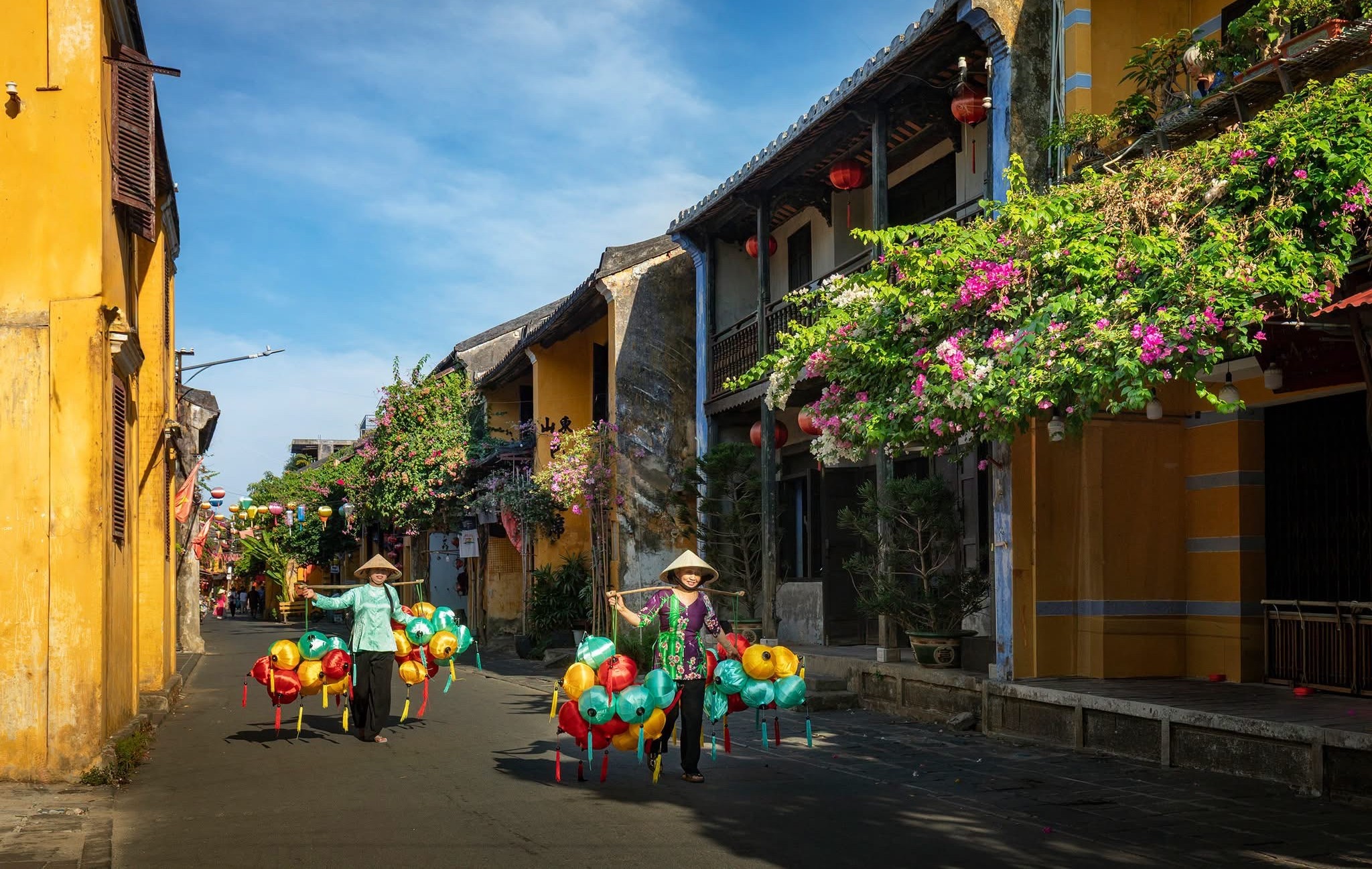
Central Vietnam Travel Tip: Don’t Judge Hoi An by Midday
The town can be busy during the day.
Its atmosphere changes significantly in the evening when the streets become illuminated and the pace slows. Official tourism information emphasizes that the Ancient Town is especially atmospheric after dark.
That is another reason to stay overnight rather than visiting only on a day trip.
Central Vietnam Travel Tip: Don’t Spend Your Whole Da Nang Stay at the Beach
Da Nang’s beaches are excellent, but the city also offers:
Son Tra Peninsula
Marble Mountains
Cham Museum
Han River
Local markets
Food
Hai Van Pass
Give the city at least one full sightseeing day.
Central Vietnam Travel Tip: Use Hue for Depth, Not Speed
Hue deserves more than a rushed few-hour stop.
The city has the Imperial City, royal tombs, pagodas, markets, gardens and a distinctive food culture. Official tourism information also highlights its cycling routes and quieter Buddhist sites.
Two nights is a much better starting point than trying to see everything in one day.
Central Vietnam Travel Tip: Consider One Base When Time Is Short
If you have only three nights, staying in Da Nang and visiting Hoi An can reduce packing and unpacking.
If your priority is Hoi An’s evening atmosphere, reverse the choice and stay in Hoi An.
The best solution depends on your travel priorities.
Central Vietnam Travel Tip: Use the Coast as Your Guide
A useful mental map is:
Hue → Lang Co → Hai Van Pass → Da Nang → Marble Mountains → Hoi An
This makes the geography easy to understand.
You are essentially moving from imperial heritage through mountains to the coast and then into an old trading town surrounded by countryside.
Best Accommodation Strategy for a 7-Day Trip
For most first-time visitors:
Night 1: Hue
Night 2: Hue
Night 3: Da Nang
Night 4: Da Nang
Night 5: Hoi An
Night 6: Hoi An
Night 7: Departure or another destination.
This minimizes unnecessary hotel changes and gives each destination enough time.
Best Accommodation Strategy for a Luxury Trip
Consider:
Hue: Riverside luxury hotel.
Da Nang: Beachfront 5-star resort.
Hoi An: Boutique heritage hotel or beachfront resort.
The contrast makes the journey feel more varied.
Best Accommodation Strategy for a Budget Trip
Choose:
Hue: Central guesthouse.
Da Nang: Small hotel near My Khe or An Thuong.
Hoi An: Family-run homestay or guesthouse within cycling distance of the Ancient Town.
You do not need a luxury property to enjoy any of these destinations.
Best Accommodation Strategy for Families
Families often benefit from:
Da Nang: Apartment-style or resort accommodation near My Khe.
Hoi An: Pool hotel or family-friendly villa.
Hue: Central hotel with easy private-vehicle access.
A swimming pool can be particularly valuable during hot months.
Best Accommodation Strategy for Couples
For couples:
Hue: Boutique hotel near the river.
Da Nang: Beachfront hotel.
Hoi An: Boutique property close to the Ancient Town or An Bang.
This creates three distinctly different accommodation experiences.
Final Thoughts
The best Central Vietnam travel tips are ultimately about choosing the right balance between weather, transportation and location.
For the most reliable overall conditions, prioritize March to May. Da Nang can also be excellent in June–August for beach-focused trips, while September and October can provide another attractive travel window. But weather differs considerably by destination: Hue’s wetter season can extend from August through January, Hoi An becomes much wetter from October through January, and Da Nang’s rainiest period generally falls from November to February.
For transportation, Da Nang is the region’s most practical hub, with an international airport, railway connections and road access to both Hue and Hoi An. Hoi An is roughly a 50-minute drive from Da Nang International Airport, while Hue has its own Phu Bai Airport and is connected by rail and road.
For accommodation, choose according to the experience you want. Hue near the Perfume River works well for history and food. Da Nang around My Khe or An Thuong is ideal for beaches and convenience. Hoi An Ancient Town is best for heritage and evening atmosphere, while An Bang Beach is better for travelers who want a quieter coastal stay. Official Hoi An information specifically describes beachside resorts and Ancient Town accommodation as two distinct ways to experience the destination.
For a first-time visitor, the simplest recommendation remains:
2 nights Hue + 2 nights Da Nang + 2–3 nights Hoi An.
Travel slowly, use the Hai Van Pass as part of the journey, keep outdoor plans flexible during rainy periods and leave enough time to enjoy each destination rather than collecting too many attractions.
Central Vietnam is at its best when the itinerary feels like a journey—not a race from one hotel to the next.
Explore Central Vietnam With Vietnam Women Travel
For travelers looking for private and small-group experiences led by women, Vietnam Women Travel can create a Central Vietnam itinerary based on your travel dates, weather preferences, hotel style and interests.
A private journey can combine Hue, Da Nang and Hoi An with the Hai Van Pass, My Son Sanctuary, local food tours, countryside cycling, beaches, markets and cultural experiences.
Private transportation is particularly useful for travelers who want flexible sightseeing between the three cities, including stops for photography, local restaurants and quieter roads that are difficult to include in a large group tour.
The women-led format is suitable for couples, families, solo travelers and private groups, rather than being limited to women-only travel.
Contact Vietnam Women Travel
VIETNAM WOMEN TRAVEL
Address: 91 Tho Nhuom Street, Hoan Kiem District, Hanoi, Vietnam
Phone / WhatsApp 24/7: +84 982 416 518
Second Contact: +84 981 090 989
Website: vietnamwomentravel.com
Private Central Vietnam Tours Led By Women
Hue Tours Led By Women
Da Nang Tours Led By Women
Hoi An Tours Led By Women
Hai Van Pass Tours
Central Vietnam Food Tours
Hoi An Countryside Tours
Private & Small-Group Vietnam Experiences
Plan Central Vietnam with local women guides who can help you choose the right season, arrange comfortable transportation and connect Hue, Da Nang and Hoi An into one seamless private journey.