Hanoi Tours Hosted by Women: Authentic Experiences for Travelers
Hanoi is a city that rewards travelers who take time to look beyond its most photographed landmarks. The narrow streets of the Old Quarter, the food stalls serving breakfast before sunrise, the quiet courtyards of historic temples, French-era buildings, Vietnamese coffee shops, busy markets, lakeside neighborhoods, and the traffic flowing through the city all reveal different parts of Hanoi. A Hanoi tour hosted by women offers a personalized way to bring these elements together, with professional female guides who can explain the history, culture, food, and everyday life behind what you see.
Vietnam Women Travel – Premium Private Tours Led by Women creates private Hanoi experiences for travelers who want more than a standard sightseeing route. The emphasis is on private groups, flexible itineraries, women-led guiding, cultural understanding, Vietnamese food, and meaningful experiences that can be adjusted to each traveler’s interests.
What Does “Hanoi Tours Hosted by Women” Mean?
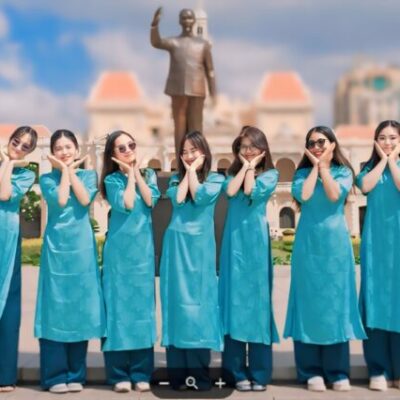
A Hanoi tour hosted by women means the experience is led by a professional female guide or female tour team. The purpose is not to suggest that women require a different version of Hanoi. Instead, it provides travelers with the opportunity to experience the city through the knowledge and perspective of Vietnamese women who understand the destinations, customs, food, neighborhoods, and daily life.
These tours are not limited to women-only groups. Solo women, couples, families, groups of friends, and mixed private groups can all choose a women-led private experience.
The most important element is personalization. Rather than simply following a fixed checklist, travelers can discuss what they want to see, what they want to eat, how much walking they prefer, and which aspects of Hanoi interest them most.
Discover Hanoi Through a Vietnamese Woman’s Perspective
One of the benefits of traveling with a female guide is having an opportunity to discuss aspects of Vietnamese culture that may otherwise remain unexplained.
You can ask about family traditions, education, work, food, clothing, marriage customs, changing lifestyles, Vietnamese celebrations, religious practices, and the differences between traditional expectations and contemporary life.
These conversations can happen naturally while walking through the Old Quarter, visiting a museum, drinking Vietnamese coffee, eating lunch, or exploring a market.
Instead of receiving only historical dates and facts, you gain context about how Hanoi works today.
Start With the Heart of Hanoi
Hoan Kiem Lake
Hoan Kiem Lake is an ideal starting point for a private Hanoi tour because several major parts of the city connect around it.
The lake is associated with the legend of the Returned Sword and is also an important public space in contemporary Hanoi. Residents use the area for walking, exercise, social activities, and relaxation.
A morning visit can reveal a quieter side of the city, while the evening atmosphere is more social and energetic.
A female guide can explain both the historical story and the modern role of the lake before taking you into the surrounding streets.
Ngoc Son Temple
From the lake, continue to Ngoc Son Temple, located on a small island connected by a distinctive red bridge.
The temple provides a compact introduction to Vietnamese historical and spiritual traditions. Instead of simply photographing the entrance, ask your guide about the figures represented inside, the legends connected with the lake, and appropriate behavior when visiting religious sites.
This creates a much more informative experience than treating the temple as a quick photo stop.
Experience the Old Quarter as More Than a Shopping District
Walk Through Hanoi’s Historic Streets
The Hanoi Old Quarter is one of the city’s most recognizable areas, but its importance goes beyond souvenir shops.
Historically, the neighborhood developed around specialized trades, with streets associated with particular products and crafts. Today, traditional businesses exist alongside restaurants, cafés, modern stores, residences, hotels, and street food vendors.
A private women-led tour can focus on the details that interest you.
If you enjoy architecture, your guide can explain tube houses and historic facades. If you love food, the route can include selected culinary stops. If photography is your priority, you can spend more time observing street scenes and architectural details.
Discover Tube Houses
The narrow tube house is one of Hanoi’s most distinctive architectural forms.
Many buildings are narrow at the street frontage but extend deeply into the block. Historically, limited street frontage and taxation practices contributed to the development of this style, while modern families have adapted these buildings for living and business.
Looking at these buildings with a guide helps you understand why Hanoi’s Old Quarter has such a distinctive appearance.
Experience Authentic Hanoi Through Food
Food is one of the strongest reasons to choose a hosted Hanoi experience. Vietnamese cuisine is not simply something you consume between attractions; it provides insight into regional ingredients, family traditions, eating habits, and the city’s history.
A private food itinerary can include pho, bun cha, banh cuon, cha ca, Vietnamese spring rolls, noodles, desserts, fresh herbs, and Vietnamese coffee, depending on your preferences.
The goal should not be to eat as many dishes as possible. A better approach is to understand what you are eating, how it is prepared, how it is traditionally served, and why it is connected to Hanoi.
Try Hanoi Bun Cha
Bun cha is one of the dishes most closely associated with Hanoi.
The combination of grilled pork, rice noodles, herbs, and dipping sauce creates a balance of smoky, fresh, sweet, savory, and acidic flavors.
A female guide can explain how to combine the ingredients and what makes northern Vietnamese flavors distinctive.
If you have food allergies or dietary restrictions, provide those details before the tour so the food route can be planned properly.
Discover Hanoi Pho
Pho is famous around the world, but tasting it in Hanoi provides an opportunity to understand the northern style of the dish.
Your guide can explain the broth, noodles, herbs, meat options, and common eating habits.
Rather than treating pho as simply a famous Vietnamese meal, use it as a starting point for learning about Hanoi’s culinary traditions.
Slow Down With Vietnamese Coffee
Hanoi’s coffee culture is part of everyday life.
A coffee break during a private tour gives travelers the chance to slow down and observe the city. Try traditional Vietnamese drip coffee or egg coffee, a Hanoi specialty known for its creamy topping and strong coffee base.
Your guide can explain why cafés are such an important social space in Vietnam and how Vietnamese coffee culture developed.
This is also a useful time to rest between sightseeing locations.
Explore Hanoi’s History With Context
Temple of Literature
The Temple of Literature is one of Hanoi’s most important cultural landmarks.
Established in 1070, the complex became associated with Confucian education and Vietnam’s traditional examination system. Its courtyards, gardens, gates, stone steles, and architecture provide a window into the importance of scholarship in Vietnamese history.
A female guide can explain the educational traditions behind the site and help you understand why the Temple of Literature remains culturally significant.
Thang Long Imperial Citadel
The Thang Long Imperial Citadel adds another dimension to Hanoi’s history.
The site reflects the city’s long role as a political center and contains evidence from different periods of development.
Combining the Citadel with the Temple of Literature creates a useful historical route because you can explore both political and educational aspects of Hanoi’s past.
Hoa Lo Prison Relic
Travelers interested in modern history may want to visit the Hoa Lo Prison Relic.
The site is connected with different periods of Vietnamese history and should ideally be visited with sufficient historical context.
A private guide allows you to ask questions about the exhibits and understand the broader events surrounding them rather than simply moving through the rooms.
Explore Vietnamese Women’s History
Vietnamese Women’s Museum
The Vietnamese Women’s Museum is particularly relevant to a Hanoi tour hosted by women.
Its exhibitions explore subjects including women’s roles in family and society, traditional clothing, crafts, wartime experiences, and cultural traditions.
For international travelers, the museum can provide a useful introduction to the diversity of Vietnamese women’s experiences.
A female guide can also help explain which historical customs remain relevant today and which have changed as Vietnamese society has developed.
Talk About Modern Vietnamese Women
A private tour provides space for broader conversations about contemporary Vietnamese women.
Travelers may want to understand women’s education, careers, family responsibilities, fashion, entrepreneurship, marriage, or changing expectations in modern Hanoi.
The guide can share cultural context while making clear that there is no single experience that represents every Vietnamese woman.
Discover Hanoi’s Religious Traditions
Hanoi’s temples and pagodas reflect a mixture of cultural and religious influences.
Visitors may encounter Buddhism, Taoism, Confucian traditions, ancestor worship, and Vietnamese folk beliefs within different settings.
A female guide can explain the differences and overlaps without making the subject unnecessarily complicated.
She can also show you how to behave respectfully at religious sites, including appropriate clothing, incense practices, photography, and areas where visitors should not enter.
Explore the French Quarter
The French Quarter provides a dramatic contrast with the Old Quarter.
The streets are generally wider, buildings are more spacious, and colonial-era architecture appears alongside modern Vietnamese businesses.
A hosted tour can focus on architecture, history, photography, or simply exploring a different part of central Hanoi.
Hanoi Opera House
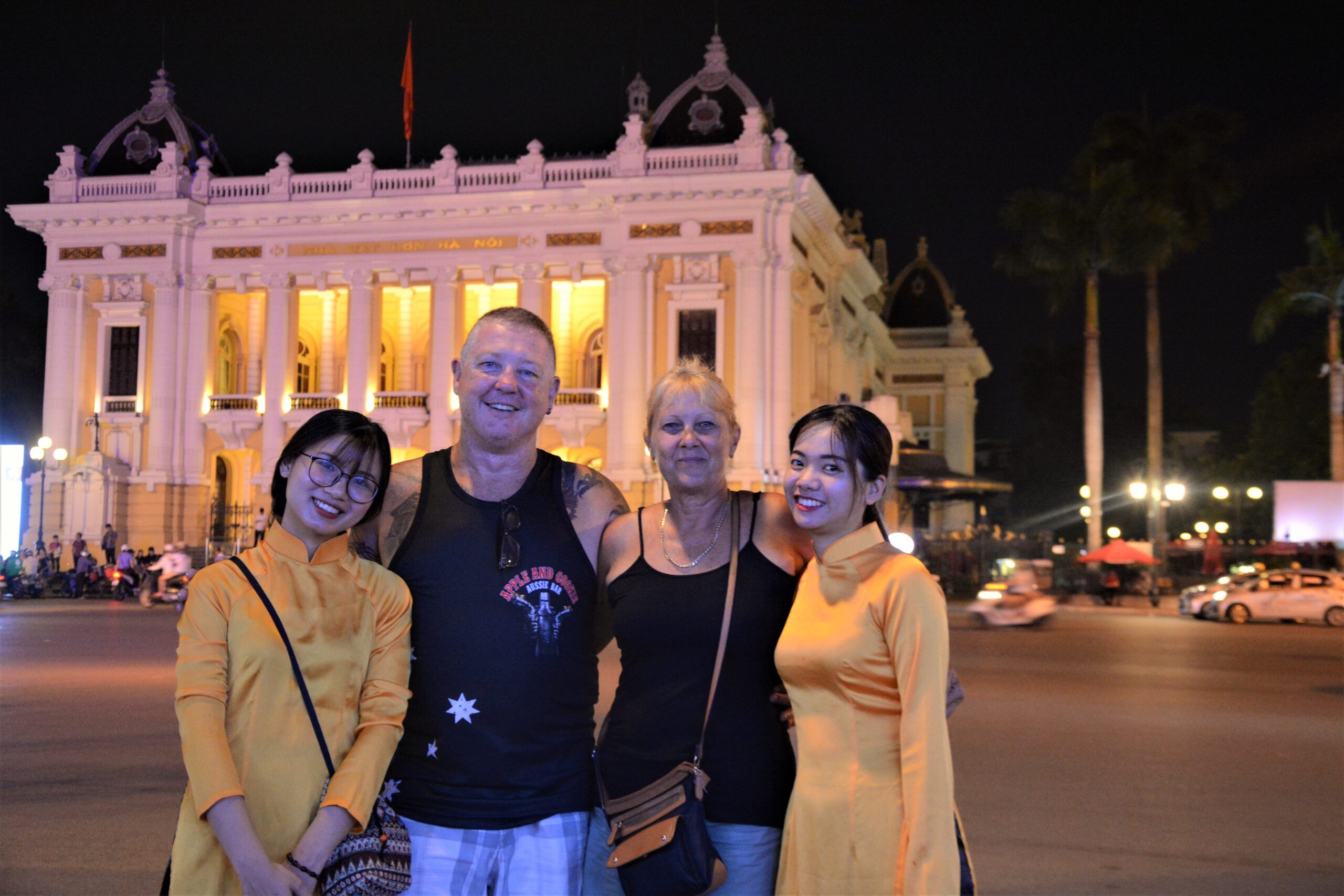
The Hanoi Opera House is one of the French Quarter’s most recognizable buildings and a natural photography stop.
Instead of photographing only the facade, walk through the surrounding streets and observe the architectural details and relationship between the Opera House and the wider French Quarter.
This is particularly useful for travelers who enjoy architectural photography.
See a Different Side of Hanoi Around West Lake
West Lake
West Lake provides a slower alternative to the busy Old Quarter.
The lake is surrounded by residential areas, cafés, restaurants, temples, and modern developments. It is a good location for travelers who want a more relaxed part of Hanoi after exploring the city’s historic center.
A private vehicle or motorbike can make it easy to connect West Lake with other neighborhoods.
Tran Quoc Pagoda
Tran Quoc Pagoda, beside West Lake, is one of Hanoi’s most recognizable Buddhist sites.
The combination of water, architecture, gardens, and religious traditions makes it particularly attractive for travelers interested in culture and photography.
Your guide can explain the site’s significance and help you understand the etiquette expected from visitors.
Experience Hanoi by Private Motorbike
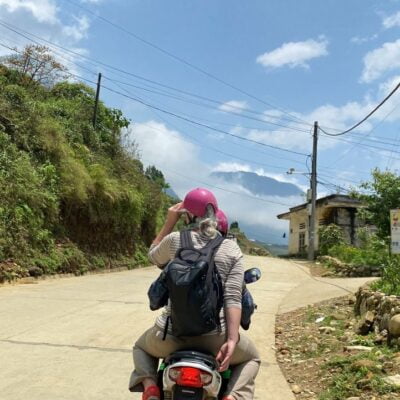
One of the best ways to see Hanoi’s everyday life is from the back of a motorbike.
A private motorbike tour allows you to move through different neighborhoods while remaining close to street-level activity.
You can pass food stalls, markets, schools, cafés, businesses, residential lanes, and major landmarks without spending the entire day walking.
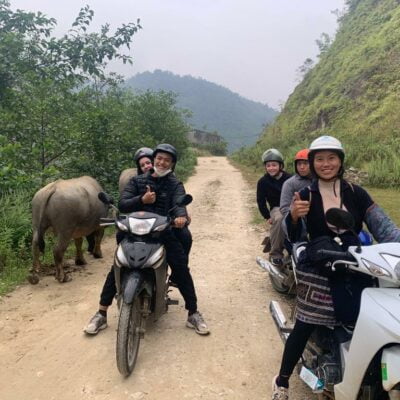
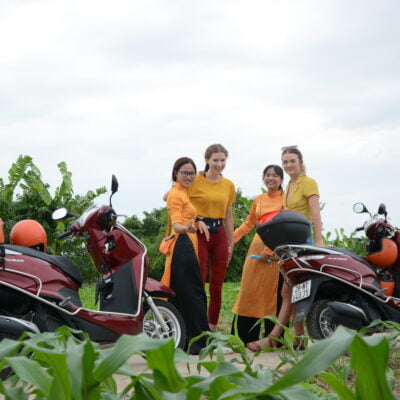
A women-led private motorbike experience can connect the Old Quarter, French Quarter, West Lake, Long Bien Bridge, and other selected areas depending on the group’s interests.
Travelers should always confirm the vehicle, driver arrangements, safety equipment, insurance, pickup details, and itinerary with the tour operator before departure.
Visit Long Bien Bridge
Long Bien Bridge is valuable for both history and photography.
Crossing the Red River, it provides views that are very different from the dense center of Hanoi. The bridge, railway, river landscape, agricultural areas, and surrounding neighborhoods create a strong visual contrast.
A private guide can explain the bridge’s history and help determine the best way to incorporate it into the day’s route.
Discover Everyday Hanoi
Authentic travel does not necessarily mean finding a “secret” attraction.
Often, the most useful experiences come from seeing ordinary Hanoi as it really functions.
Walk through a residential lane. Watch a family prepare breakfast. Sit in a neighborhood café. Visit a market. Observe how businesses use narrow buildings. See how motorbikes, pedestrians, delivery workers, and street vendors share the same roads.
A good guide helps you understand these scenes without turning residents’ everyday lives into a performance for tourists.
Why Private Touring Makes the Experience More Authentic
Private touring gives travelers control over the day.
If you love food, spend more time eating. If history interests you, add another historical site. If you prefer photography, slow down. If you are tired, reduce the number of stops.
You can also remove activities that do not interest you.
This is particularly valuable in Hanoi because the city contains so many different types of experiences. A standard itinerary cannot always reflect what every traveler actually wants.
Hanoi Tours Hosted by Women for Solo Travelers
Solo travelers often appreciate the flexibility of private touring.
You can have a female guide for the day without joining a large group. The itinerary can be built around your interests and adjusted according to your energy level.
A solo traveler interested in food might spend the day around markets, street food, cooking traditions, and cafés. Someone interested in history could focus on the Temple of Literature, Imperial Citadel, Hoa Lo, and other historical locations.
Photography, architecture, shopping, and motorbike sightseeing can also be incorporated.
Hanoi Tours Hosted by Women for Friends
Groups of friends can create an itinerary around shared interests while avoiding the restrictions of a large tour.
For example, a private day could begin at Hoan Kiem Lake, continue through the Old Quarter with food stops, move to the French Quarter for architecture and photography, and end with an evening food experience.
Another day could combine West Lake, Tran Quoc Pagoda, Long Bien Bridge, and private motorbike sightseeing.
The itinerary belongs to the group.
Hanoi Tours Hosted by Women for Families
Families benefit from the ability to adjust the pace.
Children may need breaks, older family members may prefer fewer walking sections, and different generations may have completely different interests.
A private guide can help create a balance between cultural attractions, food, transportation, outdoor spaces, and rest periods.
What to Tell Your Tour Operator Before Booking
To create a useful private itinerary, provide as much practical information as possible.
Tell the tour operator your travel date, number of travelers, hotel, preferred start time, total available hours, food preferences, dietary restrictions, mobility requirements, interests, and preferred transportation.
Also explain what you do not want.
If you dislike shopping, say so. If you have already visited the Old Quarter, request another route. If you want more food and less history, make that clear.
The more specific your request, the easier it is to create a tour that feels genuinely personalized.
What Makes a Hanoi Tour Feel Authentic?
Authenticity is not about avoiding every famous attraction.
Hoan Kiem Lake, the Old Quarter, Temple of Literature, West Lake, and other major landmarks are important precisely because they are part of Hanoi’s identity.
The difference is how you experience them.
Instead of taking a photograph and immediately moving on, learn the story behind the place. Eat the food associated with the city. Ask questions. Observe how residents use the space. Explore the surrounding neighborhood.
A guide can help turn a sightseeing stop into a cultural experience.
Practical Tips for Travelers
Wear comfortable shoes if your itinerary includes walking through the Old Quarter or historic sites. Bring water and sun protection during hot periods.
When visiting temples and pagodas, wear respectful clothing and follow the specific rules of the site.
Keep valuables secure in busy markets and crowded streets.
If you want to photograph people closely, ask permission.
For food tours, communicate allergies and dietary requirements before the tour begins.
Most importantly, allow some flexibility. Hanoi’s weather, traffic, attraction schedules, and street activity can affect the timing of a day.
Why Choose Vietnam Women Travel?
Vietnam Women Travel – Premium Private Tours Led by Women specializes in private Hanoi experiences hosted by professional women.
The company can create personalized tours around Hanoi food, culture, history, women’s history, architecture, photography, Vietnamese coffee, Old Quarter exploration, West Lake, Long Bien Bridge, religious sites, markets, and private motorbike sightseeing.
Tours are available for solo travelers, couples, families, groups of friends, and mixed private groups. They are women-led, but they are not restricted to women-only participants.
The focus is on private service, flexible planning, cultural understanding, and creating an itinerary that matches the travelers rather than forcing every guest into exactly the same route.
A More Meaningful Way to Experience Hanoi
A Hanoi tour hosted by women can be much more than a convenient way to visit the city’s landmarks.
It can be an opportunity to understand how Hanoi eats, works, worships, studies, travels, builds its neighborhoods, preserves its history, and changes with modern life.
You might begin with the legend of Hoan Kiem Lake, walk through the Old Quarter, learn about Vietnamese education at the Temple of Literature, discuss women’s history at the Vietnamese Women’s Museum, taste bun cha and pho, stop for egg coffee, photograph French colonial architecture, explore West Lake, cross Long Bien Bridge, and finish the day with Hanoi’s evening food culture.
The itinerary is flexible, but the objective remains the same: to experience Hanoi with context, conversation, and personal attention rather than simply passing through its attractions.
VIETNAM WOMEN TRAVEL
Vietnam Women Travel – Premium Private Tours Led by Women
📍 Address: 91 Tho Nhuom Street, Hoan Kiem District, Hanoi, Vietnam
📞 Hotline/WhatsApp: +84988402008 / +84982416518 / +84981090989
📧 Email: info@vietnamwomentravel.com
🌐 Website: https://vietnamwomentravel.com/
Website: Vietnam Women Travel
Create your own private Hanoi experience around the food, history, culture, photography, neighborhoods, and activities you care about most—with professional women hosting and guiding your journey.