Central Vietnam Itinerary: The Perfect 7-Day Journey
A 7-day Central Vietnam itinerary is long enough to experience the region’s most important highlights without spending the entire trip moving between hotels. The classic route—Hue, Da Nang and Hoi An—combines imperial history, beaches, mountain scenery, ancient architecture, local food and countryside experiences in a relatively compact area.
Central Vietnam is especially easy to explore because Da Nang has an international airport, while Hue, Da Nang and Hoi An are connected by road. The scenic Hai Van Pass provides a spectacular route between Hue and Da Nang, while Hoi An is only a short drive south of Da Nang. Official tourism information also identifies the three destinations as major highlights of Central Vietnam and recommends the Hai Van Pass as one of the region’s memorable scenic journeys.
For a first visit, this itinerary focuses on Hue → Da Nang → Hoi An, with optional additions such as My Son Sanctuary, Marble Mountains, Son Tra Peninsula and a countryside experience. It is designed to give you enough time to enjoy each destination rather than simply checking attractions off a list.
Central Vietnam 7-Day Itinerary at a Glance
| Day | Destination | Main Experiences | Overnight |
|---|---|---|---|
| Day 1 | Hue | Arrival, Imperial City, Perfume River | Hue |
| Day 2 | Hue | Royal tombs, Thien Mu Pagoda, local food | Hue |
| Day 3 | Hue → Da Nang | Hai Van Pass, Lang Co, Son Tra | Da Nang |
| Day 4 | Da Nang | My Khe Beach, Marble Mountains, city & food | Da Nang |
| Day 5 | Da Nang → Hoi An | Countryside, Cam Thanh, Ancient Town | Hoi An |
| Day 6 | Hoi An | My Son or countryside, Ancient Town, lanterns | Hoi An |
| Day 7 | Hoi An | Beach / free morning / departure | — |
This route works especially well for couples, families, solo travelers and private groups. It can also be adapted for travelers who want more food experiences, more beaches, less walking or additional cultural activities.
Why Spend 7 Days in Central Vietnam?
Seven days provides an excellent balance between sightseeing and relaxation.
Hue introduces Vietnam’s imperial past. The city is home to the Imperial Citadel, royal tombs, temples and the Perfume River.
Da Nang provides a modern coastal contrast, with long beaches, the Son Tra Peninsula, Marble Mountains, seafood and a lively urban atmosphere.
Hoi An finishes the journey with one of Vietnam’s most atmospheric historic towns, famous for preserved architecture, lanterns, traditional food, crafts and surrounding countryside. Hoi An was a major Southeast Asian trading post between the 15th and 19th centuries and became a UNESCO World Heritage Site in 1999.
The route also gives you the opportunity to experience one of Vietnam’s great scenic roads: Hue to Da Nang over the Hai Van Pass.
Day 1: Arrive in Hue
Start your Central Vietnam journey in Hue, the former imperial capital. If you arrive in the morning, check into your hotel and have lunch before beginning your first sightseeing activities. If you arrive later in the afternoon, keep the schedule lighter and explore the area around the Perfume River and central Hue.
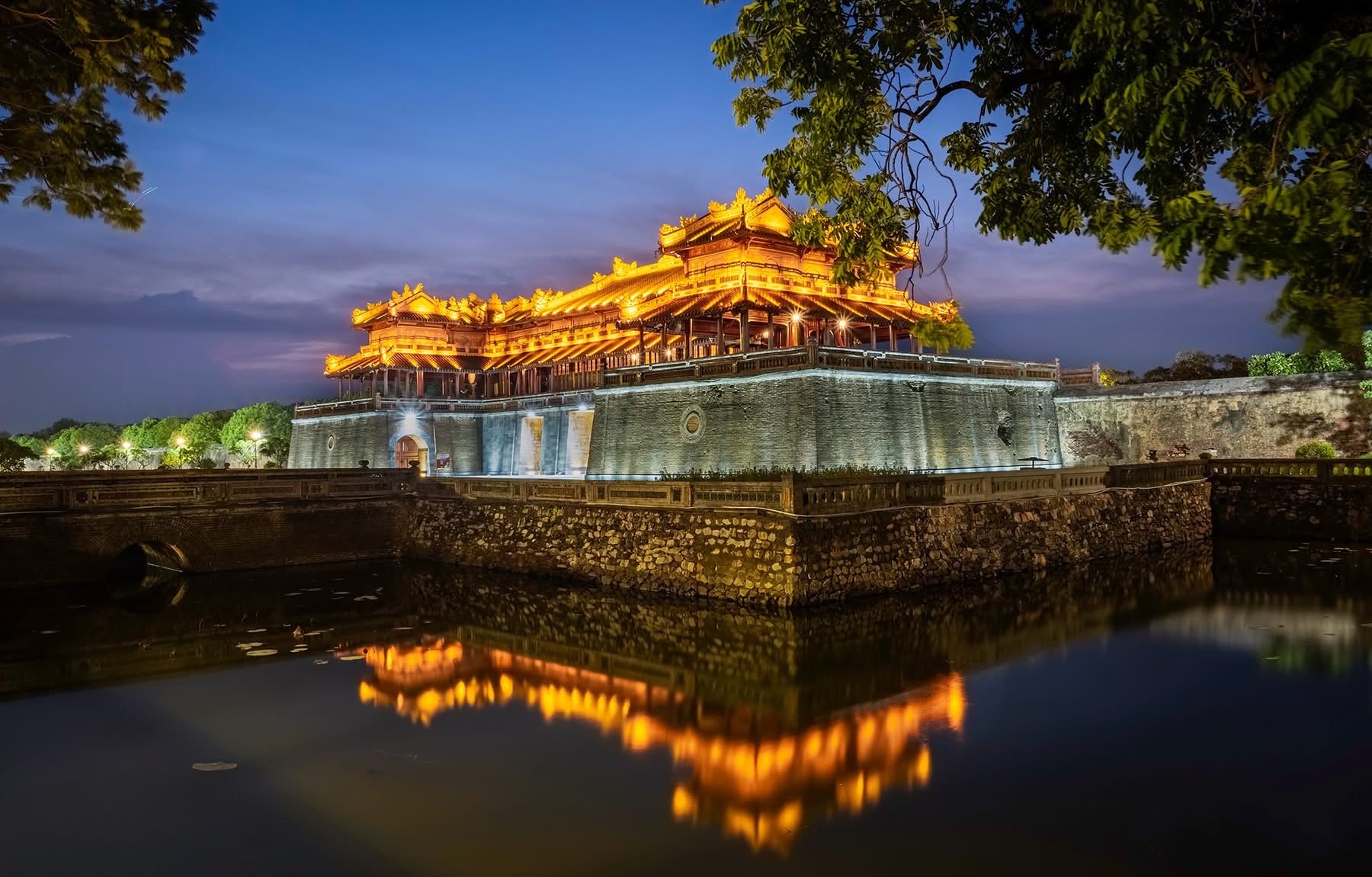
The first major attraction should be the Imperial City, the walled complex that served as the political and cultural heart of the Nguyen Dynasty. The broader Complex of Hue Monuments is one of Vietnam’s major heritage destinations and includes the Imperial Citadel, royal tombs and religious structures.
Allow at least two to three hours for the Imperial City. Walk through the main gates and courtyards, see the surviving ceremonial buildings and learn about the Nguyen emperors who ruled Vietnam from Hue.
After sightseeing, take a slow walk beside the Perfume River. In the evening, explore Hue’s food scene. This is the perfect time to try bun bo Hue, one of Central Vietnam’s most famous dishes.
Breakfast: Depending on arrival, at your departure city or hotel.
Lunch: Local Hue restaurant.
Dinner: Hue specialties, including bun bo Hue and traditional small dishes.
Overnight: Hue.
Day 2: Explore Hue’s Imperial Heritage
Use your second day to see the attractions outside the Imperial Citadel.
Start with Thien Mu Pagoda, one of Hue’s best-known landmarks. The pagoda overlooks the Perfume River and is particularly attractive in the morning when the area is relatively peaceful.
Continue to one or two of Hue’s royal tombs. Minh Mang, Tu Duc and Khai Dinh are the three most commonly visited. Each has a very different design, so visiting two is generally better than trying to see every tomb in one day.
Minh Mang’s Tomb is known for its harmonious relationship with the surrounding landscape. Tu Duc’s Tomb has a garden-like character and reflects the emperor’s personal connection with the complex. Khai Dinh’s Tomb is dramatically different, with ornate decoration and architectural influences from Europe.
In the afternoon, return to Hue city for a relaxed coffee or food experience. You can also visit a local craft area or join a cooking experience focused on Hue cuisine.
Hue’s cuisine deserves more attention than simply trying bun bo Hue. Look for banh beo, banh nam, banh loc, nem lui and com hen.
Breakfast: Hotel breakfast.
Lunch: Local restaurant near the royal tombs.
Dinner: Hue food experience.
Overnight: Hue.
Day 3: Hue to Da Nang via Hai Van Pass
Day 3 is one of the highlights of the entire itinerary because the journey itself becomes an attraction.
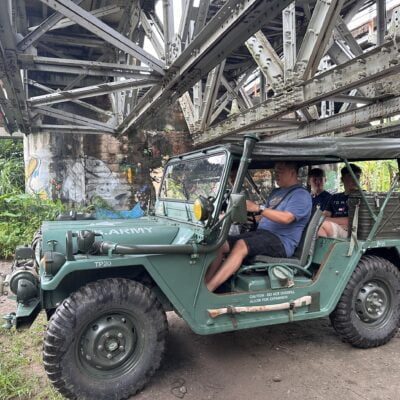
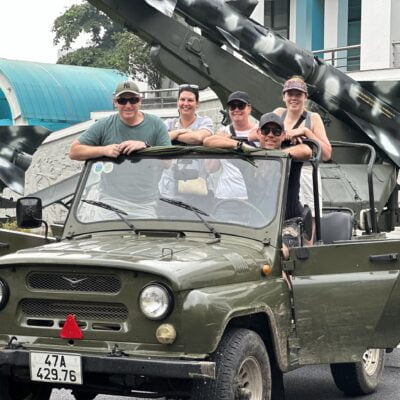
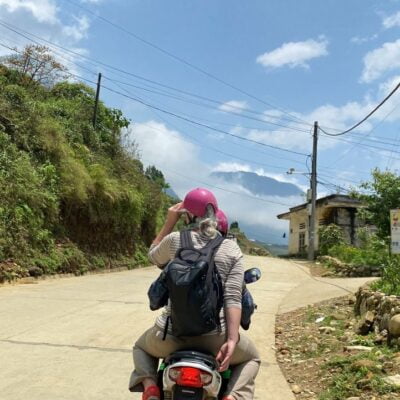
Leave Hue in the morning by private car, Jeep, motorbike with experienced local driver or another suitable vehicle. Travel through the countryside toward Lang Co, where mountains, lagoon and coastline come together.
Continue toward the Hai Van Pass.
The Hai Van Pass is one of Vietnam’s most famous scenic roads, crossing the mountains between Hue and Da Nang. The route provides views of the sea, forests, bays and coastline. Official tourism information specifically highlights the pass as a major Central Vietnam attraction.
A private vehicle is particularly valuable here because you can stop at viewpoints instead of simply driving through.
After crossing the pass, continue toward Da Nang.
Check into your hotel and spend the afternoon at My Khe Beach. Early evening is a good time for a walk along the waterfront.
For dinner, explore Da Nang’s street food. Try mi Quang, banh xeo, bun thit nuong and fresh seafood. Official tourism information identifies mi Quang and Da Nang’s wider street-food culture as essential parts of the city experience.
Breakfast: Hotel breakfast in Hue.
Lunch: Seafood or local restaurant around Lang Co.
Dinner: Da Nang street food or seafood.
Overnight: Da Nang.
Day 4: Discover Da Nang
Day 4 is dedicated to Da Nang.
Start early at Son Tra Peninsula. The forested peninsula extends into the sea and offers panoramic views over Da Nang Bay. It is also home to the endangered red-shanked douc langur.
Visit Linh Ung Pagoda and the giant Lady Buddha statue before continuing toward the city.
After lunch, explore the Marble Mountains. The five limestone and marble formations contain caves, pagodas and shrines and are located only a short distance from central Da Nang. Official tourism information recommends visiting in the morning when temperatures are cooler, but an afternoon visit can also work within a carefully planned itinerary.
The caves involve stairs, so wear comfortable shoes.
Return to central Da Nang in the late afternoon. Spend the evening around the Han River, where Dragon Bridge provides one of the city’s best-known nighttime views.
For travelers there on a Saturday or Sunday, the Dragon Bridge fire-and-water performance is traditionally scheduled for 9:00 PM.
Breakfast: Hotel breakfast.
Lunch: Mi Quang or Da Nang local specialties.
Dinner: Seafood dinner by the coast.
Overnight: Da Nang.
Day 5: Da Nang to Hoi An
On Day 5, slow the pace.
You can travel from Da Nang to Hoi An directly in less than an hour, but don’t simply treat the route as a transfer. A better option is to explore the countryside around Hoi An before checking into your accommodation.
One option is Cam Thanh Coconut Village, where waterways and coconut palms provide a completely different landscape from the city. A basket-boat experience can be included, although choosing a responsible local operator is important.
Another option is a private countryside experience involving rice fields, vegetable gardens, local farming communities and bicycle routes.
Official tourism itineraries recommend countryside cycling, farming activities and fishing experiences around Hoi An as ways to see everyday rural life beyond the Ancient Town.
After lunch, check into your Hoi An hotel.
Spend the afternoon walking through the Ancient Town. See the Japanese Covered Bridge, historic merchant houses, temples, small streets and riverside buildings.
Stay until evening.
As darkness falls, Hoi An changes completely. Lanterns illuminate the old streets and reflections appear across the Thu Bon River.
The monthly lantern festival traditionally takes place on the 14th day of the lunar month, around the full moon.
Even when you are not visiting during the festival, Hoi An is still beautiful after sunset.
Breakfast: Hotel breakfast.
Lunch: Hoi An local restaurant.
Dinner: Cao lau, white rose dumplings and other Hoi An specialties.
Overnight: Hoi An.
Day 6: My Son or a Full Hoi An Experience
Day 6 gives you a choice.
Travelers interested in history should visit My Son Sanctuary in the morning.
The site contains red-brick temples associated with the Champa civilization and represents one of Central Vietnam’s most important archaeological landscapes. Official Vietnamese tourism information includes My Son as a major heritage site and places it within easy reach of Hoi An.
Visit early because temperatures can become high and much of the archaeological area is exposed.
Return to Hoi An for lunch.
In the afternoon, choose a slower activity. You could join a Vietnamese cooking class, take a bicycle ride through the countryside, visit a traditional craft village or relax at An Bang Beach.
For first-time visitors, I recommend combining a cooking class with a short countryside experience. This adds something interactive to a trip that otherwise includes many monuments and viewpoints.
In the evening, return to the Ancient Town for dinner and another walk after dark.
Breakfast: Hotel breakfast.
Lunch: Local Hoi An restaurant.
Dinner: Hoi An cooking or food experience.
Overnight: Hoi An.
Day 7: Relax in Hoi An and Depart
Do not schedule a major attraction on your final morning.
Have breakfast at the hotel and take one final walk through Hoi An before the streets become busy.
You can also visit An Bang Beach, have Vietnamese coffee, purchase local crafts or collect tailored clothing if you arranged tailoring earlier in the trip.
For travelers catching an evening flight from Da Nang, there is enough time for a relaxed morning in Hoi An followed by a private transfer to Da Nang International Airport.
For an earlier flight, leave Hoi An with sufficient buffer for traffic and airport procedures.
Breakfast: Hotel breakfast.
Lunch: Hoi An or Da Nang.
Dinner: Depending on departure time.
The Best Way to Travel Between Hue, Da Nang and Hoi An
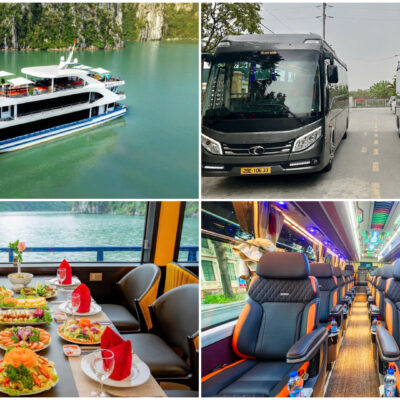
For a seven-day itinerary, private transportation is often the best choice because it turns the transfer days into sightseeing opportunities.
The most scenic section is Hue → Lang Co → Hai Van Pass → Da Nang.
A private car lets you stop for photographs, lunch and viewpoints.
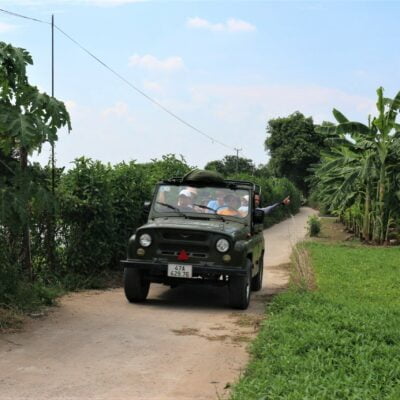
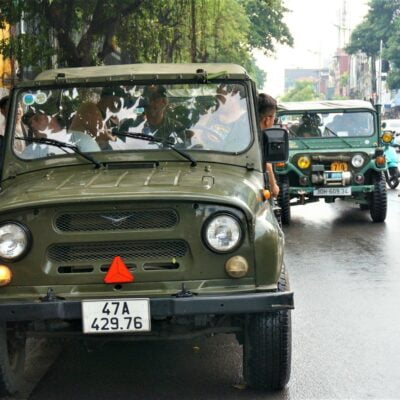
A private Jeep offers an open-air experience and is particularly attractive for travelers who want better views along the mountain road.
An experienced local motorbike driver provides a more adventurous option for travelers who want to experience the Hai Van Pass on two wheels without having to navigate Central Vietnam themselves.
The train is another possibility between Hue and Da Nang, particularly for travelers who prefer a slower scenic journey, but it does not provide the same flexibility for stops.
Why Stay in Hue for Two Nights?
One night in Hue is possible but rushed.
Two nights allows you to see the Imperial City on one day and the royal tombs and Thien Mu Pagoda on another.
It also gives you time to understand Hue’s food culture instead of treating the city as a collection of monuments.
For history lovers, three nights can be even better.
Why Stay in Da Nang for Two Nights?
Two nights is enough to cover the city’s main highlights without making it feel like a rushed beach stop.
You can visit Son Tra, Marble Mountains and My Khe Beach while also leaving time for local food and the Han River.
Da Nang is also a practical base because its international airport provides convenient connections to other Vietnamese cities.
Why Stay in Hoi An for Two Nights?
Hoi An is best experienced after sunset, so a day trip from Da Nang cannot fully reproduce the experience.
Two nights allow you to see the Ancient Town during the day, return in the evening, explore the countryside and still have time for My Son or An Bang Beach.
For couples, three nights can be particularly enjoyable.
Central Vietnam Itinerary for Food Lovers
Food should not be treated as something you do only at dinner.
In Hue, start with bun bo Hue and explore smaller steamed rice cakes, dumplings and local dishes.
In Da Nang, try mi Quang, banh xeo, seafood and local grilled dishes.
In Hoi An, look for cao lau, white rose dumplings, com ga and banh mi.
The three cities offer noticeably different food traditions, making this seven-day route almost a culinary journey by itself.
Central Vietnam Itinerary for Couples
For couples, the itinerary can be made more relaxed.
Spend the first two days exploring Hue at a comfortable pace.
Travel privately over the Hai Van Pass.
Stay near My Khe Beach in Da Nang.
Move to Hoi An for two nights and finish with a lantern-lit evening in the Ancient Town.
Adding an evening at An Bang Beach can make the final part of the trip even slower and more romantic.
Central Vietnam Itinerary for Families
Families can follow the same route with a few adjustments.
Keep the Imperial City visit shorter if younger children become tired.
Choose a private vehicle between destinations.
At Marble Mountains, focus on the most accessible caves and viewpoints.
In Hoi An, include a bicycle ride, cooking class or basket boat experience rather than spending the entire day inside the Ancient Town.
For families with older children, My Son and the Hai Van Pass can add more variety.
Central Vietnam Itinerary for Seniors
For older travelers, private transportation is particularly useful.
Hue’s main attractions can be spread across two days rather than completed in one long excursion.
The Hai Van Pass can be enjoyed from a comfortable vehicle.
In Hoi An, choose shorter walking routes and arrange transportation close to the Ancient Town where possible.
There is no need to participate in every physically demanding activity to appreciate Central Vietnam.
Central Vietnam Itinerary for Adventure Travelers
Adventure travelers can make several substitutions.
Replace a relaxed Da Nang morning with Son Tra exploration.
Add a motorcycle or Jeep experience across the Hai Van Pass.
Replace a leisurely Hoi An afternoon with cycling through the countryside.
Travelers with extra time can extend the route to Phong Nha, where caves and outdoor activities become the main focus.
Should You Add Phong Nha to a 7-Day Trip?
For most travelers, I would not add Phong Nha to this exact seven-day route.
Phong Nha is excellent, but reaching it adds substantial transportation time.
If caves are your highest priority, restructure the itinerary:
Hue → Phong Nha → Hue/Da Nang → Hoi An
rather than simply adding Phong Nha as another destination.
Official tourism itineraries also separate Phong Nha into a dedicated section of longer Central Vietnam heritage routes.
Should You Add Quy Nhon or Phu Yen?
Not to a balanced seven-day first trip.
Quy Nhon and Phu Yen are better additions when you have 10–14 days.
They offer quieter beaches and coastal scenery but require additional road travel.
For seven days, Hue, Da Nang and Hoi An provide a more complete experience.
Best Time for This 7-Day Itinerary
Weather varies across Central Vietnam, but a broad planning window is February to May, when temperatures are generally comfortable for heritage sightseeing and road travel.
For Da Nang specifically, official tourism guidance identifies March–May and September–October as favorable periods, while June–August can also offer relatively calm seas and less rain. The wetter period generally runs from November into February.
Because Hue, Da Nang and Hoi An can experience different weather patterns, always check the forecast shortly before your trip.
What to Pack for Central Vietnam
For a seven-day trip, pack relatively lightly.
Bring comfortable walking shoes, breathable clothing, sun protection, a light rain jacket, swimwear and one smart-casual outfit for evenings.
If you are traveling during a wetter period, waterproof protection for electronics is useful.
For the Hai Van Pass, bring an extra layer even when Da Nang is warm.
Where to Stay
A convenient accommodation strategy is:
Night 1: Hue
Night 2: Hue
Night 3: Da Nang
Night 4: Da Nang
Night 5: Hoi An
Night 6: Hoi An
This means only two hotel changes during the trip.
For Hue, stay around the central area or near the Perfume River.
In Da Nang, choose between a beachfront hotel around My Khe or a central property near restaurants and the river.
In Hoi An, stay either close to the Ancient Town for evening walks or near An Bang Beach for a quieter atmosphere.
Central Vietnam Itinerary: Hotel Changes vs Staying in One Base
Some travelers consider staying in Da Nang for all seven days and taking day trips to Hue and Hoi An.
It is possible, but I don’t recommend it for a first visit.
You lose the atmosphere of staying in Hoi An after the day-trippers leave.
You also turn Hue into a long excursion instead of experiencing the city at a relaxed pace.
The Hue → Da Nang → Hoi An hotel sequence is more rewarding.
How Much Does a 7-Day Central Vietnam Trip Cost?
The budget depends heavily on hotel level, private transportation and activities.
A budget traveler can use shared transportation and simple hotels.
A mid-range traveler can choose 4-star hotels, private transfers and selected guided experiences.
A premium traveler can use private cars or Jeeps, boutique hotels, private guides and upgraded dining.
Rather than calculating the trip only by price, compare the value of hotel location, transport, guide quality, private experiences and included meals.
Why Choose a Private Central Vietnam Tour?
A private itinerary makes particular sense in Central Vietnam because the region is compact enough for a vehicle to become part of the sightseeing experience.
A private car can stop at the Hai Van Pass, Lang Co, countryside roads and local restaurants.
A private guide can also change the day’s schedule when weather is unfavorable.
This is especially useful for families, couples and travelers who want to avoid large tour groups.
Central Vietnam Tours Led by Women
A Central Vietnam Tour Led by Women can combine the main destinations with local food and cultural experiences while keeping the itinerary private.
The women-led format is suitable for couples, families, solo travelers and private groups. It is not a women-only travel concept.
A local female guide can add context to Hue’s imperial history, introduce regional cuisine in Da Nang and Hoi An, and connect travelers with local artisans, food producers and family-run businesses.
A More Relaxed 7-Day Version
Travelers who prefer less sightseeing can make a small adjustment.
Spend:
Days 1–2: Hue
Days 3–4: Da Nang
Days 5–7: Hoi An
Use the extra day in Hoi An for the beach, countryside, food and relaxation.
This is an excellent option for couples and travelers who don’t want seven consecutive days of organized activities.
A More Active 7-Day Version
Active travelers can instead choose:
Day 1: Hue Imperial City.
Day 2: Hue royal tombs + countryside.
Day 3: Hai Van Pass.
Day 4: Son Tra + Marble Mountains.
Day 5: Hoi An cycling + countryside.
Day 6: My Son + Ancient Town.
Day 7: Beach + departure.
This version has more movement and is better suited to travelers who enjoy full days.
Central Vietnam 7-Day Itinerary Without a Tour Group
Independent travelers can easily follow this route, but advance planning is recommended for transportation and accommodation.
The most important booking is the Hue → Da Nang → Hoi An transportation, especially if you want a private vehicle over the Hai Van Pass.
Activities such as My Son, cooking classes and countryside cycling can generally be organized after arrival, but booking ahead gives you more choice during busy periods.
Final Thoughts
The perfect 7-day Central Vietnam itinerary does not need to include every destination in the region. The strongest first-time route is Hue → Da Nang → Hoi An, because these three destinations provide an extraordinary variety of experiences within a manageable geographic area.
Spend two nights in Hue to appreciate the Imperial City, royal tombs, Thien Mu Pagoda and local cuisine. Travel to Da Nang via the Hai Van Pass, making the journey itself one of your Central Vietnam highlights. Then spend two or three nights in Hoi An, where historic architecture, lanterns, local food, countryside and beaches provide a slower finish. Official tourism itineraries similarly connect Hoi An, My Son, Hue and the Hai Van Pass as a core Central Vietnam heritage journey.
The beauty of this route is its contrast.
Hue is about history.
Da Nang is about beaches, mountains and modern Central Vietnam.
Hoi An is about heritage, food and atmosphere.
Together, they create a seven-day journey that feels varied without becoming exhausting.
Explore imperial palaces in Hue, cross the legendary Hai Van Pass, enjoy Da Nang’s coastline and finish beneath Hoi An’s lanterns. That is Central Vietnam at its best.
Explore Central Vietnam With Vietnam Women Travel
For travelers looking for private and small-group experiences led by women, Vietnam Women Travel can customize the classic seven-day route around Hue, Da Nang and Hoi An.
The itinerary can include Hue’s Imperial City and royal tombs, the Hai Van Pass, Da Nang’s beaches and Marble Mountains, Hoi An Ancient Town, My Son Sanctuary, countryside cycling, local food and private cultural experiences.
Transportation can be arranged around your preferred pace, whether you want a comfortable private car, an open-air Jeep experience or another suitable option. The itinerary is suitable for couples, families, solo travelers and private groups.
Contact Vietnam Women Travel
VIETNAM WOMEN TRAVEL
Address: 91 Tho Nhuom Street, Hoan Kiem District, Hanoi, Vietnam
Phone / WhatsApp 24/7: +84 982 416 518
Second Contact: +84 981 090 989
Website: vietnamwomentravel.com
Private Central Vietnam Tours Led By Women
Hue Tours Led By Women
Da Nang Tours Led By Women
Hoi An Tours Led By Women
My Son Tours
Hai Van Pass Tours
Private & Small-Group Vietnam Experiences
Discover Central Vietnam with local women guides—from Hue’s imperial heritage and the Hai Van Pass to Da Nang’s beaches and the lantern-lit streets of Hoi An.