Central Vietnam Travel Guide: Hue, Hoi An, Da Nang & Beyond
Central Vietnam is where history, beaches, mountains, ancient architecture and some of the country’s most distinctive food traditions come together. A journey through the region can take you from the imperial city of Hue to the lantern-lit streets of Hoi An, across the dramatic Hai Van Pass, into the modern coastal city of Da Nang, and onward to the caves of Phong Nha, the beaches of Quy Nhon or the highlands of Da Lat.
Unlike Northern Vietnam, where mountains and cooler landscapes dominate, Central Vietnam offers an especially varied combination of cultural heritage, tropical coastline, historical sites, national parks and regional cuisine. Official travel information highlights Hue and Hoi An for their cultural importance, Da Nang for beaches and outdoor attractions, and Phong Nha-Ke Bang for its spectacular cave systems.
For first-time visitors, the most practical route is often Hue → Da Nang → Hoi An, although the journey can easily be extended to Phong Nha, My Son, Quy Nhon, Phu Yen, Nha Trang or Da Lat. The ideal route depends on whether your priority is history, food, beaches, adventure, photography or a slower private journey.
Central Vietnam at a Glance
| Destination | Best For | Recommended Stay |
|---|---|---|
| Hue | Imperial history, temples, royal cuisine | 2–3 days |
| Da Nang | Beaches, food, city life | 2–3 days |
| Hoi An | Ancient architecture, lanterns, food | 2–3 days |
| Phong Nha | Caves, adventure, nature | 2–3 days |
| My Son | Champa history | Half or full day |
| Quy Nhon | Beaches, seafood, quieter coast | 2–3 days |
| Phu Yen | Scenic coastline, local life | 2–3 days |
| Nha Trang | Beaches, islands, resorts | 2–4 days |
| Da Lat | Cool climate, nature, coffee | 2–3 days |
Why Visit Central Vietnam?
Central Vietnam is particularly attractive because distances between major highlights are manageable, while the experiences are dramatically different.
You can spend one morning exploring the Imperial City in Hue, drive over the Hai Van Pass in the afternoon and have dinner in Hoi An the following day. The region also has excellent beach destinations, national parks and some of Asia’s most impressive caves.
Vietnam’s official tourism information describes Central Vietnam as a region of distinctive cuisine, impressive caves, coastal cities, forests and historical highlights.
1. Hue – Vietnam’s Imperial City
Hue should be at the top of any Central Vietnam itinerary for travelers interested in history and architecture.
Hue served as the imperial capital of Vietnam during the Nguyen Dynasty, when 13 emperors ruled from the city over 143 years. The Complex of Hue Monuments contains the Imperial Citadel, royal tombs, temples and other structures associated with the dynasty.
But Hue is more than historical buildings. The city has a distinctive culinary tradition, quiet riverside scenery and a slower pace than Da Nang.
The Imperial City of Hue
The Imperial City, or Dai Noi, is the essential first stop.
Within the massive citadel walls you can see gates, courtyards, ceremonial halls, gardens and surviving royal structures. Some sections were damaged during periods of war, but restoration continues to reveal the scale and complexity of the former imperial capital.
Allow at least half a day for a meaningful visit.
Hue Royal Tombs
The royal tombs scattered outside the city provide another perspective on the Nguyen Dynasty.
Among the most frequently visited are the tombs of Khai Dinh, Minh Mang and Tu Duc.
Khai Dinh’s tomb stands out for its ornate architecture and strong European influence. Minh Mang’s complex is more harmonious with the surrounding natural landscape, while Tu Duc’s site has a quieter garden atmosphere.
A private car is the most convenient way to visit several tombs in one day.
Thien Mu Pagoda
Thien Mu Pagoda overlooks the Perfume River and has become one of Hue’s most recognizable landmarks.
The seven-story Phuoc Duyen Tower is particularly associated with the site.
Visiting in the late afternoon can be especially pleasant because the temperature is generally cooler and the river takes on softer light.
Perfume River
The Perfume River runs through the heart of Hue and provides a natural way to understand the city’s geography.
A short river cruise can be combined with Thien Mu Pagoda, while evening walks along the river provide a quieter alternative to structured sightseeing.
Hue Royal Cuisine
Hue is one of the best places in Vietnam to explore the relationship between food and royal history.
Try local dishes such as bun bo Hue, banh beo, banh nam, banh loc, com hen and nem lui.
The cuisine is known for careful presentation and a balance of textures and flavors. A local food tour can be one of the best ways to move beyond the famous bun bo Hue and discover smaller dishes.
2. Da Nang – Beaches, Mountains and Modern Central Vietnam
Da Nang is Central Vietnam’s main coastal city and one of the region’s most convenient bases.
It has an international airport, railway station, modern hotels, long beaches and easy access to Hoi An, Marble Mountains and the Hai Van Pass. Official tourism information highlights Da Nang’s beaches, Son Tra Peninsula, Marble Mountains, street food and Cham heritage.
Da Nang works well for travelers who want a mixture of city convenience and nearby nature.
My Khe Beach
My Khe Beach is the city’s best-known beach.
The long sandy coastline is popular with both visitors and local residents, especially in the early morning and around sunset.
Early morning is worth experiencing because fishermen, runners, swimmers and local families create a completely different atmosphere from the middle of the day.
Son Tra Peninsula
The Son Tra Peninsula rises directly from the coast northeast of Da Nang and provides one of the easiest escapes from the city.
The peninsula is covered in forest and is home to the endangered red-shanked douc langur. Linh Ung Pagoda and the giant Lady Buddha statue are among the best-known attractions.
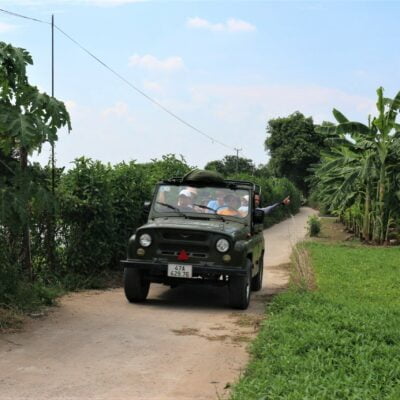
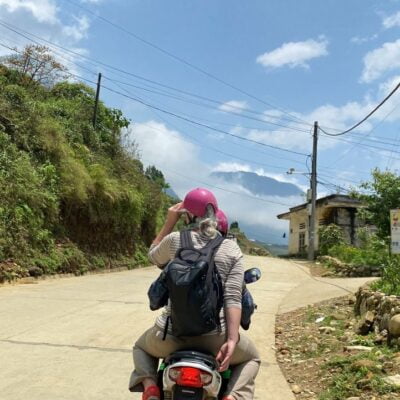
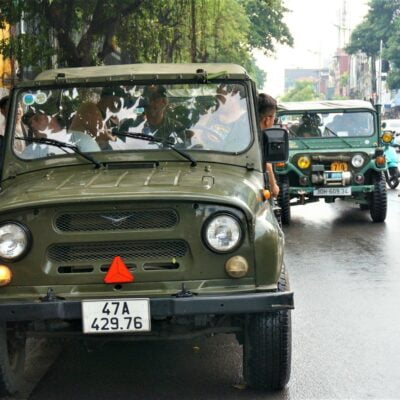
The mountain roads are particularly enjoyable by motorbike, private car or Jeep.
Linh Ung Pagoda
The Linh Ung Pagoda at Son Tra contains the famous 67-meter Lady Buddha statue, which overlooks the coastline.
The site combines religious architecture with broad views across Da Nang Bay.
Go early in the day for cooler temperatures and a better chance of seeing the coastline clearly.
Marble Mountains
The Marble Mountains are a group of five limestone and marble formations south of central Da Nang.
The mountains contain caves, shrines, pagodas and viewpoints, and are named after the five elements: Water, Wood, Metal, Fire and Earth.
The attraction is relatively close to Da Nang, making it easy to combine with Hoi An or a half-day city tour.
Wear comfortable shoes because visiting the caves and viewpoints involves stairs.
Da Nang’s Food Scene
Da Nang has a strong regional food culture.
One of the city’s signature dishes is mi Quang, a turmeric-colored noodle dish commonly served with meat or seafood, peanuts, herbs and a small amount of flavorful broth.
Also look for banh xeo, bun thit nuong, seafood and local noodle soups.
A food-focused evening is an excellent way to experience the city beyond its beaches.
Dragon Bridge
The Dragon Bridge has become one of Da Nang’s most recognizable modern landmarks.
At night, the illuminated dragon creates a dramatic cityscape, and the weekend fire-and-water show traditionally takes place at 9:00 PM on Saturday and Sunday.
The bridge is especially enjoyable when combined with the nearby riverside cafés and night market.
3. Hoi An – The Ancient Trading Port
Hoi An is one of the most distinctive cities in Vietnam.
The ancient town grew into a major international trading port from the 16th to 19th centuries, when merchants from China, Japan, Europe and other parts of Asia interacted here. Its preserved architecture and historic urban layout led to UNESCO World Heritage recognition in 1999.
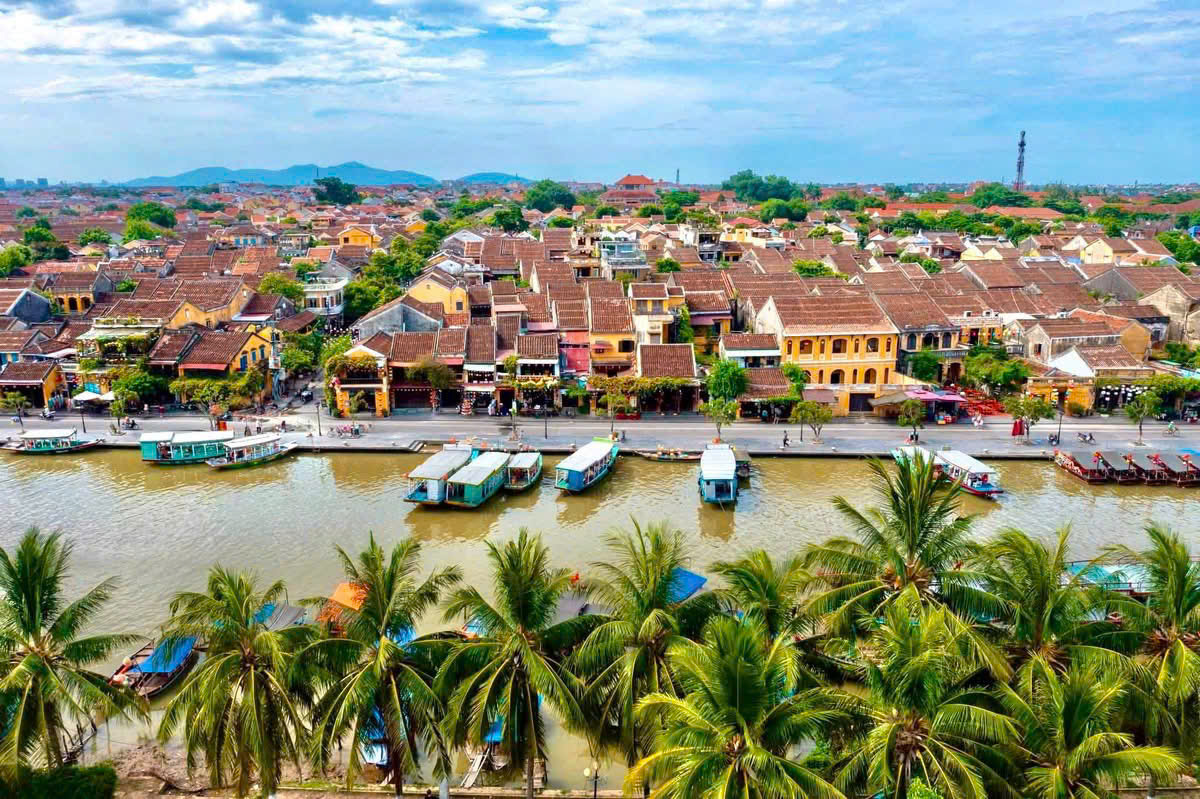
Today, Hoi An is famous for yellow-painted shop houses, lanterns, riverside streets, tailor shops, cafés and food.
Hoi An Ancient Town
The ancient town is best explored on foot.
Walk through the narrow streets, visit historic merchant houses, see the Japanese Covered Bridge and explore small temples, galleries and cafés.
The atmosphere changes throughout the day.
Morning is quieter.
Afternoon brings more activity.
Evening transforms the town with lanterns and riverside lights.
Japanese Covered Bridge
The Japanese Covered Bridge is one of Hoi An’s most recognizable landmarks and a symbol of the ancient town.
It reflects the multicultural trading history that helped shape the city’s architecture.
Visit early in the day if you want photographs with fewer crowds.
Lanterns and the Full-Moon Festival
Lanterns have been part of Hoi An’s identity for centuries, influenced by Chinese and Japanese traders who established communities in the old trading port. The monthly lantern festival traditionally takes place on the 14th day of the lunar month around the full moon.
During the event, electric lighting is reduced in parts of the old town, allowing the lanterns to dominate the streetscape.
It is one of the most photogenic evenings in Central Vietnam.
Hoi An by Bicycle
One of the best ways to explore Hoi An is by bicycle.
Once outside the ancient town, the landscape changes quickly to rice fields, vegetable gardens, waterways and small villages.
A countryside bicycle tour provides a useful contrast to the heavily visited historic center.
Hoi An Cooking Class
Food is central to Hoi An’s identity.
A cooking class can begin with a local market visit followed by an explanation of herbs, noodles, vegetables and sauces before you prepare several Vietnamese dishes.
It is especially useful for travelers who want an interactive cultural experience rather than another sightseeing stop.
Hoi An Tailor Experience
Hoi An is famous for custom tailoring.
Travelers can order suits, dresses, shirts and other garments, with some shops able to complete work within a short stay.
If tailoring is important, allow enough time for at least one fitting and possible adjustments.
Hoi An Street Food
Try local specialties such as:
Cao lau
White rose dumplings
Hoanh thanh
Com ga Hoi An
Banh mi
The food is one of the best reasons to stay in Hoi An for at least two nights.
4. Cam Thanh Coconut Village
Near Hoi An, Cam Thanh offers waterways, coconut palms and countryside experiences.
Traditional basket-boat rides have become a popular tourist activity, but the surrounding waterways also provide an opportunity to understand the fishing and agricultural environment around Hoi An.
Choose a responsible local operator and avoid experiences that treat local life purely as a staged performance.
5. An Bang Beach
An Bang Beach provides an easy escape from Hoi An’s historic center.
The beach has restaurants, cafés and places to relax, making it possible to combine culture in the morning with swimming or sunset by the sea.
For travelers who want a slower Hoi An itinerary, staying closer to the beach can be an attractive alternative to staying directly inside the old town.
6. My Son Sanctuary
My Son Sanctuary is one of the most important Champa archaeological sites in Central Vietnam.
The temple complex lies around 35 kilometers inland from Hoi An and contains red-brick structures dating from the Champa civilization. The site is recognized as a UNESCO World Heritage property.
Visit early because temperatures can become high and much of the complex is exposed to the sun.
A guide is worthwhile because the ruins become much more interesting when you understand their religious and historical context.
7. Hai Van Pass – Central Vietnam’s Great Scenic Road
The Hai Van Pass is one of Vietnam’s most famous coastal roads.
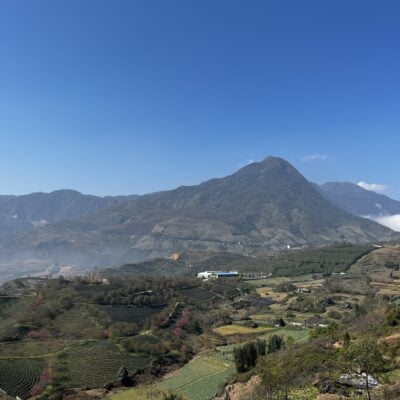
The route connects Hue, Da Nang and Hoi An and climbs through forested mountains between the coast and the inland valleys. Vietnam’s official tourism information describes it as one of the country’s most famous scenic roads.
The pass can be traveled by:
Motorbike
Private car
Jeep
Train
For travelers who do not want to ride a motorcycle, a private car or Jeep is an excellent alternative.
Hai Van Pass by Train
The railway provides a slower way to appreciate the mountain and coastal scenery without worrying about driving.
For travelers who enjoy scenic journeys, the train can be particularly enjoyable between Hue and Da Nang.
However, if you want to stop at viewpoints along the road, a private vehicle is more flexible.
8. Lang Co Beach
On the northern side of the Hai Van Pass, Lang Co offers a long beach and lagoon landscape surrounded by mountains.
It is a useful stopping point between Hue and Da Nang.
A seafood lunch here can break up the drive and turn the road journey into part of the itinerary rather than simply a transfer.
9. Phong Nha – Caves and Adventure
For travelers interested in nature and adventure, Phong Nha-Ke Bang National Park is one of Central Vietnam’s most important destinations.
The area is famous for its spectacular cave systems, limestone mountains, rivers and forests. It is home to Son Doong Cave, widely described as the world’s largest cave passage by volume, although access is highly limited and requires specialized expedition arrangements. Vietnam’s official tourism site highlights Son Doong and the broader Phong Nha cave system as major Central Vietnam attractions.
You do not need to join a Son Doong expedition to enjoy Phong Nha.
Phong Nha Cave
Boat trips into Phong Nha Cave offer one of the most accessible ways to see the area’s underground landscapes.
The river enters the cave system, allowing travelers to experience large chambers and limestone formations from the water.
Paradise Cave
Paradise Cave is another major attraction around Phong Nha, famous for its enormous chambers and impressive stalactites.
It is more accessible than some of the region’s specialized adventure caves.
Dark Cave
Dark Cave offers a more active experience involving water, ziplining and exploration.
It is particularly suitable for younger adventure travelers who want something more physical than a standard cave tour.
10. Quy Nhon – Beaches Beyond the Main Tourist Route
Quy Nhon is a strong choice for travelers who want Central Vietnam’s coastline without the same level of international attention as Da Nang or Nha Trang.
The city combines beaches, seafood, coastal landscapes and nearby fishing villages.
Official Central Vietnam tourism information highlights Quy Nhon for its beaches, clear-water destinations such as Ky Co and nearby Bai Xep, while noting its comparatively lower tourist density.
Ky Co Beach
Ky Co is known for turquoise water, cliffs and sandy beaches.
It can be reached through organized local excursions or by road and boat depending on the itinerary.
The surrounding coastline is particularly attractive for travelers interested in photography and snorkeling.
Eo Gio
Eo Gio, meaning “Wind Strait,” offers one of the region’s strongest coastal viewpoints.
Walkways follow the cliffs and provide views over the sea and surrounding rocky landscape.
11. Phu Yen – Quiet Coastal Vietnam
Phu Yen is one of the best choices for travelers looking beyond the heavily promoted Central Vietnam route.
The province has long beaches, fishing villages, dramatic coastal rock formations and relatively undeveloped stretches of coastline.
Highlights include Ganh Da Dia, Bai Xep, Vung Ro Bay and Dai Lanh Cape.
Phu Yen is ideal for travelers who want to combine road trips with local seafood and quiet beaches.
12. Ganh Da Dia
Ganh Da Dia is one of Phu Yen’s geological highlights.
The coast features unusual dark basalt formations arranged in patterns resembling stacked plates.
The site is particularly photogenic in the early morning when the light is softer and the sea is calmer.
13. Vung Ro Bay
Vung Ro Bay is a beautiful coastal area surrounded by mountains.
The bay has both scenic significance and historical importance, as the coastline once played a role in wartime maritime supply operations.
Today, seafood restaurants and boat trips make the area easy to include in a private road journey.
14. Nha Trang – Beaches and Islands
Nha Trang is one of Vietnam’s best-known beach destinations and can be included in a longer Central Vietnam itinerary.
The city is more developed and resort-focused than Quy Nhon or Phu Yen, making it a better choice for travelers who want a wide range of hotels, restaurants, nightlife and island excursions.
Popular activities include:
Island hopping
Snorkeling
Diving
Mud baths
Beach time
Seafood dining
15. Da Lat – The Central Highlands Escape
Although Da Lat is inland rather than coastal, it is frequently combined with Central Vietnam itineraries.
The city sits in the Central Highlands and is known for cooler weather, pine forests, flowers, coffee plantations and French-influenced architecture.
It offers a strong contrast with the tropical coast.
Travelers who want a break from beaches and historical cities can add two or three days in Da Lat.
Central Vietnam Food Guide
Food is one of the strongest reasons to travel through Central Vietnam because each major destination has a distinctive culinary identity.
Hue Food
Try:
Bun bo Hue
Banh beo
Banh nam
Banh loc
Com hen
Nem lui
Da Nang Food
Try:
Mi Quang
Banh xeo
Bun thit nuong
Fresh seafood
Vietnamese coffee
Hoi An Food
Try:
Cao lau
White rose dumplings
Com ga
Banh mi
Hoanh thanh
The journey itself becomes a culinary tour when you compare these regional dishes.
Central Vietnam Weather
Weather is an important consideration because Central Vietnam is divided between different climate patterns.
February–May is generally a comfortable period for combining cultural sightseeing and beach destinations.
June–August can be hot, particularly in coastal cities, but beach conditions can be excellent.
September–January brings increasing rain to parts of Central Vietnam, and Hue and Hoi An can experience significant wet weather.
The exact weather pattern varies by destination. Da Nang’s official tourism guidance identifies March–May and September–October as particularly comfortable, while June–August can offer calmer seas and relatively little rain.
How Many Days Do You Need in Central Vietnam?
For the main destinations, allow at least 7 days.
A good first itinerary is:
2 days Hue
2 days Da Nang
2–3 days Hoi An
With 10–14 days, add Phong Nha, My Son, Quy Nhon or another destination.
Trying to see Hue, Da Nang, Hoi An, Phong Nha, Quy Nhon and Nha Trang in one week would be too rushed.
7-Day Central Vietnam Itinerary
Day 1 – Hue
Arrive in Hue and explore the riverside area.
Day 2 – Hue
Visit the Imperial City, royal tombs and Thien Mu Pagoda.
Day 3 – Hue to Da Nang
Travel via Hai Van Pass, stopping at Lang Co and viewpoints.
Day 4 – Da Nang
Explore My Khe Beach, Son Tra Peninsula and Marble Mountains.
Day 5 – Da Nang to Hoi An
Visit Marble Mountains if not done earlier, then continue to Hoi An.
Explore the ancient town in the afternoon and evening.
Day 6 – Hoi An
Spend the day exploring the countryside, local food and beaches.
Day 7 – Hoi An
Visit My Son early, return to Hoi An and continue to the airport or onward destination.
10-Day Central Vietnam Itinerary
For ten days, consider:
Days 1–2: Hue
Days 3–5: Da Nang
Days 6–7: Hoi An
Day 8: My Son
Days 9–10: Phong Nha
This route combines imperial history, beaches, ancient architecture and caves.
14-Day Central Vietnam Itinerary
With two weeks, you can travel more slowly:
Days 1–2: Hue
Days 3–4: Hue and countryside
Days 5–6: Da Nang
Days 7–9: Hoi An
Day 10: My Son
Days 11–12: Quy Nhon
Days 13–14: Phu Yen
This is particularly good for travelers who enjoy combining heritage and coastal scenery.
Best Central Vietnam Route for Couples
Couples can prioritize:
Hue → Hai Van Pass → Da Nang → Hoi An
Add a beach stay near An Bang or a luxury resort outside Da Nang.
Hoi An is particularly attractive in the evening when lanterns illuminate the old town.
Best Central Vietnam Route for Families
Families can choose:
Da Nang → Hoi An → Hue
Da Nang provides beaches and easy transportation.
Hoi An provides cycling, cooking classes and countryside activities.
Hue provides historical attractions that can be adapted to children’s interests.
Best Central Vietnam Route for Adventure Travelers
Choose:
Phong Nha → Hue → Hai Van Pass → Da Nang
Add kayaking, cave exploration, motorbike or Jeep journeys where appropriate.
Best Central Vietnam Route for Food Lovers
Choose:
Hue → Da Nang → Hoi An
This gives you three distinct culinary traditions within a relatively compact route.
Start with bun bo Hue and royal-style small dishes, continue with mi Quang and coastal seafood in Da Nang, then finish with cao lau and Hoi An specialties.
Best Central Vietnam Route for Beach Lovers
Choose:
Da Nang → Quy Nhon → Phu Yen → Nha Trang
This route follows the coast and focuses much more heavily on beaches and seafood.
For a quieter trip, spend more time around Quy Nhon and Phu Yen and less time in Nha Trang.
Central Vietnam by Motorbike
Central Vietnam is one of the best regions in the country for scenic road journeys.
The Hai Van Pass is the classic route, while the coast between Da Nang, Hoi An, Quy Nhon and Phu Yen provides additional opportunities for road trips.
Travelers without sufficient riding experience can hire professional local drivers or travel by private car or Jeep.
Central Vietnam by Private Car
Private car travel is particularly convenient because many major destinations are connected by road.
A private vehicle allows you to stop at:
Hai Van Pass
Lang Co
Marble Mountains
Scenic beaches
Local restaurants
Village roads
This turns transfers into experiences rather than simply moving from one hotel to the next.
Central Vietnam by Train
Train travel is particularly attractive around Hue, Da Nang and the Hai Van Pass.
The railway offers scenic coastal and mountain views without requiring you to drive.
For longer journeys, however, domestic flights can save significant time.
Central Vietnam by Air
Da Nang International Airport is the principal aviation gateway for the central coastal region, with domestic and international connections. Official tourism information also identifies Da Nang as a convenient hub for visiting Hoi An, Hue and nearby attractions.
For travelers on a tight schedule, flying into Da Nang and out of another Central Vietnam airport can reduce unnecessary backtracking.
Where to Stay in Central Vietnam
Choose accommodation according to the experience you want.
Hue: Stay near the Perfume River or central heritage district.
Da Nang: Stay near My Khe for beach access or central Da Nang for restaurants and city life.
Hoi An: Stay inside or near the Ancient Town for walking, or near An Bang for a quieter beach setting.
Phong Nha: Stay around the town or river area.
Quy Nhon: Stay near the beachfront for convenience.
Central Vietnam Off the Main Tourist Route
Travelers with extra time should consider:
Phu Yen
Quy Nhon
Bach Ma National Park
Kon Tum
Pleiku
Quang Binh’s rural areas
These destinations allow you to move beyond the classic Hue–Da Nang–Hoi An route.
Bach Ma National Park
Bach Ma National Park lies between Hue and Da Nang and provides forests, waterfalls, hiking routes and mountain views.
It is an excellent addition for travelers who prefer nature to cities.
The park can be included as a day trip, although an overnight nature itinerary allows more time for walking.
Kon Tum and the Central Highlands
For travelers who want a deeper cultural journey, Kon Tum provides access to Central Highlands communities, traditional communal houses and a very different landscape from the coast.
It requires more travel time, but it can be rewarding for travelers who have already visited the main Central Vietnam destinations.
Responsible Travel in Central Vietnam
Central Vietnam contains sensitive heritage sites, religious spaces and traditional communities.
Dress respectfully at temples and pagodas, follow photography restrictions and avoid touching old structures at heritage sites.
In Hoi An and rural villages, support local businesses rather than relying only on large international facilities.
When visiting Cham heritage sites such as My Son, remember that these are sacred and archaeological spaces, not simply photography locations.
Central Vietnam for Photographers
The region is exceptionally varied for photography.
Hue: Imperial architecture and Perfume River.
Da Nang: beaches, Son Tra and city lights.
Hai Van Pass: mountains and coastline.
Hoi An: yellow architecture and lanterns.
Phong Nha: caves and limestone scenery.
Quy Nhon: beaches and cliffs.
Phu Yen: basalt formations and fishing villages.
Central Vietnam for First-Time Visitors
The strongest first-time combination is:
Hue → Da Nang → Hoi An
These three destinations provide an unusually balanced introduction to Central Vietnam.
Hue covers history.
Da Nang covers beaches and modern city life.
Hoi An covers heritage, food and countryside.
Central Vietnam Beyond Hue, Hoi An and Da Nang
The title says “and Beyond” for a reason.
Once you have experienced the core route, Central Vietnam becomes much more interesting when you look farther south and west.
Phong Nha introduces enormous cave systems.
Quy Nhon offers a quieter coastal atmosphere.
Phu Yen provides dramatic scenery and local fishing communities.
Da Lat brings cool highland weather and coffee culture.
These destinations are best added according to your interests rather than simply collecting more locations.
Final Thoughts
A Central Vietnam Travel Guide naturally begins with Hue, Hoi An and Da Nang, but the region extends far beyond these three cities. Hue provides imperial history and one of Vietnam’s most distinctive culinary traditions. Da Nang combines beaches, mountains, street food and modern city life. Hoi An brings together preserved architecture, lantern-lit evenings, food and the history of an international trading port.
Beyond the main route, Phong Nha offers extraordinary caves, Quy Nhon and Phu Yen provide beautiful coastal landscapes with a quieter feel, and Da Lat gives travelers a completely different highland environment.
For a first visit, allow 7 days for Hue, Da Nang and Hoi An. With 10–14 days, add Phong Nha, My Son or one of the quieter coastal destinations.
Central Vietnam is especially rewarding when you connect the destinations by road. The Hai Van Pass, in particular, turns the journey between Hue and Da Nang into one of the highlights rather than just a transfer.
Explore the imperial city, cross the mountains, relax on Central Vietnam’s beaches, walk beneath Hoi An’s lanterns and continue beyond the famous route to discover a deeper side of the region.
Explore Central Vietnam With Vietnam Women Travel
For travelers looking for private and small-group experiences led by women, Vietnam Women Travel can create a Central Vietnam itinerary around your interests, travel dates and preferred pace.
A private journey can combine Hue, Da Nang and Hoi An with the Hai Van Pass, My Son, Phong Nha, Quy Nhon, Phu Yen or other destinations. You can travel by private car, Jeep or other suitable transportation while allowing time for local food, heritage sites, beaches, villages and photography.
The women-led format is suitable for couples, families, solo travelers and private groups, rather than being limited to women-only travel.
Contact Vietnam Women Travel
VIETNAM WOMEN TRAVEL
Address: 91 Tho Nhuom Street, Hoan Kiem District, Hanoi, Vietnam
Phone / WhatsApp 24/7: +84 982 416 518
Second Contact: +84 981 090 989
Website: vietnamwomentravel.com
Private Central Vietnam Tours Led By Women
Hue Tours Led By Women
Hoi An Tours Led By Women
Da Nang Tours Led By Women
Phong Nha Tours
Private & Small-Group Vietnam Experiences
Discover Central Vietnam with local women guides—from the imperial heritage of Hue and the lantern streets of Hoi An to Da Nang’s beaches, the Hai Van Pass, Phong Nha’s caves and the quieter coastal landscapes beyond the main tourist route.