Hoi An Travel Guide: Best Things to Do, Eat & See
Hoi An is one of the most atmospheric destinations in Vietnam. Located on the central coast near Da Nang, this former trading port combines historic architecture, colorful lanterns, Vietnamese cuisine, beaches, rice fields, craft villages and slow-paced countryside in a compact area that is easy to explore.
The heart of the destination is Hoi An Ancient Town, a UNESCO World Heritage Site that preserves an unusually intact historic urban landscape. Hoi An developed as an international trading port, with connections to Chinese, Japanese, European and other merchants. That history can still be seen in the architecture, food, temples, merchant houses and narrow streets. (vietnam.travel)
But Hoi An is much more than the Ancient Town. The surrounding countryside has rice paddies, vegetable gardens and waterways; An Bang Beach is only a short drive away; Tra Que Vegetable Village offers agricultural experiences; and My Son Sanctuary provides a connection to the Champa civilization. Official tourism information also highlights Hoi An’s food, cycling, beaches, craft traditions and nearby heritage sites as essential parts of the experience. (vietnam.travel)
Hoi An Travel Guide at a Glance
| Experience | Recommended Time | Best For |
|---|---|---|
| Ancient Town | Half–1 day | History & architecture |
| Hoi An at Night | 2–4 hours | Lanterns & atmosphere |
| Cao Lau Food Experience | 1–2 hours | Food lovers |
| Tra Que Village | Half day | Countryside & farming |
| Cam Thanh | Half day | Waterways & family activities |
| An Bang Beach | Half–1 day | Beach & relaxation |
| My Son Sanctuary | Half–1 day | Champa history |
| Countryside Cycling | 2–5 hours | Active travelers |
| Cooking Class | Half day | Food & culture |
| Tailoring | 1–3 days | Shopping |
| Cham Islands | Full day | Sea & snorkeling |
Why Visit Hoi An?
Hoi An is special because you can combine several completely different travel experiences without long transfers.
In the morning, you can walk through centuries-old merchant houses. At lunchtime, you can eat cao lau in a small local restaurant. In the afternoon, you can cycle through rice fields or visit Tra Que Vegetable Village. By sunset, you can be swimming at An Bang Beach, and after dark, you can return to the Ancient Town to see lanterns reflected in the Thu Bon River.
The food is equally distinctive. Hoi An’s history as a trading port influenced its cuisine, while ingredients from nearby farms, rivers and the coast helped create dishes closely associated with the town. Official tourism information highlights cao lau, white rose dumplings, hoanh thanh and other regional specialties as essential food experiences. (vietnam.travel)
Where Is Hoi An?
Hoi An is in Quang Nam Province, approximately 30 kilometers south of Da Nang. Da Nang International Airport is the most convenient airport for international and domestic travelers arriving by air.
The drive from Da Nang to Hoi An usually takes around 45–60 minutes depending on traffic and the pickup location.
Hoi An also works well as part of a wider Central Vietnam itinerary:
Hue → Da Nang → Hoi An
or
Da Nang → Hoi An → My Son → Quy Nhon
How Many Days Do You Need in Hoi An?
For a first-time visitor, 2 nights is a good minimum.
Three nights is better if you want to combine the Ancient Town with countryside, food, beaches and My Son without rushing.
A practical itinerary is:
Day 1: Ancient Town and Hoi An food.
Day 2: Countryside, Tra Que or Cam Thanh, plus evening in the Ancient Town.
Day 3: My Son or An Bang Beach, then departure.
Travelers who mainly want to relax can easily spend four or five nights.
1. Explore Hoi An Ancient Town
The Ancient Town is the essential Hoi An experience.
The historic streets are filled with yellow-painted buildings, wooden merchant houses, temples, cafés, galleries, boutiques and lanterns. Much of the original street layout remains intact, and the historic buildings form the core of the UNESCO-listed heritage area. (vietnam.travel)
Walk rather than rushing from attraction to attraction.
Give yourself time to stop for Vietnamese coffee, enter small historic houses, browse handicrafts and watch everyday life around the streets.
The atmosphere is particularly enjoyable in the early morning before the busiest hours.
2. Visit the Japanese Covered Bridge
The Japanese Covered Bridge is one of Hoi An’s most recognizable symbols.
The bridge reflects the town’s history as an international trading port and is associated with the Japanese merchant community that once lived and traded in Hoi An.
It is a quick visit, but the surrounding streets are worth exploring slowly.
Rather than photograph the bridge and immediately leave, walk through the nearby lanes and historic buildings.
3. Visit the Old Merchant Houses
Several historic houses inside the Ancient Town can be visited with the appropriate heritage ticket.
These homes reveal how prosperous merchant families lived and conducted business centuries ago.
Their architecture combines different influences, including Vietnamese, Chinese and Japanese elements.
Official tourism information recommends buying an Old Town Ticket, which provides access to a selection of heritage buildings. (vietnam.travel)
4. Visit Assembly Halls
Hoi An’s historic assembly halls provide another view of the communities that once lived and traded here.
The buildings associated with Chinese communities contain elaborate gates, courtyards, altars and decorative details.
Look for places such as Fujian Assembly Hall and Cantonese Assembly Hall while walking through the old streets.
These sites help explain why Hoi An’s architecture feels different from many other Vietnamese cities.
5. Walk Along the Thu Bon River
The Thu Bon River is central to Hoi An’s identity.
The river helped make the town a successful trading port and remains one of the best places to appreciate the city’s atmosphere.
Walk along the river in the late afternoon, stop for coffee and stay until the lanterns begin to glow.
The reflections become particularly beautiful after dark.
6. Experience Hoi An at Night
Hoi An changes dramatically after sunset.
The yellow walls become warm against the colorful lanterns, restaurants fill the side streets and the river reflects lights from boats and buildings.
Official tourism information recommends evening walks through the Ancient Town as one of the best ways to experience the heritage area. (vietnam.travel)
This is one reason staying overnight is far better than visiting Hoi An only as a daytime excursion from Da Nang.
7. See the Hoi An Lantern Festival
The traditional lantern festival is associated with the 14th day of each lunar month, around the full moon.
During the festival, electric lighting is reduced in parts of the Ancient Town, allowing lanterns and candlelight to become much more prominent. (vietnam.travel)
Visitors can see lantern-lit streets, cultural activities and boats along the river.
Festival dates change according to the lunar calendar, so check the exact date before planning your trip around the event.
8. Take a Lantern Boat Ride
A short boat ride on the Thu Bon River can be a fun way to see Hoi An after dark.
Some visitors also choose to release small floating lanterns onto the water.
Choose an operator that follows local environmental and safety rules and avoid treating the activity as simply a photo opportunity.
9. Try Cao Lau
Cao lau is probably the dish most strongly associated with Hoi An.
It combines firm, chewy rice noodles with pork, fresh herbs, bean sprouts and crispy toppings, using a small amount of concentrated broth rather than a large bowl of soup.
Its distinctive noodles are traditionally associated with local ingredients and water from the Ba Le well, along with a specific preparation method involving wood ash. (vietnam.travel)
For food lovers, trying cao lau in Hoi An is essential.
10. Try White Rose Dumplings
Banh bao banh vac, commonly called white rose dumplings, are another Hoi An specialty.
The delicate steamed dumplings are shaped to resemble flowers and filled with ingredients such as shrimp, pork and mushrooms.
Their distinctive form has become one of Hoi An’s culinary signatures. (vietnam.travel)
11. Try Hoi An Chicken Rice
Com ga Hoi An is another local favorite.
The dish typically combines seasoned rice with shredded chicken, herbs, onions and accompaniments.
It is simple compared with some elaborate Vietnamese dishes, but the combination of rice, chicken, herbs and local seasoning makes it worth seeking out.
12. Try Hoi An Banh Mi
Hoi An is famous for its banh mi, with several local shops becoming particularly popular among visitors.
A good Hoi An banh mi combines crisp bread with pâté, meats, herbs, pickles, sauces and chili.
It makes an excellent quick lunch before continuing your sightseeing.
13. Try Mi Quang
Although mi quang is strongly associated with Quang Nam and Da Nang rather than Hoi An alone, it deserves a place on any food-focused Hoi An itinerary.
The turmeric-colored noodles are served with herbs, peanuts, vegetables and meat or seafood, accompanied by a relatively small amount of rich broth.
It is another good example of how Central Vietnamese food differs from the noodle soups of Northern Vietnam.
14. Explore Hoi An Street Food
One of the pleasures of Hoi An is that you don’t need an expensive restaurant to eat well.
Local snacks and specialties can be found in small restaurants, markets and food stalls throughout and around the Ancient Town.
Official tourism information recommends exploring Hoi An’s food as part of experiencing its culture, not merely as a separate restaurant activity. (vietnam.travel)
A Hoi An food tour is particularly useful for first-time visitors because a local guide can introduce several dishes in a single evening.
15. Take a Hoi An Cooking Class
Cooking classes are among the most popular interactive experiences in Hoi An.
A typical class may begin with a market visit or countryside transfer, followed by lessons on Vietnamese herbs, sauces and cooking techniques.
You may prepare dishes such as spring rolls, noodles, rice pancakes or local salads.
The best classes explain the ingredients and regional traditions rather than simply giving you a recipe sheet.
16. Visit Tra Que Vegetable Village
Tra Que Vegetable Village is one of the best places to experience Hoi An’s agricultural side.
The village produces vegetables and herbs used by restaurants and households in Hoi An. Official tourism information highlights the area’s farming landscapes and fresh herbs as an important part of the local food culture. (vietnam.travel)
A countryside experience can include walking through the gardens, learning about traditional farming techniques and helping with simple agricultural tasks.
17. Cycle Through the Hoi An Countryside
Cycling is one of the best ways to leave the Ancient Town behind.
Within minutes, the buildings become rice fields, vegetable gardens, small waterways and villages.
Early morning is particularly good because temperatures are cooler and agricultural activity is already underway. Official tourism information specifically recommends cycling around Cam Thanh and Tra Que to see vegetable farms and rural landscapes. (vietnam.travel)
18. Visit Cam Thanh Coconut Village
Cam Thanh is known for its waterways and coconut palms.
The area became important during wartime because the dense coconut forests provided cover, and today it is associated with rural tourism and basket-boat experiences.
A short basket boat ride is a popular choice for families and first-time visitors, while cycling through the surrounding countryside provides a quieter alternative.
19. Take a Basket Boat Ride
Traditional round basket boats have become one of Hoi An’s most recognizable tourist experiences.
The ride can be entertaining, but the area is also a real wetland and agricultural environment.
Choose a responsible operator and avoid excessively loud or disruptive activities in the waterways.
20. Visit An Bang Beach
An Bang Beach is approximately a 10-minute drive from the Ancient Town and is one of the easiest beaches to combine with a Hoi An itinerary. (vietnam.travel)
Spend a morning swimming, have lunch at a beach restaurant or return in the late afternoon for sunset.
An Bang is particularly useful for travelers who want to combine culture and beach time without changing hotels.
21. Relax at Cua Dai Beach
Cua Dai Beach is another coastal option closer to Hoi An.
The beach area has experienced environmental changes over the years, with restoration work helping parts of the coastline recover.
It is worth checking current beach conditions when planning your visit because the coastline can change seasonally.
22. Visit My Son Sanctuary
My Son Sanctuary is one of the most important cultural sites near Hoi An.
Located around 40 kilometers from Hoi An, the complex contains temples built by the Champa civilization between roughly the 7th and 13th centuries. It is recognized as a UNESCO Cultural Heritage Site. (vietnam.travel)
The sanctuary lies in a valley surrounded by forest, creating a completely different atmosphere from Hoi An.
Go early in the morning for cooler temperatures and softer light.
23. Learn About Champa Civilization
A visit to My Son is much more meaningful when you understand that the temples were part of a religious and political center associated with the historic Champa Kingdom.
The brick construction, sculptures and temple layouts reveal a civilization with strong connections to Hindu traditions and maritime trade.
A knowledgeable guide can explain the differences between Champa architecture and the later Vietnamese architecture seen in Hoi An and Hue.
24. Visit the Hoi An Museum and Heritage Sites
The Ancient Town contains several museums and heritage buildings where you can learn about Hoi An’s development as a trading center.
Instead of simply taking photographs of old houses, spend time understanding why the town was built the way it was.
The mixture of Chinese, Japanese, Vietnamese and European influences is one of Hoi An’s most interesting characteristics. (vietnam.travel)
25. Go Shopping for Tailor-Made Clothes
Hoi An has a long relationship with silk, textiles and tailoring.
Today, hundreds of tailor shops serve visitors looking for suits, dresses, shirts and other custom-made clothing. Official tourism information notes that tailoring has deep roots in Hoi An’s trading history. (vietnam.travel)
If you want custom clothing, allow at least one or two days for measurements, fitting and alterations.
Don’t leave everything until the final morning.
26. Buy Hoi An Lanterns
Colorful handmade lanterns are among the easiest souvenirs to carry home.
Look for traditionally constructed lanterns that fold down for transport.
A local guide can also explain how different shapes and materials are used.
27. Explore Hoi An’s Craft Villages
Beyond the Ancient Town, the wider area is home to craft traditions including woodworking, pottery, silk and lantern making.
A craft-village excursion can be particularly interesting for travelers who want to see how local products are made rather than simply purchasing souvenirs.
28. Visit Thanh Ha Pottery Village
Thanh Ha Pottery Village is one of Hoi An’s best-known traditional craft areas.
The village has a long history of pottery production, with artisans creating household items, decorations and souvenirs from local clay.
Visitors can often observe the process and try basic pottery activities.
29. Visit Kim Bong Carpentry Village
Kim Bong is traditionally associated with woodworking and carpentry.
The village’s craftsmen have produced furniture, architectural components and decorative pieces for generations.
A visit helps explain some of the woodworking visible in Hoi An’s historic architecture.
30. Explore Hoi An by Bicycle at Sunrise
Early morning cycling is one of the simplest but most rewarding things to do.
The countryside is quieter, the roads are cooler and farmers are already working in the fields.
You may pass water buffalo, vegetable gardens, rice paddies and small houses before returning to town for breakfast.
Official tourism information specifically recommends sunrise cycling around the countryside. (vietnam.travel)
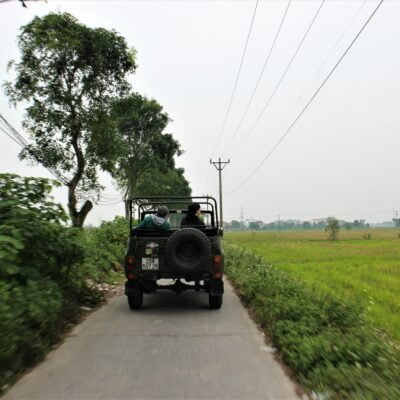
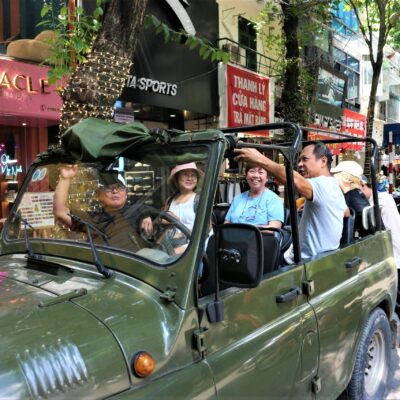
31. Take a Hoi An Jeep Tour
A private Jeep tour can be an alternative to cycling for travelers who want to cover more of the countryside.
An open vehicle provides good visibility and makes it easy to stop for photographs.
A route can combine the Ancient Town area with rice fields, Cam Thanh, Tra Que, local markets and beach roads.
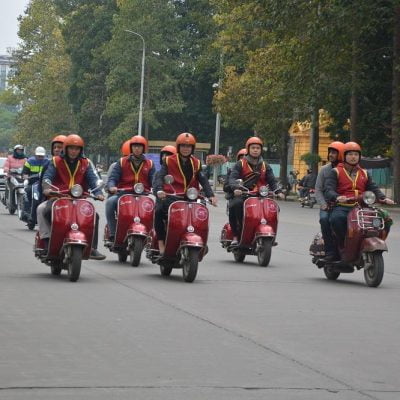
32. Explore Hoi An by Vespa
A Hoi An Vespa Tour offers another way to experience the countryside and surrounding communities.
Instead of remaining in the tourist center, a local driver can take you through rural roads, fishing communities, vegetable farms and small villages.
This is particularly useful for travelers who want local food and countryside scenery without a full day of cycling.
33. Visit the Cham Islands
The Cham Islands lie offshore from Hoi An and offer opportunities for snorkeling, swimming and boat trips.
A full-day excursion can be added when the sea is calm and weather conditions are suitable.
The islands are better suited to travelers who have at least three nights in Hoi An because otherwise the itinerary becomes too compressed.
34. Go Snorkeling
During suitable weather, snorkeling around the Cham Islands can provide an enjoyable contrast with Hoi An’s historical attractions.
Marine conditions vary seasonally, so check conditions before booking.
Don’t expect every excursion to provide the same underwater visibility.
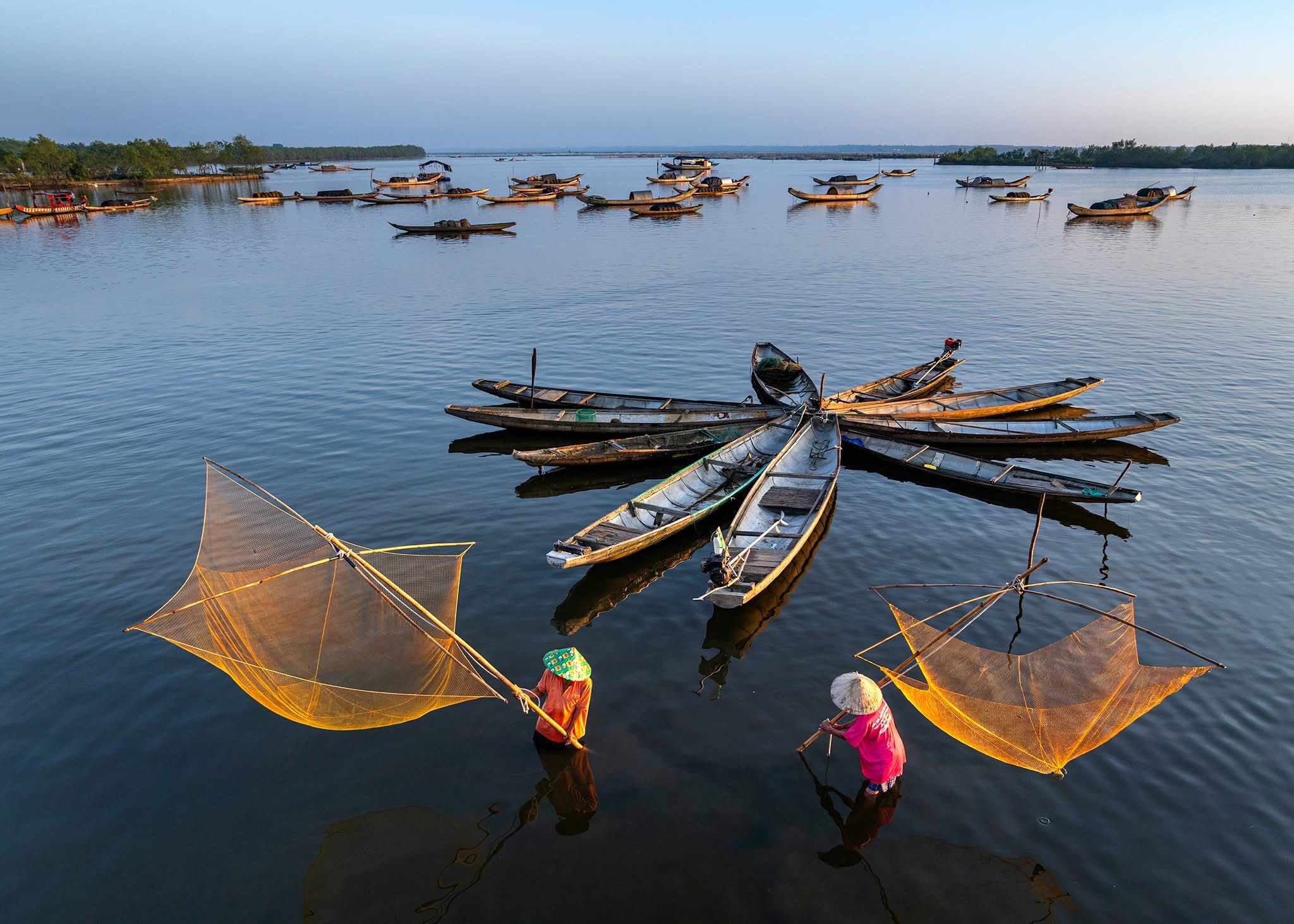
35. Experience Hoi An’s Fishing Culture
Fishing has always been connected with Hoi An’s relationship with rivers and the sea.
A countryside or coastal excursion can introduce travelers to fishing communities, boats and local seafood markets.
These experiences can be more interesting when combined with lunch rather than treated as a short photo stop.
36. Visit Hoi An Market
The Hoi An Central Market is one of the best places to observe local food culture.
Look for fresh herbs, vegetables, seafood, fruit, spices and prepared dishes.
Go early in the morning for the strongest market atmosphere.
This is also a good place to discover ingredients used in cao lau and other local dishes.
37. Try Vietnamese Iced Coffee
A trip to Hoi An is incomplete without sitting down for ca phe sua da.
The combination of strong Vietnamese coffee, condensed milk and ice works particularly well in the heat of Central Vietnam.
Choose a small café overlooking a street or river and take your time.
38. Try Hoi An Herbal Drinks
Local restaurants and food stalls sometimes serve herbal drinks and teas alongside meals.
Try them after a hot day of cycling or walking.
They are a simple way to explore flavors beyond Vietnamese coffee and fruit juices.
39. Hoi An for Couples
Hoi An is one of the easiest destinations in Vietnam to design around couples.
Spend the morning cycling through the countryside, enjoy lunch near the river, relax at An Bang Beach in the afternoon and return to the Ancient Town after sunset.
A private cooking class or lantern-making experience can also make the trip more interactive.
40. Hoi An for Families
Families can combine:
Ancient Town
Basket boats
Cooking classes
Tra Que Vegetable Village
An Bang Beach
Hoi An countryside
The compact geography means you can return to the hotel between activities rather than spending hours in transportation.
41. Hoi An for Solo Travelers
Hoi An is easy to explore independently.
The Ancient Town is walkable, food tours provide an opportunity to meet other travelers, and cycling routes can be arranged through local operators.
Solo travelers should still use standard precautions with valuables, especially in busy evening areas.
42. Hoi An for Seniors
The Ancient Town is relatively flat, but walking on old streets can become tiring during hot weather.
Choose morning and evening sightseeing and take breaks in cafés.
For My Son, countryside and beach excursions, private transportation can reduce unnecessary physical strain.
43. Hoi An for Food Lovers
Food should be a major part of your itinerary.
A good food-focused day can look like:
Breakfast: Banh mi and Vietnamese coffee.
Lunch: Cao lau.
Afternoon: Tra Que or cooking class.
Snack: White rose dumplings.
Dinner: Hoi An specialties and fresh seafood.
Hoi An’s cuisine reflects both its local agricultural surroundings and its history as a trading port, with Chinese, Japanese and other influences visible in its food. (vietnam.travel)
44. Hoi An for Photographers
For photographers, Hoi An offers several distinct environments.
Early morning: Markets and empty streets.
Daytime: Yellow architecture and historic houses.
Late afternoon: Rice fields and countryside.
Sunset: Thu Bon River and An Bang Beach.
Night: Lanterns and river reflections.
The most memorable photographs often come from leaving the main tourist streets for smaller lanes and countryside roads.
45. Hoi An for History Lovers
Spend extra time inside the Ancient Town’s heritage buildings and visit My Son.
The combination of Champa history + international trading-port history + Vietnamese heritage makes Hoi An particularly rich.
The town’s long trading history brought together people, products and architectural traditions from different regions. (vietnam.travel)
46. Best Time to Visit Hoi An
Hoi An can be visited year-round, but weather should influence your itinerary.
The drier months generally offer better conditions for cycling, beaches and outdoor sightseeing, while the rainy season can bring cloudy days and occasional flooding in the Ancient Town.
The advantage of Hoi An’s compact layout is that you can still enjoy food, cafés, heritage buildings and cooking classes when the weather is poor.
47. Hoi An During the Rainy Season
Rain does not necessarily ruin Hoi An.
The lanterns can look even more atmospheric when reflected on wet streets.
Use rainy days for:
Museums
Cooking classes
Food tours
Tailoring
Cafés
Craft workshops
Keep beach and countryside activities flexible.
48. What to Wear in Hoi An
Light, breathable clothing works well in warm weather.
Bring comfortable walking shoes because you will likely spend several hours exploring the Ancient Town.
For temples and heritage buildings, modest clothing is appropriate.
During rainy periods, a compact rain jacket or umbrella is useful.
49. How to Get to Hoi An
The easiest option is to fly into Da Nang International Airport and travel by road to Hoi An.
From Da Nang, you can use:
Private car
Taxi
Shuttle
Motorbike
A private transfer is especially convenient for families and couples carrying luggage.
50. Hoi An From Da Nang
Hoi An is close enough to Da Nang for a day trip, but staying overnight is much better.
A day visitor usually experiences the busiest period and leaves before the town becomes most atmospheric.
Stay at least one night so you can experience Hoi An after dark.
51. Hoi An From Hue
Travelers coming from Hue can drive south via Da Nang and the Hai Van Pass.
This is one of the most scenic road journeys in Central Vietnam.
A private vehicle allows you to stop at Lang Co, the Hai Van Pass and other viewpoints.
52. Hoi An and Da Nang
The two destinations complement each other.
Da Nang: beaches, modern city, Son Tra, Marble Mountains.
Hoi An: heritage, food, countryside and lanterns.
A 4–5 day combination works particularly well.
53. Hoi An and Hue
The three-city route:
Hue → Da Nang → Hoi An
is one of the best ways to experience Central Vietnam.
Hue gives you imperial history, Da Nang provides coastal scenery and Hoi An finishes with heritage and food.
54. Hoi An and My Son
My Son is close enough to Hoi An to be a half-day or full-day excursion.
For history lovers, this combination is essential.
For families or travelers who prefer a slower trip, spend the morning at My Son and return to Hoi An for an easy afternoon.
55. A Perfect 2-Day Hoi An Itinerary
Day 1: Arrive, explore Ancient Town, Japanese Covered Bridge, merchant houses, local food and lantern-lit streets.
Day 2: Tra Que or countryside cycling in the morning, An Bang Beach in the afternoon, Ancient Town after sunset.
This is enough for the essential Hoi An experience.
56. A Perfect 3-Day Hoi An Itinerary
Day 1: Ancient Town and food.
Day 2: Tra Que, Cam Thanh and countryside cycling.
Day 3: My Son in the morning, beach or cooking class in the afternoon.
This is the best balance for first-time visitors.
57. A Perfect 4-Day Hoi An Itinerary
Day 1: Ancient Town.
Day 2: Countryside and food.
Day 3: My Son.
Day 4: An Bang Beach or Cham Islands.
Four days allows you to travel much more slowly.
58. Hoi An Travel Tips for First-Time Visitors
Explore the Ancient Town early in the morning.
Return again after dark because the atmosphere is completely different.
Stay at least two nights.
Eat local specialties rather than relying on international restaurants.
Use a bicycle or private local vehicle to explore the countryside.
Book tailoring early enough for fitting and alterations.
Keep beach days flexible around weather.
Carry cash for smaller restaurants and market purchases.
Respect heritage buildings and religious sites.
59. Hoi An Old Town Ticket
Several heritage buildings in the Ancient Town require an entrance ticket.
Official tourism guidance recommends buying an Old Town Ticket that provides access to a selection of heritage sites. (vietnam.travel)
Use the ticket strategically rather than trying to visit every building simply because admission is included.
60. Is Hoi An Worth Visiting?
Absolutely.
Hoi An is not the place to visit if your main goal is seeing as many major monuments as possible.
It is a place to slow down.
Walk.
Eat.
Cycle.
Drink coffee.
Watch lanterns.
Explore the countryside.
Sit by the river.
Visit the beach.
That relaxed rhythm is one of the reasons Hoi An remains one of Central Vietnam’s most popular destinations.
Best Things to Do in Hoi An at a Glance
For a short visit, prioritize these experiences:
1. Walk Hoi An Ancient Town
2. See the Japanese Covered Bridge
3. Experience Hoi An after dark
4. Eat cao lau
5. Try white rose dumplings
6. Cycle through the countryside
7. Visit Tra Que Vegetable Village
8. Relax at An Bang Beach
9. Visit My Son Sanctuary
10. Take a cooking class
11. Explore Cam Thanh
12. Have Vietnamese coffee by the river
Final Thoughts
A good Hoi An Travel Guide should go far beyond the lanterns.
Yes, the Ancient Town is the heart of the destination, and its preserved architecture and trading-port history make it one of Vietnam’s most remarkable cultural sites. But Hoi An becomes much more interesting when you combine the old streets with cao lau, white rose dumplings, rice fields, vegetable gardens, bicycle rides, beaches, craft villages and My Son Sanctuary. (vietnam.travel)
For most first-time visitors, two or three nights is ideal. Spend one day understanding the Ancient Town, another exploring the countryside and food scene, and a third visiting My Son or relaxing at An Bang Beach.
The best time of day is not always the middle of the afternoon. Hoi An is especially beautiful early in the morning and after sunset, when the streets become quieter or the lanterns begin illuminating the historic buildings.
Walk the old streets, eat the local food, cycle through the rice fields and stay until the lanterns come on. Hoi An is a destination to experience slowly, not simply to photograph quickly.
Explore Hoi An With Vietnam Women Travel
For travelers looking for private and small-group experiences led by women, Vietnam Women Travel can create a customized Hoi An itinerary combining heritage, food, countryside and coastal experiences.
A private journey can include Hoi An Ancient Town, local food tours, cooking classes, Tra Que Vegetable Village, Cam Thanh, An Bang Beach, My Son Sanctuary, craft villages and countryside exploration.
For travelers coming from Da Nang or Hue, Hoi An can also be included in a larger Central Vietnam itinerary with the Hai Van Pass, Hue’s imperial heritage and Da Nang’s beaches.
The women-led format is suitable for couples, families, solo travelers and private groups, rather than being limited to women-only travel.
Contact Vietnam Women Travel
VIETNAM WOMEN TRAVEL
Address: 91 Tho Nhuom Street, Hoan Kiem District, Hanoi, Vietnam
Phone / WhatsApp 24/7: +84 982 416 518
Second Contact: +84 981 090 989
Website: vietnamwomentravel.com
Private Central Vietnam Tours Led By Women
Hoi An Tours Led By Women
Da Nang Tours Led By Women
Hue Tours Led By Women
My Son Tours
Hoi An Food Tours
Private & Small-Group Vietnam Experiences
Discover Hoi An with local women guides—from the lantern-lit Ancient Town and famous local dishes to rice fields, craft villages, beaches and the cultural heritage beyond the historic center.